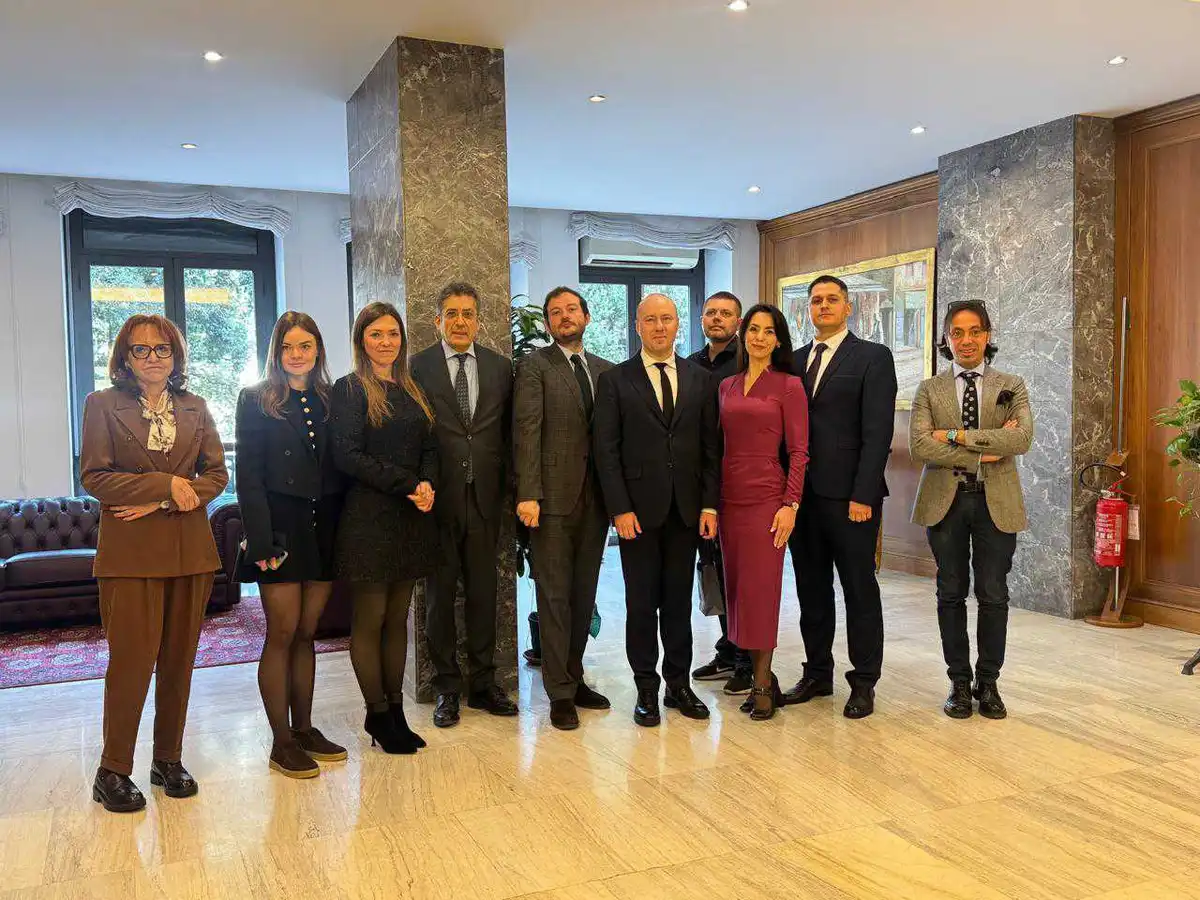

The team of the National Agency on Corruption Prevention (NACP) presented to Italy’s anti-corruption institutions Ukraine’s unique experience in managing corruption risks and implementing state anti-corruption policy under the unprecedented conditions of a full-scale war.
During an institutional visit to Rome, NACP representatives held a series of expert consultations with specialists from the Italian National Anti-Corruption Authority (ANAC), the Financial Guard (Guardia di Finanza), the Court of Auditors (Corte dei conti), and the Financial Intelligence Unit (Unità di Informazione Finanziaria).
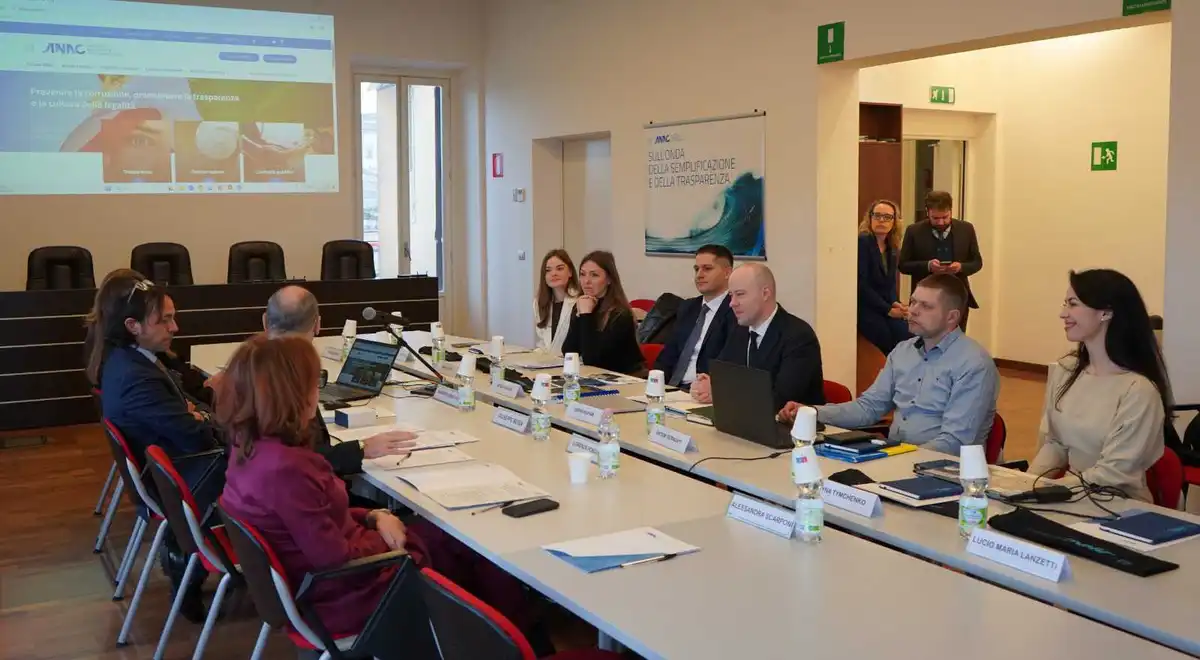
In particular, the parties conducted a substantive exchange of practical anti-corruption tools, laying the groundwork for deeper integration of the NACP into the European anti-corruption environment.
Within the framework of the professional dialogue, special attention was paid to anti-corruption mainstreaming — an important element of the negotiation process for Ukraine’s accession to the European Union (EU). Today, the NACP ensures transparency of the European integration process by coordinating and providing expert review across all 36 negotiation chapters.
To help partners better understand the Ukrainian context, the Agency shared its expertise and effective practices, particularly regarding:
- modern approaches to shaping state anti-corruption policy in Ukraine, including mechanisms for implementing the current Anti-Corruption Strategy and key priorities of the next policy document for 2026–2030, which aims to ensure continuity, systemic development, and increased effectiveness of anti-corruption reforms during the next five-year period;
- a sectoral approach to strategic analysis of corruption risks, enabling a shift from fragmented detection of violations to systematic preventive anti-corruption measures, particularly in the areas of recovery and public procurement;
- anti-corruption expertise as an effective tool for identifying and eliminating corruption-prone factors at the legislative drafting stage;
- the comprehensive expert work of NACP units aimed at improving anti-corruption programs of state authorities and local self-government bodies;
- financial control instruments, including lifestyle monitoring of officials, successful practices of applying civil confiscation of unjustified assets, as well as automated and full verification of asset declarations and the use of logical and arithmetic control;
- ensuring transparency of public procurement for recovery through digital tools, in particular Prozorro and DREAM;
- development of the whistleblowing institution, including the functioning of reporting channels for possible corruption offenses, operation of the Unified Whistleblower Reporting Portal, mechanisms for ensuring confidentiality and protection of whistleblowers, as well as the reward payment system;
- NACP approaches to fostering a culture of integrity, including through educational programs, training of public servants and anti-corruption officers, and cooperation with general secondary, vocational, and higher education institutions.
The Italian side, in turn, presented corruption risk indicators, practices of preventive oversight in public procurement, and effective mechanisms for whistleblower protection — topics that are particularly relevant for Ukraine in the context of the European integration process. Particular attention was paid to the experience of operating a whistleblowing system under a broad definition of a whistleblower in line with the requirements of EU Directive 2019/1937. Such experience is important for the further development of Ukraine’s whistleblowing system in accordance with European standards.
“Today, Ukraine’s anti-corruption policy is an integral part of our path toward the EU. Every solution we implement — from the introduction of the civil confiscation mechanism to the sectoral risk assessment approach — brings us closer to European standards and strengthens the trust of the international community. Therefore, our partnership with ANAC and key Italian institutions focuses on working with concrete tools to adapt the best European practices to our conditions. At the same time, we are not only adopting such practices but also offering our own unique solutions, which international partners recognize as highly progressive and successful,” emphasized NACP Deputy Head Serhii Hupiak.
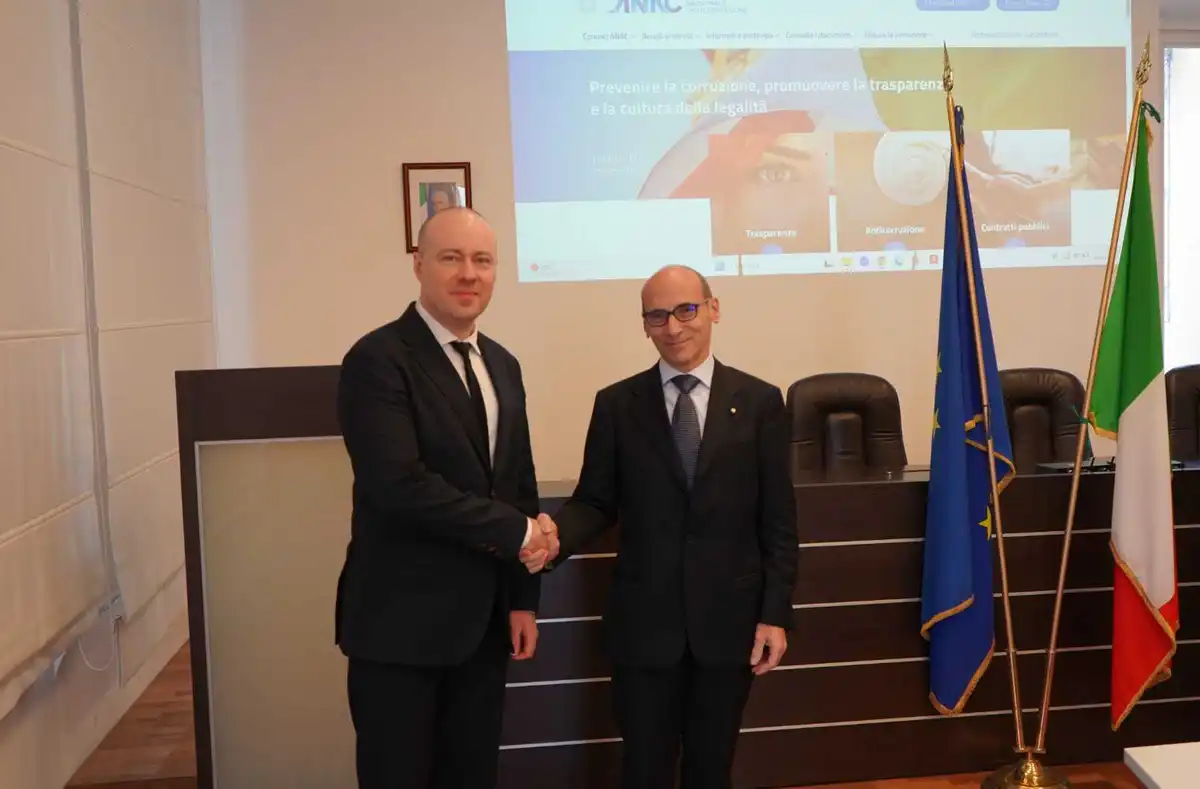
According to him, the Ukrainian mechanism for monitoring the lifestyle of public officials and the tools for civil confiscation of unjustified assets attracted particular interest from Italian colleagues, who noted them as among the most effective approaches in Europe. Western partners also highlighted Ukraine’s ability to create complex and effective instruments such as lifestyle monitoring under conditions of limited time and human resources, while still demonstrating significant results.
Experts from ANAC also highly appreciated the systematic nature of the strategic corruption risk analysis studies conducted by the NACP in such important areas as recovery, public procurement, and forestry. This work serves as an important signal to European partners regarding Ukraine’s readiness to use recovery funds transparently.
The experience of conducting anti-corruption expertise also received strong recognition. Partners noted that the NACP’s ability to review more than 8,000 draft regulatory acts within a short period (2024–2025) and ensure that 96% of its recommendations were taken into account demonstrates the institution’s authority and the reliability of the anti-corruption filter at the legislative drafting stage.

In addition, according to the Italian side, Ukraine’s ecosystem of digital tools in the field of public procurement currently serves as a benchmark model of transparency for countries undergoing post-conflict recovery.
Italian colleagues also drew attention to Ukraine’s experience in developing the whistleblowing institution. In particular, they highlighted the effectiveness of reporting channels, the functioning of the Unified Whistleblower Reporting Portal, and the effectiveness of mechanisms for protection and confidentiality. Particular interest was generated by Ukraine’s awareness-raising products aimed at promoting whistleblowing, as well as real cases of reward payments, which, according to the partners, demonstrate a high level of development of this system in Ukraine.
“The recognition by Italian institutions of the effectiveness and uniqueness of the tools developed by the NACP is a strong signal to the EU, confirming Ukraine’s capacity not only to implement European standards but also to offer EU member states its own advanced and practice-proven solutions,” the NACP Deputy Head emphasised.
The visit continued the practical implementation of the Memorandum of Understanding between the NACP and ANAC, signed in 2025 during the Ukraine Recovery Conference, as well as the agreements reached on the sidelines of the 11th session of the Conference of the States Parties to the United Nations Convention against Corruption in Doha.
The visit took place with the support of the EU Anti-Corruption Initiative in Ukraine (EUACI).