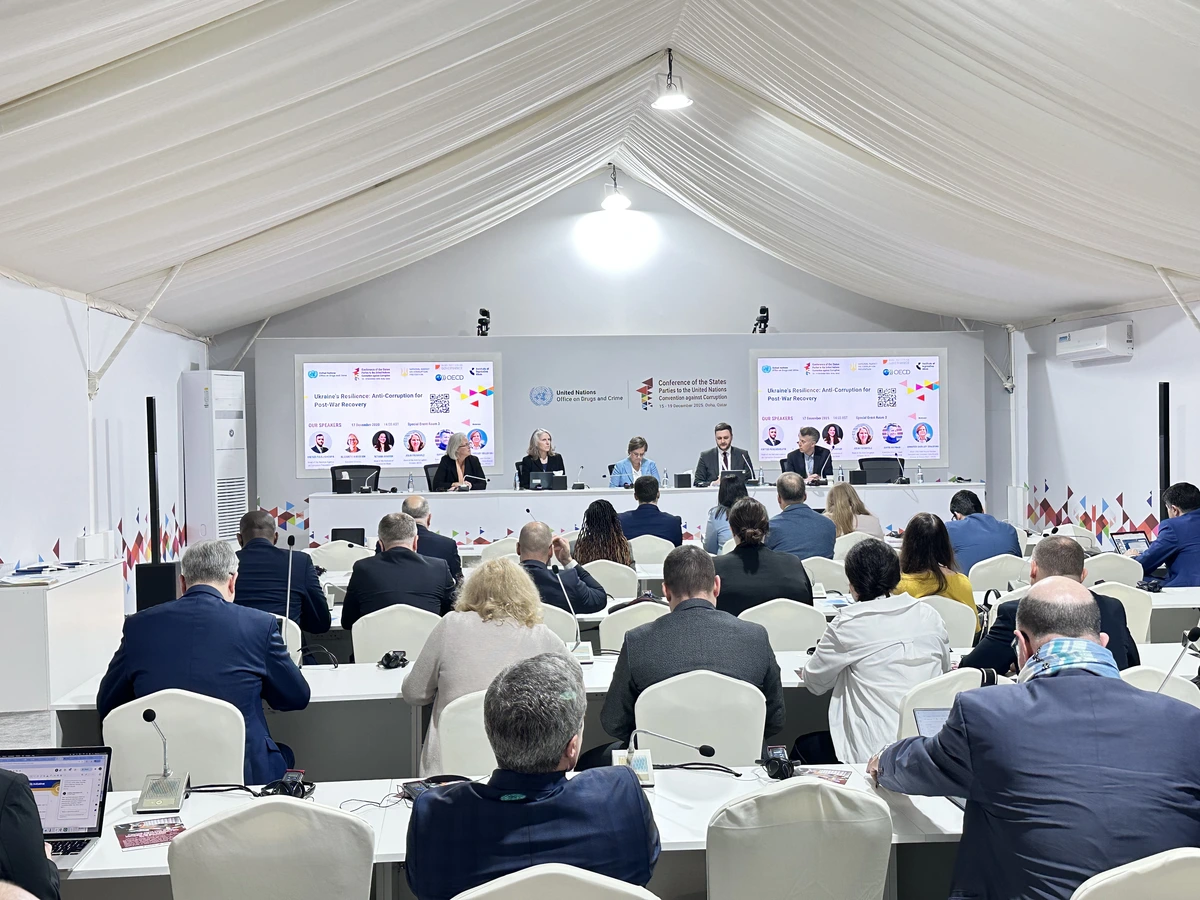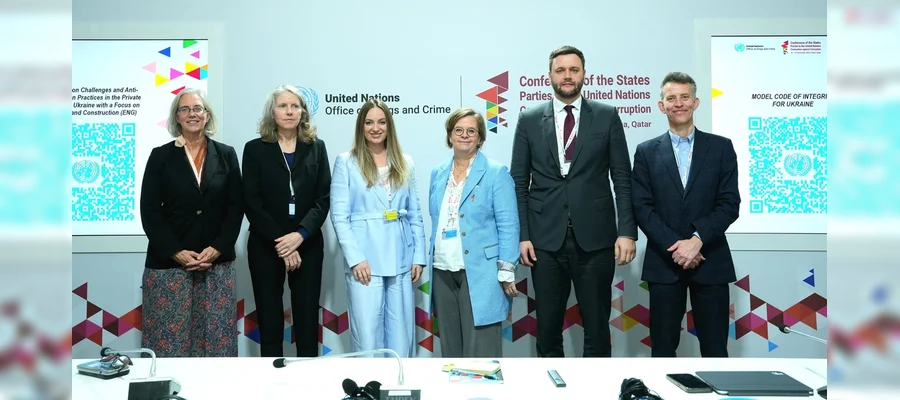
Today, the integration of anti-corruption mechanisms into the post-war recovery strategy is a determining factor in Ukraine's state stability. This was emphasized by the Head of the National Agency on Corruption Prevention (NACP) during a special event entitled ‘Ukraine's Resilience: Fighting Corruption for Post-War Recovery’, which took place during the 11th session of the Conference of the States Parties to the United Nations Convention against Corruption (UNCAC).
The Head of the NACP noted that Ukraine's contribution to ensuring honest reconstruction lies in the systematic implementation of anti-corruption tools at all stages of the recovery process: risk analysis, compliance checks and financial control tools.
“The world is investing billions in Ukraine's recovery, so our country must create mechanisms to ensure that these funds are used for their intended purpose, in particular through procurement monitoring and advanced data analysis methods,” Viktor Pavlushchyk emphasized.
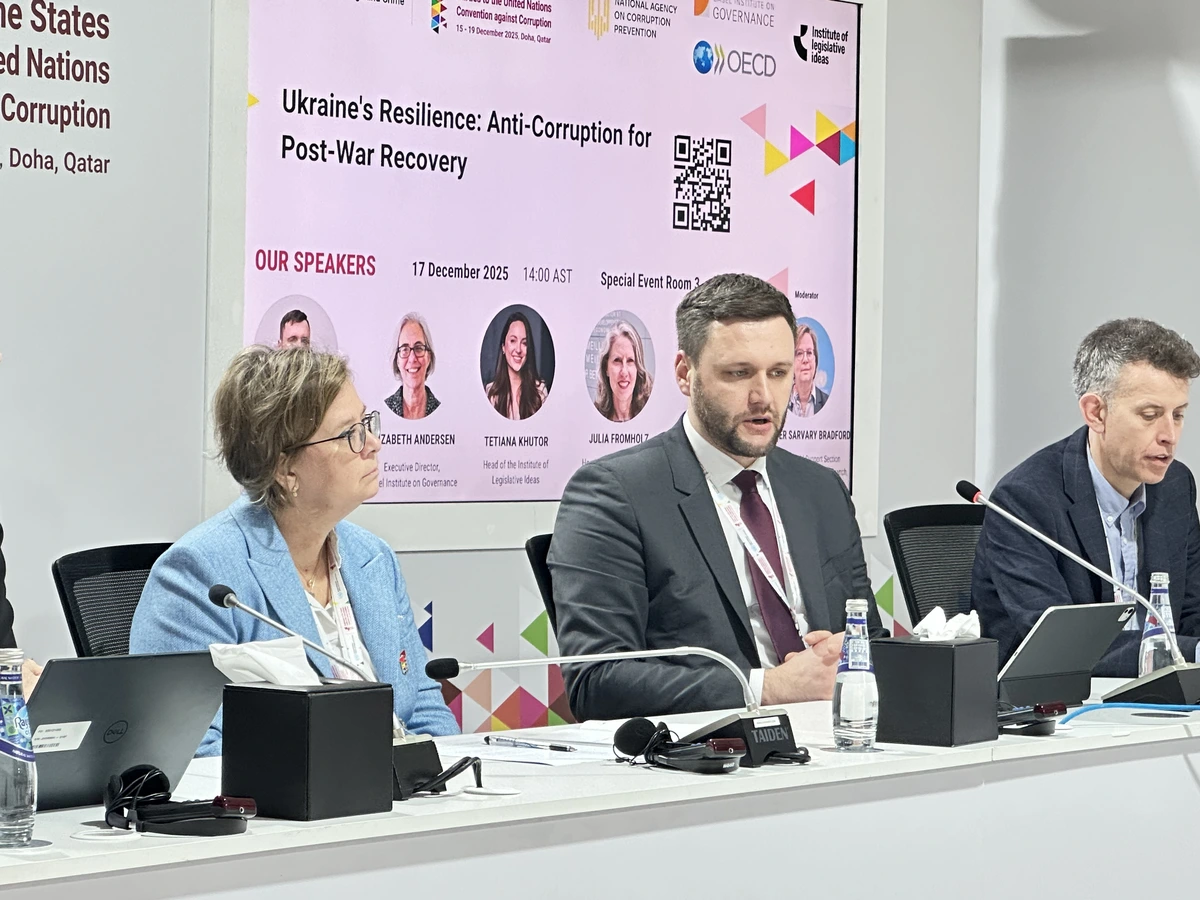
He noted that Ukraine has successfully created a multi-level, independent anti-corruption infrastructure that includes specialized institutions: the National Agency on Corruption Prevention (NACP), the National Anti-Corruption Bureau (NABU), the Specialized Anti-Corruption Prosecutor's Office (SAPO) and the High Anti-Corruption Court (HACC). It fully complies with the basic international standards derived from the principles of the UN Convention against Corruption: prevention, combating and justice. Its stability is an important signal to international partners that their support is protected by functioning and independent anti-corruption institutions.
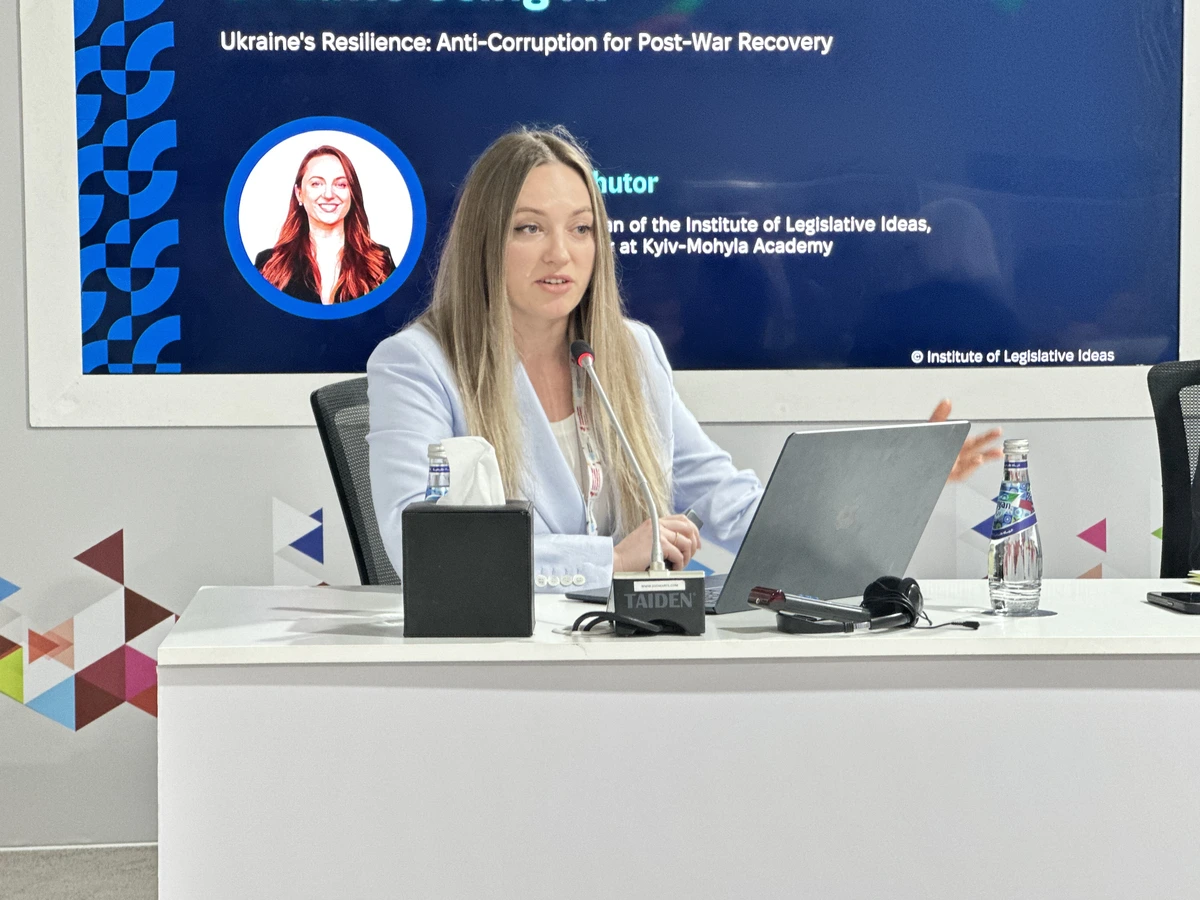
The importance of a systematic approach to combating corruption in reconstruction was also supported by Tetiana Khutor, Head of the Analytical Centre ‘Institute of Legislative Ideas’.
“For over ten years, the Institute of Legislative Ideas has been demonstrating that one of the most effective anti-corruption measures is to prevent the legalization of corruption risks in legislation. The war has exposed a key limitation: the insufficient human capacity of both the state and the public to cover the entire range of changes and respond exclusively with manual methods. This has made the transition to automated solutions inevitable. That is why today we are transforming our many years of practical experience in combating corruption into artificial intelligence-based tools that allow us to maintain the effectiveness of prevention even under extreme pressure,” she said.
Viktor Pavlushchyk also emphasized digitalization as the main anti-corruption mechanism. He highlighted tools such as the Register of Declarations, the Transparency Register, automated risk assessment systems, and others.
At the same time, Gavin Hayman, Executive Director of the Open Contracting Partnership, focused on the DREAM system — a ‘single window’ for tracking infrastructure projects, which already covers about 10,000 objects worth about $40 billion. He stressed that with more than 300,000 damaged objects recorded in the national register and the aggression continuing, transparency in reconstruction is not only an economic requirement but also ‘an act of resistance and a condition for the country's survival.’
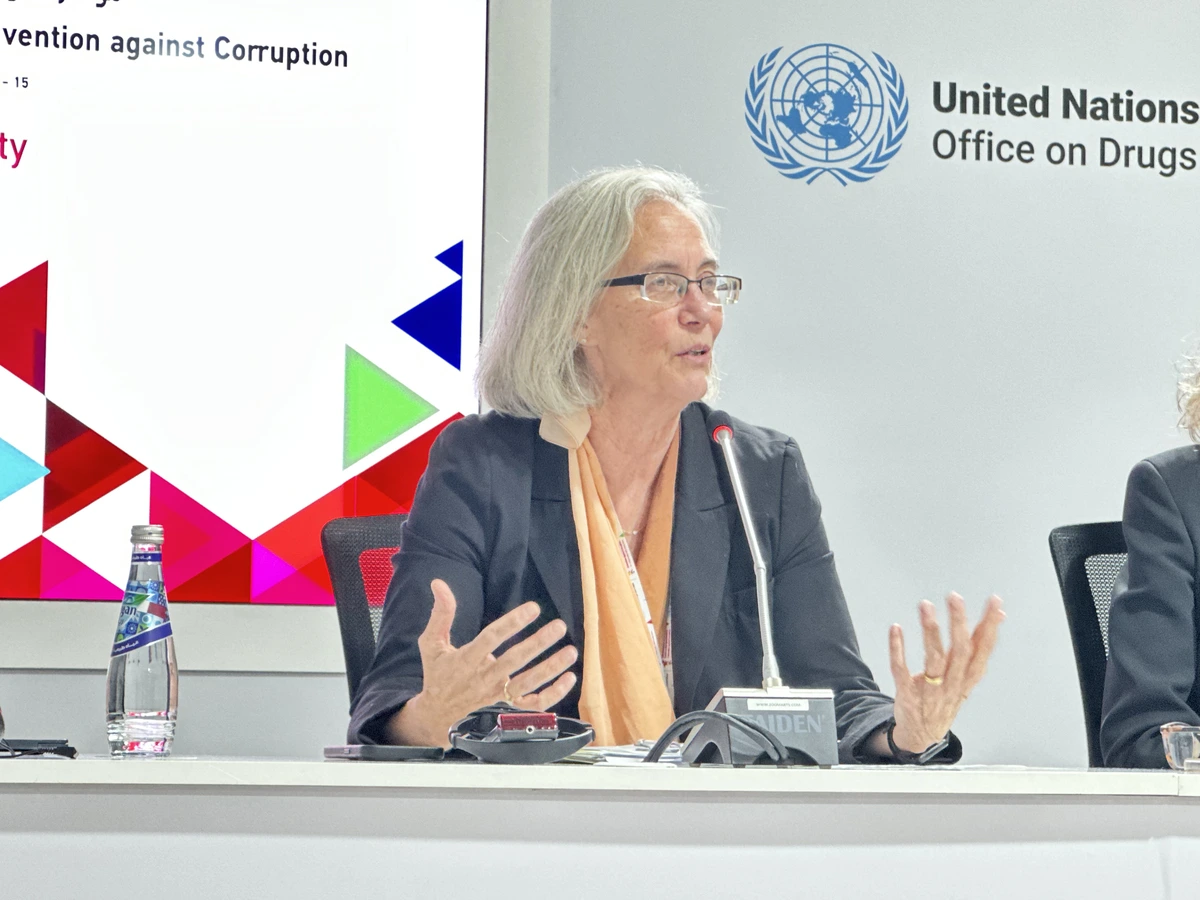
Elisabeth Andersen, Executive Director of the Basel Institute on Governance, noted that Ukraine's anti-corruption system has proven its effectiveness in the critical conditions of war and called for support for the new Anti-Corruption Strategy to adapt anti-corruption policy to the new realities.
“The Basel Institute on Governance has two recommendations for Ukraine: the first concerns the new Anti-Corruption Strategy, which has the potential to become a key opportunity to adapt Ukraine's anti-corruption policy to the new realities. This requires full support from society, and the final version of the Strategy must ensure that the opinions of all stakeholders are taken into account. The second recommendation is that it is necessary to maintain the unity of the anti-corruption community in order to present a united front against corruption,” she said.
An important step in strengthening this system was Ukraine's recent accession to the Organization for Economic Co-operation and Development (OECD) Working Group on Bribery and its expected accession to the Convention on Combating Bribery of Foreign Public Officials in International Business Transactions.
Julia Fromholz, Head of the OECD Anti-Corruption Department, highlighted three areas in which Ukraine's alignment with the Convention's standards is particularly important in the context of today's discussion.
“Compliance with the Convention's standards strengthens the independence of institutions responsible for ensuring the rule of law during reconstruction. This strengthens Ukraine's legislative and political architecture. In parallel with the ratification of the Convention, Ukraine's anti-corruption authorities will be integrated into a global network of law enforcement agencies to strengthen international cooperation with other members of the OECD Working Group on Bribery. As it prepares for large-scale reconstruction, Ukraine is moving forward in at least two complementary directions: it is implementing advanced digital transparency tools while bringing its policies into line with the most powerful international anti-corruption system. Each of these directions reinforces the other. The OECD, as it has done for many years, will continue to support Ukraine by facilitating the monitoring, implementation and daily systematic work necessary to ensure integrity at all stages of reconstruction,” she said.
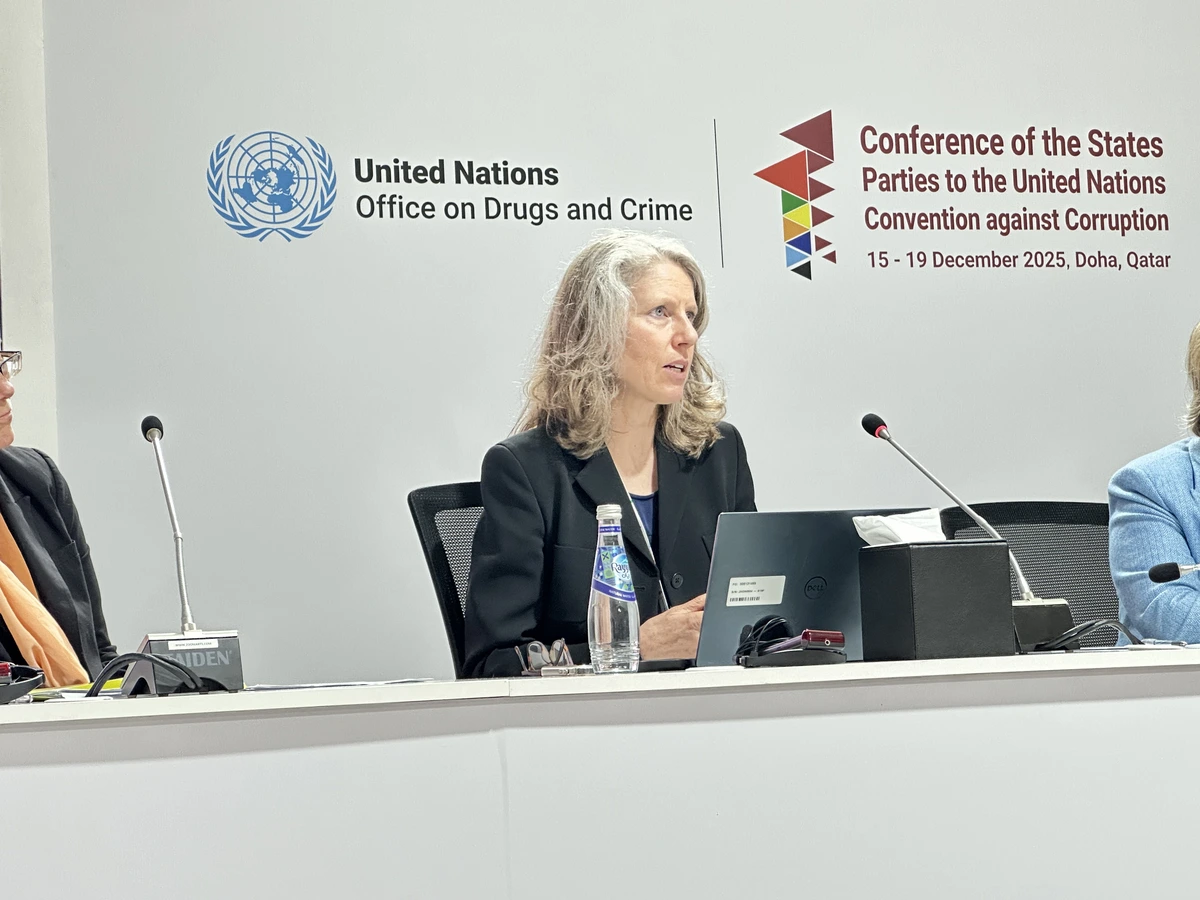
The event was moderated by Jennifer Sarvary Bradford, Head of the Conference Support Section, Anti-Corruption and Economic Crime Branch, Division for Treaty Affairs, United Nations Office on Drugs and Crime.
The event was organized by NACP in cooperation with the Basel Institute on Governance, the United Nations Office on Drugs and Crime, and the Institute for Legislative Ideas.
We would like to remind you that the Ukrainian delegation, headed by NACP Head Viktor Pavlushchyk, is participating in the 11th session of the Conference of the States Parties to the United Nations Convention against Corruption. This week, the NACP Head spoke at the UN Anti-Corruption Conference and called on states to invest in systems that measure integrity. During the conference, the NACP joined the commitments to ensure transparency and public participation in the implementation of the provisions of the UN Convention against Corruption.
For reference
UNCAC (2003) is a global international agreement that defines mechanisms for preventing corruption, criminalizing offences, international cooperation and asset recovery.
The Conference of the States Parties to UNCAC is a key body for monitoring the implementation of the Convention and setting global priorities in the fight against corruption.
In accordance with the order of the President of Ukraine, the Ukrainian delegation at the conference is headed by the Head of the NACP, Viktor Pavlushchyk. The delegation also includes representatives of key anti-corruption and diplomatic institutions: representatives of the National Anti-Corruption Bureau of Ukraine, the Specialized Anti-Corruption Prosecutor's Office, the High Anti-Corruption Court, the Asset Recovery and Management Agency, and others.