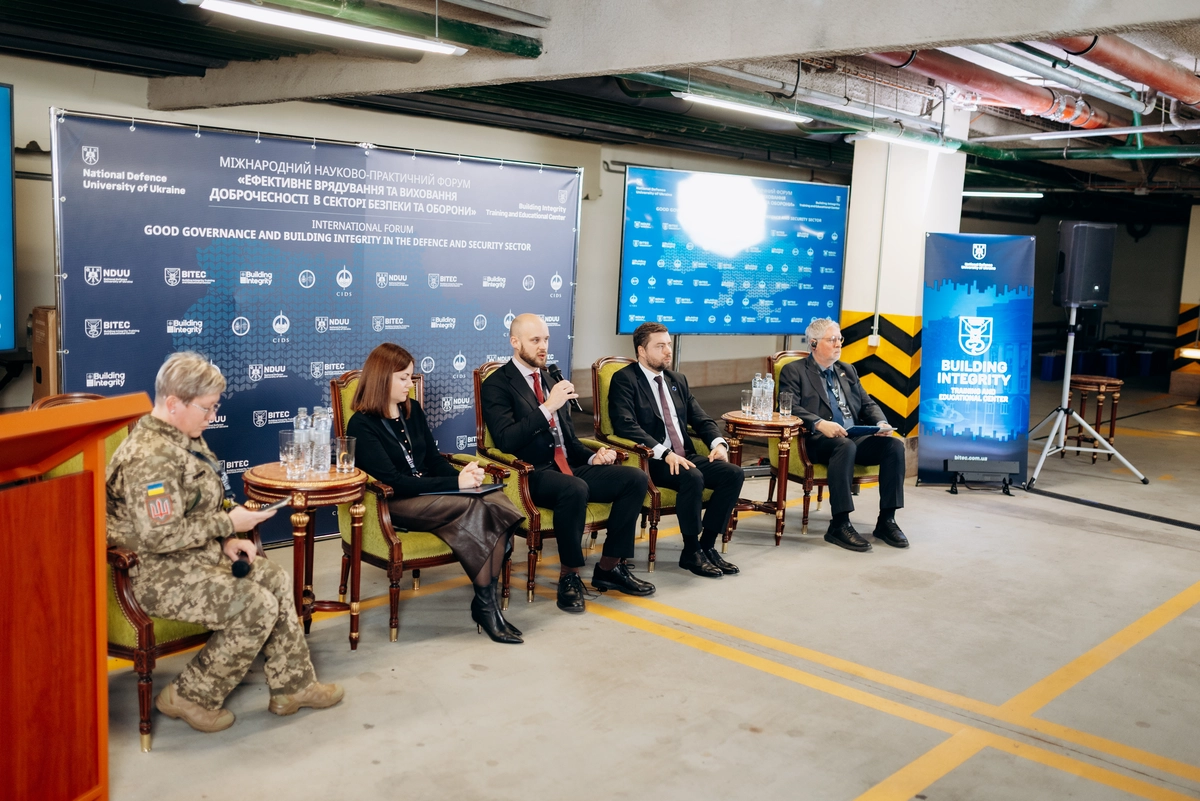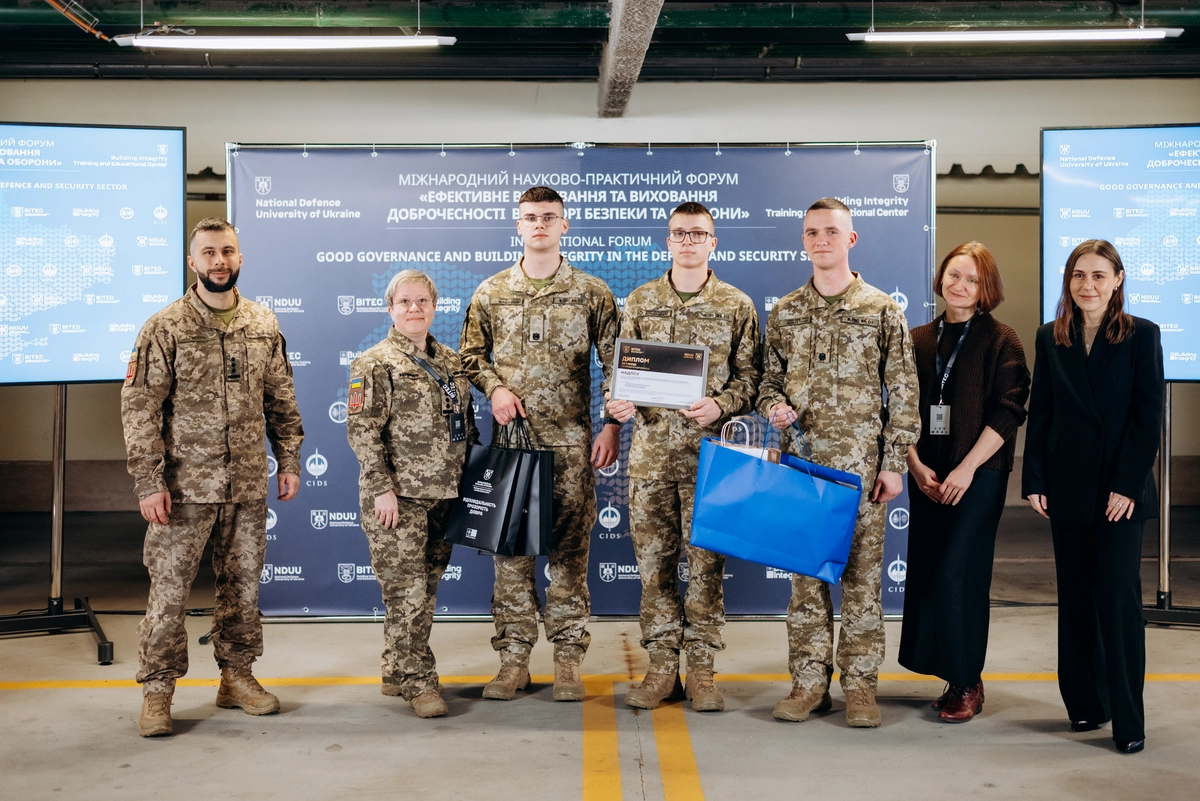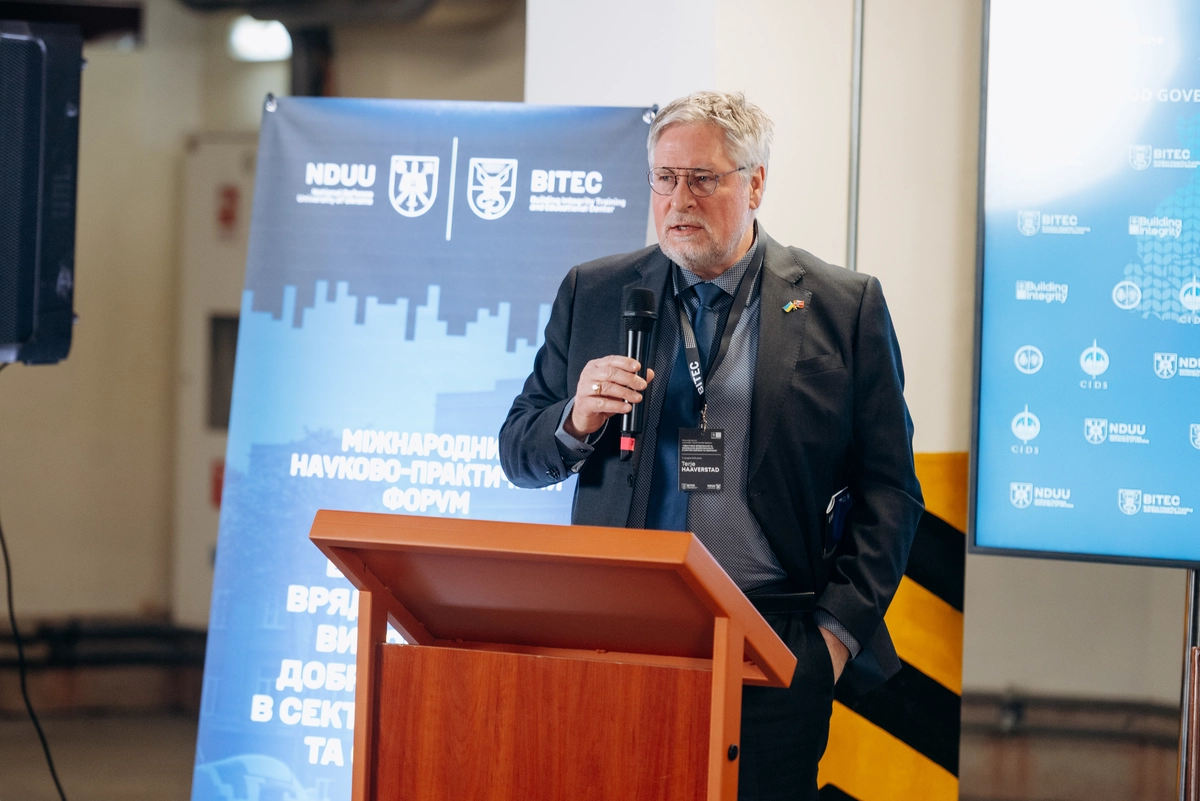
Close and consistent cooperation between the National Agency on Corruption Prevention (NACP), the Ministry of Defence of Ukraine and the National Defence University of Ukraine contributes to the formation of a sustainable partnership and systematic development of integrity in the security and defence sector. Such cooperation ensures the implementation of NATO recommendations and the introduction of effective anti-corruption tools necessary for Ukraine's interoperability with NATO. This was noted by NACP Head Viktor Pavlushchyk during the VI International Scientific and Practical Forum ‘Effective Governance and Integrity Education in the Security and Defence Sector’.
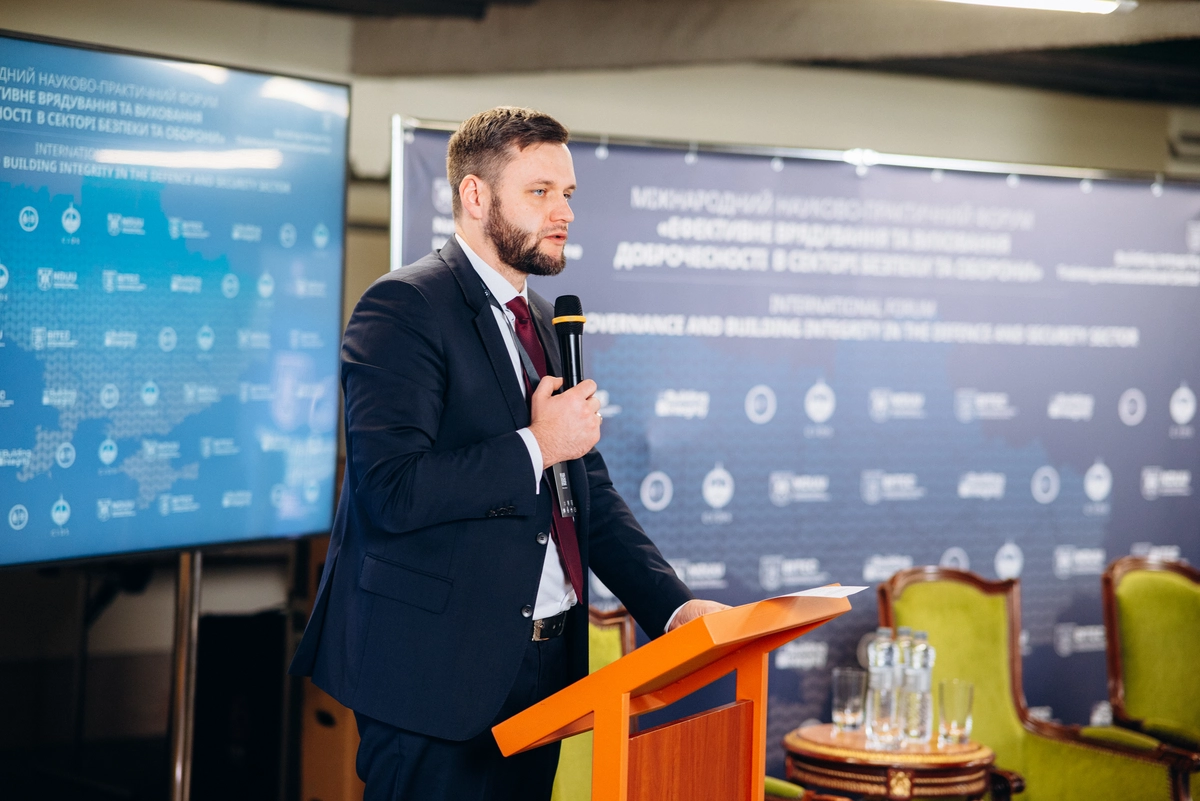
The event was attended by Ukrainian Defence Minister Denys Shmyhal, Deputy Defence Minister for European Integration Anatolii Kutsevol, Head of the NATO Integrity Building Programme Joakim Fredin, and other representatives of state bodies, law enforcement agencies, and foreign partners.
Participants discussed topical issues regarding strategic guidelines for implementing integrity development policies in line with NATO standards, modern approaches to fostering a culture of integrity and zero tolerance for corruption in the security and defence sector. Particular attention was paid to the exchange of best practices and the presentation of practical models and mechanisms for fostering good governance.
‘We have built a comprehensive anti-corruption management system and strengthened the institutional capacity of our responsible departments,’ said Defence Minister Denys Shmyhal during his speech.

According to him, among the tools created by the Ministry of Defence to identify potential corruption activities are the Corruption Risk Register, the new Anti-Corruption Programme of the Ministry of Defence, and the DOT-Chain Defence platform, which has become an example of innovation and transparency in the field of procurement.
The Minister of Defence also noted that the ministry had conducted more than 600 control measures and transferred hundreds of materials to law enforcement agencies.
Marta Ivashkiv, Acting Head of the Department for Integrity Policy Formation in the Field of Security and Defence at the National Agency on Corruption Prevention (NACP), took part in a panel discussion on strategic guidelines for the implementation of NATO-standard development policies. She spoke about the role, place, and key tasks of the NACP in the field of integrity development in the security and defence sector.
In particular, Marta Ivashkiv emphasized the importance of defining a common vector for all stakeholders during the implementation of Task 7 of NATO's Initial Interoperability Requirement 0204 ‘Building Integrity’. This involves developing a culture of integrity, in particular through the full integration of NATO's Integrity Education Discipline based on a nationally synchronized approach to the curricula of academic institutions in the security and defence sector. In addition, it is important to develop the capabilities of the Scientific Centre for Integrity Education and Corruption Prevention in the Defence and Security Sector of the National Defence University of Ukraine in order to obtain the status of a regional and, in the future, international Building Integrity Training and Education Centre of Excellence (BITEC).
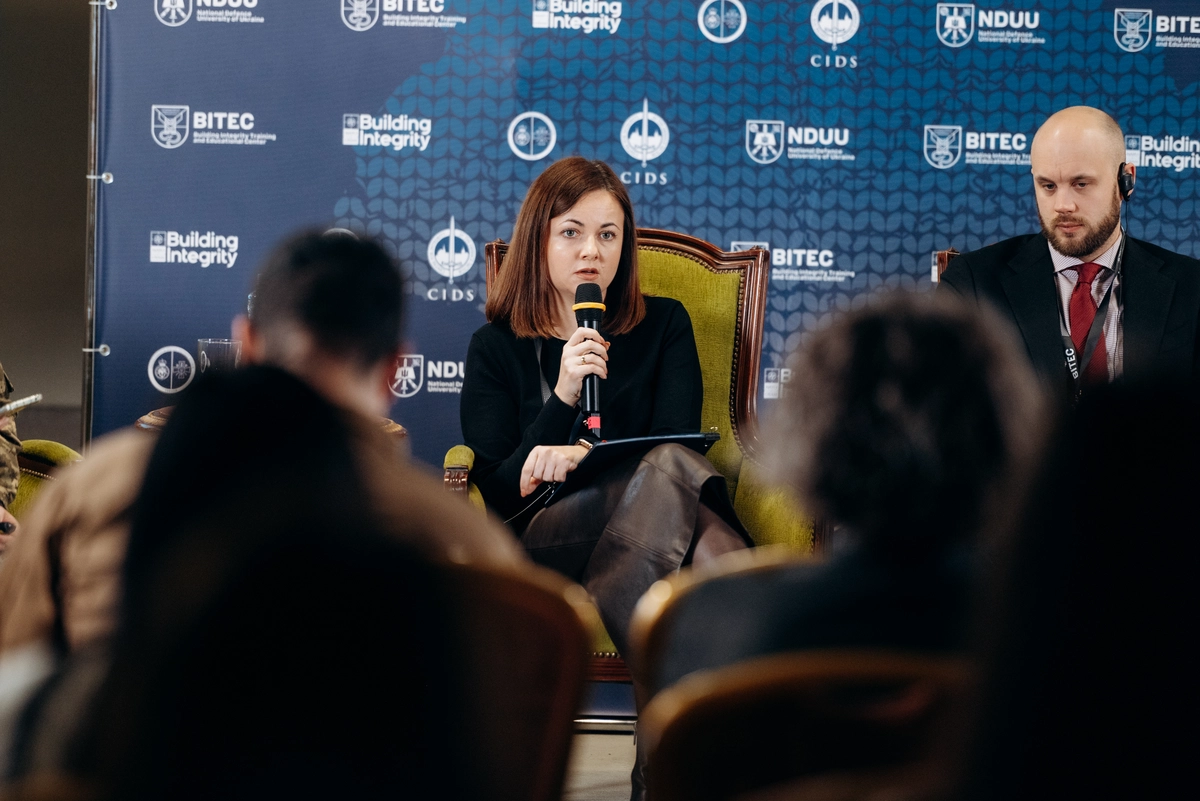
The event was initiated by the National Defence University of Ukraine in cooperation with the Ministry of Defence of Ukraine and international partners.
We would like to remind you that a series of events dedicated to the implementation of international standards in the field of security and defence took place at the NACP.