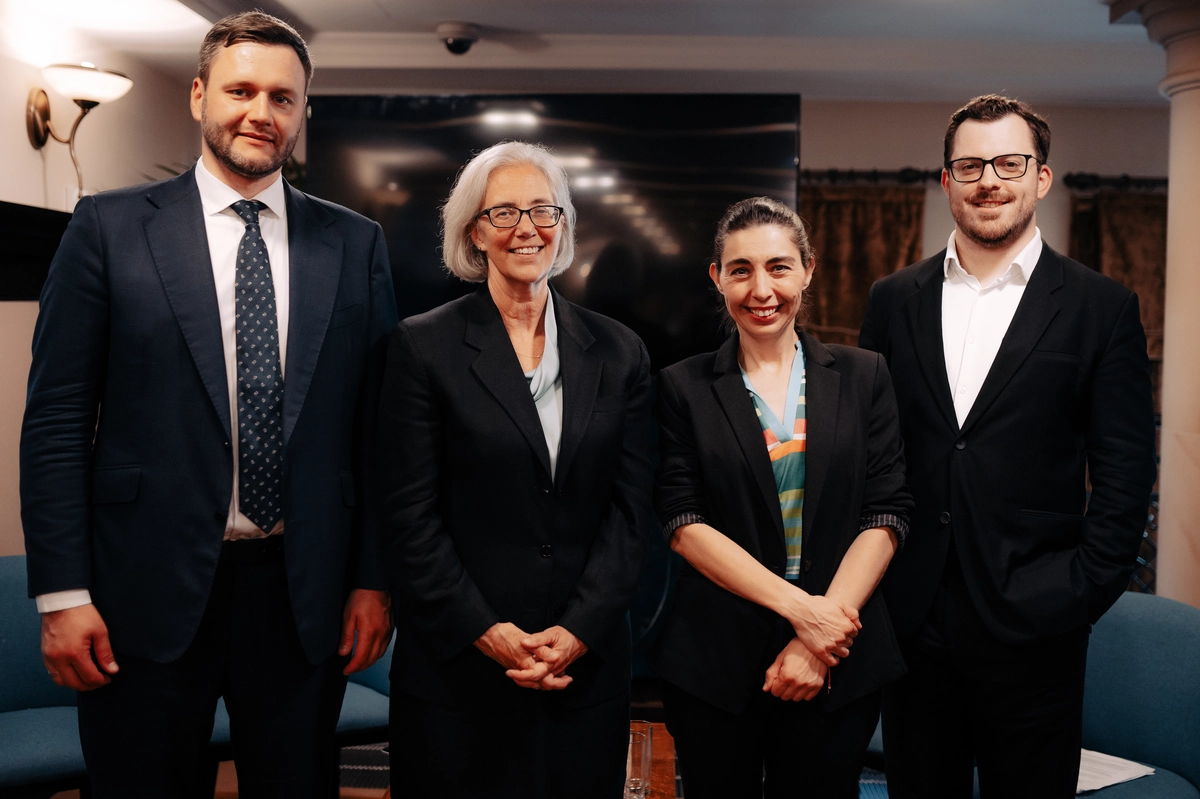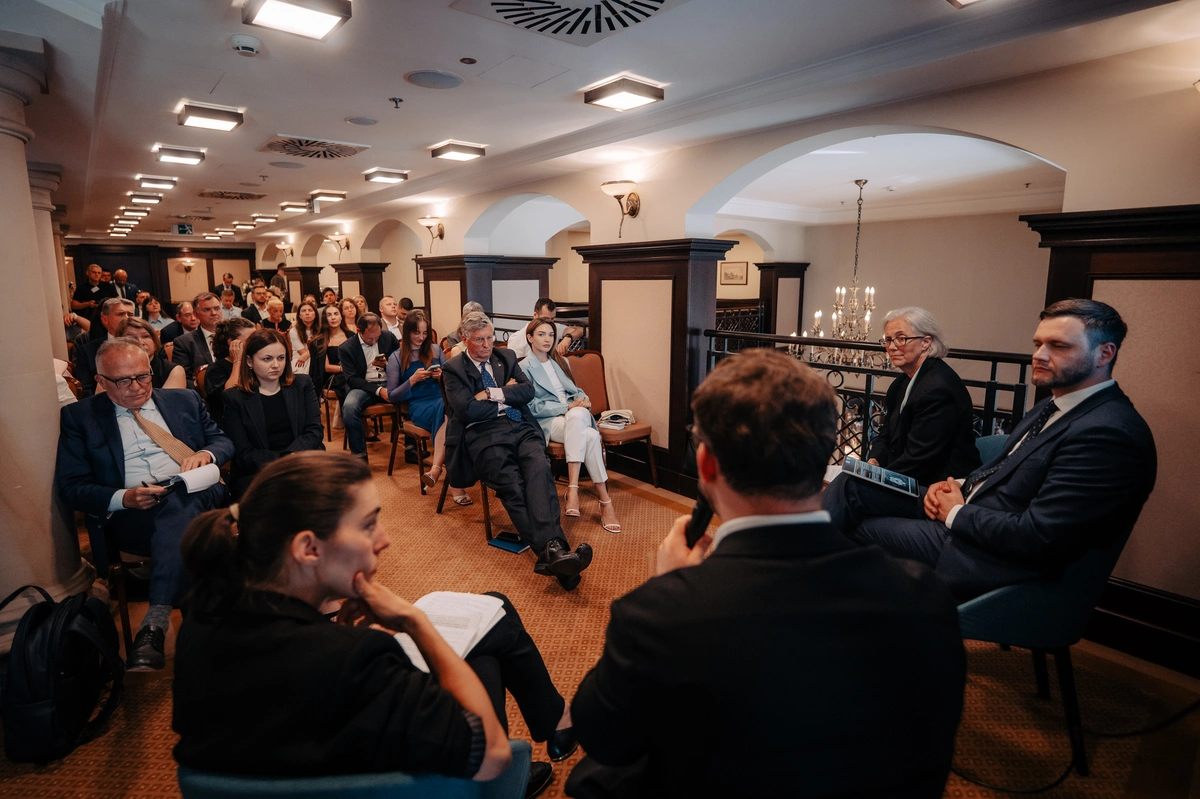


On the sidelines of the Ukraine Recovery Conference (URC 2026) in the city of Gdańsk (Republic of Poland), a discussion was held dedicated to the challenges of governance, trust-building, and partnership in Ukraine's defence sector. The official side event was organised by the team of the National Agency on Corruption Prevention (NACP) jointly with the Ministry of Defence of Ukraine, the Basel Institute on Governance, and the Foundation for Institutional Development (FID).
Today, the Ukrainian defence sector is rapidly integrating into the broader European security system. However, the expansion of international partnerships and technological integration requires an unprecedented level of institutional trust, transparency, and integrity.
“In procurement, it is not the process itself that matters, but the high-quality, efficient, and timely provisioning of the front line. This is precisely why we are shifting defence procurement to tender procedures, creating an environment of healthy competition for manufacturers, and opening opportunities for easy market entry. Our approach consists of data-driven decision-making, minimising human involvement, transparency, and anti-corruption controls. There are already successful examples—namely, the procurement of 155mm artillery shells and pickup trucks. We have achieved significant savings, diversified supplies, and ensured speed without compromising on quality. Going forward, we will scale up effective solutions. Even during the war, we are building a system where every decision is explained, verified, and controlled. First and foremost, this is so that the military receives exactly what they need: quickly, with high quality, and for reasonable money,” noted Mstyslav Banik, Deputy Minister of Defence of Ukraine, who joined the event online.
Head of the NACP Viktor Pavlushchyk reminded that the NACP has been designated as the National Coordinator for Ukraine's cooperation with NATO in the field of building integrity. Therefore, the corruption prevention tools available at the NACP focus specifically on building integrity within the security and defence sector. An important tool in this work is the BI Defence Community platform, created to consolidate the efforts of all sector bodies around unified approaches to preventing corruption in accordance with international standards. The NACP also conducts strategic analysis of corruption risks in the field of defence procurement, particularly during the procurement of UAVs, and together with the Ministry of Defence, implements recommendations to minimise corruption risks throughout the entire cycle: from planning to utilisation. This approach allows for the effective and comprehensive implementation of NATO recommendations.
“Wartime challenges require quick decisions, but the simplification of procedures cannot come at the expense of transparency and integrity. Our priority is the defence sector and procurement: the new anti-corruption strategy is adapted to the realities of martial law. Even during the active phase of the war, we continue to build anti-corruption mechanisms in defence procurement, because transparency and accountability are a guarantee of long-term investments in our defence-industrial complex and integration into the Euro-Atlantic security system. The trust of our partners is a weapon, just as important as air defence systems or artillery,” noted the Head of the NACP.
Oleksandr Plachynta, Head of the International Military Assistance Monitoring Department of the Ministry of Defence of Ukraine, emphasised that the most systemic flaw of the past was the lack of data in decision-making.
“Since the beginning of March, we have formally established an approach: the effectiveness of UAVs for procurement purposes is determined by system data on actual hits. This eliminates subjectivity and allows us to confidently tell our partners exactly what is worth financing. This approach is already helping to attract billions of euros for the Ukrainian defence industry. We hit 90% of targets with Ukrainian drones—therefore, funding this capability, based on data, is critically important,” he noted.
The discussion was summarised by Iryna Novakova, Head of the NATO-Ukraine Comprehensive Assistance Package project.
“Ukraine procures quickly and on a large scale, while intensifying its focus on integrity—this is logical, because every euro that did not go to corruption works for victory. NATO supports Ukraine in the digitalisation of procurement, strengthening cooperation mechanisms with law enforcement agencies, and forming a culture of integrity through training and education. This is not just about today's war—it is about sustainable institutions and Ukraine's role as a significant security partner for the Euro-Atlantic space,” she noted.
The discussion was moderated by Elizabeth Andersen, Executive Director of the Basel Institute on Governance.
The event was attended by representatives of government institutions of Ukraine, development partners, the defence industry, as well as representatives of the public and think tanks.
For reference: The Ukraine Recovery Conference (URC 2026) takes place on June 25–26, 2026, in the city of Gdańsk (Republic of Poland).
This year, a special feature of the Conference is the new "Security Dimension" initiated by Poland. It focuses on strengthening Ukraine's defence capability as a key prerequisite for further reconstruction. The topics cover the development of air defence, unmanned technologies, humanitarian demining, the protection of critical infrastructure, the countering of disinformation, and partnerships in the defence industry. URC 2026 is designed to consolidate international support for the recovery of Ukraine and stimulate investment in the Ukrainian economy.