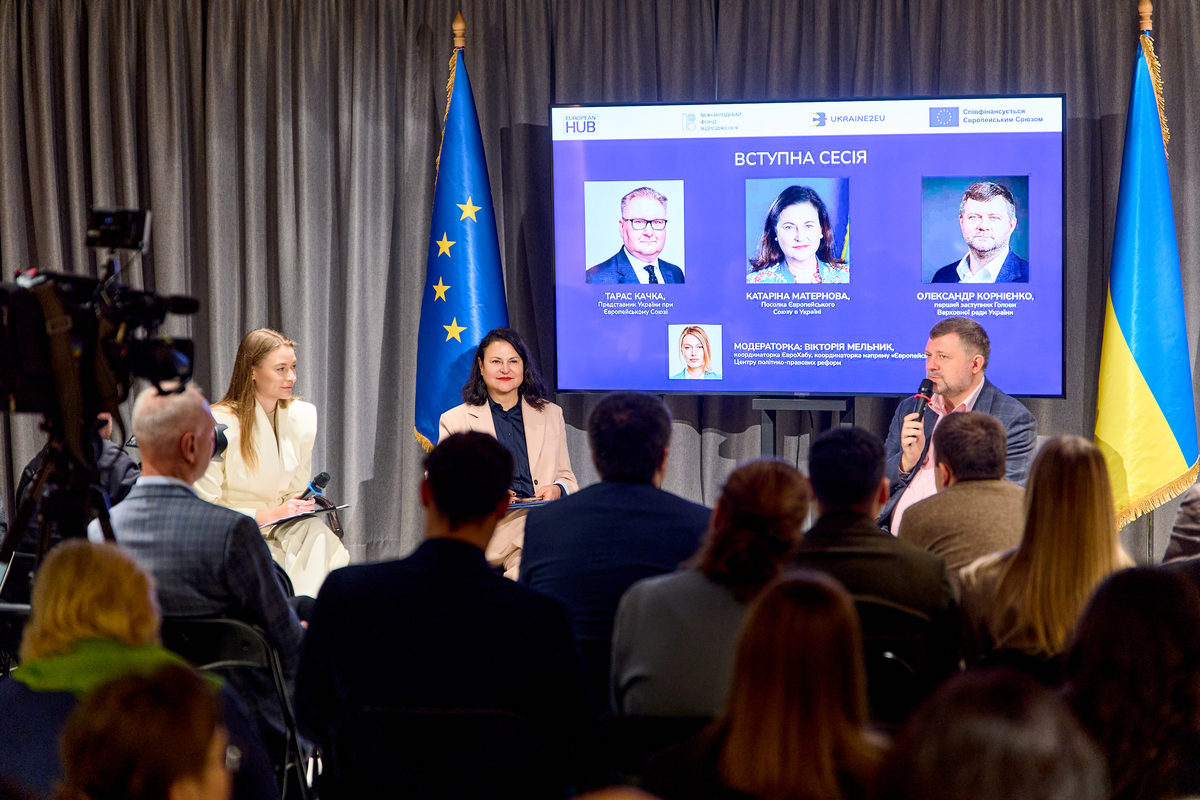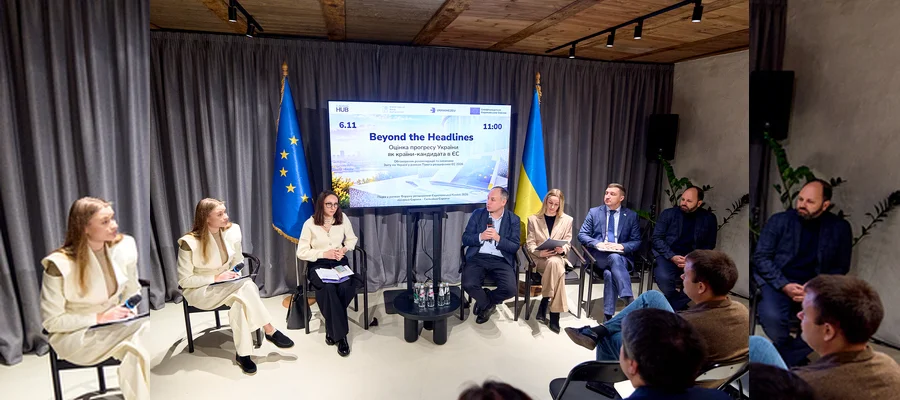
Individual anti-corruption measures will not deliver sustainable results unless the rules and governance processes that create conditions for corruption are systematically changed. Therefore, reforms in corruption-prone sectors must be interconnected and coordinated within a unified state policy. This was emphasised by Dmytro Kalmykov, Deputy Head of the National Agency on Corruption Prevention (NACP), during the discussion “Beyond the Headlines. Assessing Ukraine's Progress as an EU Candidate Country”.
Commenting on the 2026 European Commission report on Ukraine's progress under the European Union Enlargement Package (the Report), Dmytro Kalmykov highlighted two important developments in the fight against corruption: the European Commission positively assessed the work of specialised anti-corruption bodies and acknowledged the National Agency's development of the Anti-Corruption Strategy for 2026–2030 (the Strategy), which will define state policy priorities for the next five years.
According to the NACP Deputy Head, the Strategy is important not only because it takes into account the key initiatives and reforms advocated by the European Commission. Above all, it should lay the foundation for a systematic, consistent anti-corruption policy based on data analysis.
“Corruption is generally not a collection of isolated problems, each of which can be resolved through a separate legislative amendment or institutional reform. It is a complex phenomenon often caused by shortcomings in the regulatory framework, public administration, a lack of transparency in procedures, and ineffective oversight. Therefore, comprehensive, logical, well-considered systemic changes are needed, in which individual reforms complement and reinforce one another and eliminate the conditions that give rise to corruption in different sectors. This means moving from addressing the consequences of corruption to systematically eliminating its root causes,” said the NACP Deputy Head.
At the same time, the effectiveness of anti-corruption policy depends on the coordinated efforts of all institutions involved. Therefore, following the adoption of the Strategy by the Verkhovna Rada, the NACP's primary task will be to develop the State Anti-Corruption Programme and launch a full cycle of coordination, monitoring and evaluation of its implementation. The transition from preparing policy documents to implementing the measures they envisage should become one of Ukraine's key achievements by the time of the next European Commission report.
Among the NACP's immediate priorities, Dmytro Kalmykov also highlighted completing, jointly with the Ministry of Justice, an analysis of the new EU Directive on combating corruption and improving statistics on pre-trial investigations, court proceedings and the enforcement of final judicial decisions in corruption cases. In addition, the Agency is working on legislative amendments concerning the regulation of conflicts of interest, including restrictions on gifts, activities after leaving public office and the transfer of corporate rights. It is also working to strengthen financial control, improve interagency cooperation and expand access to foreign data to enhance declaration verification.
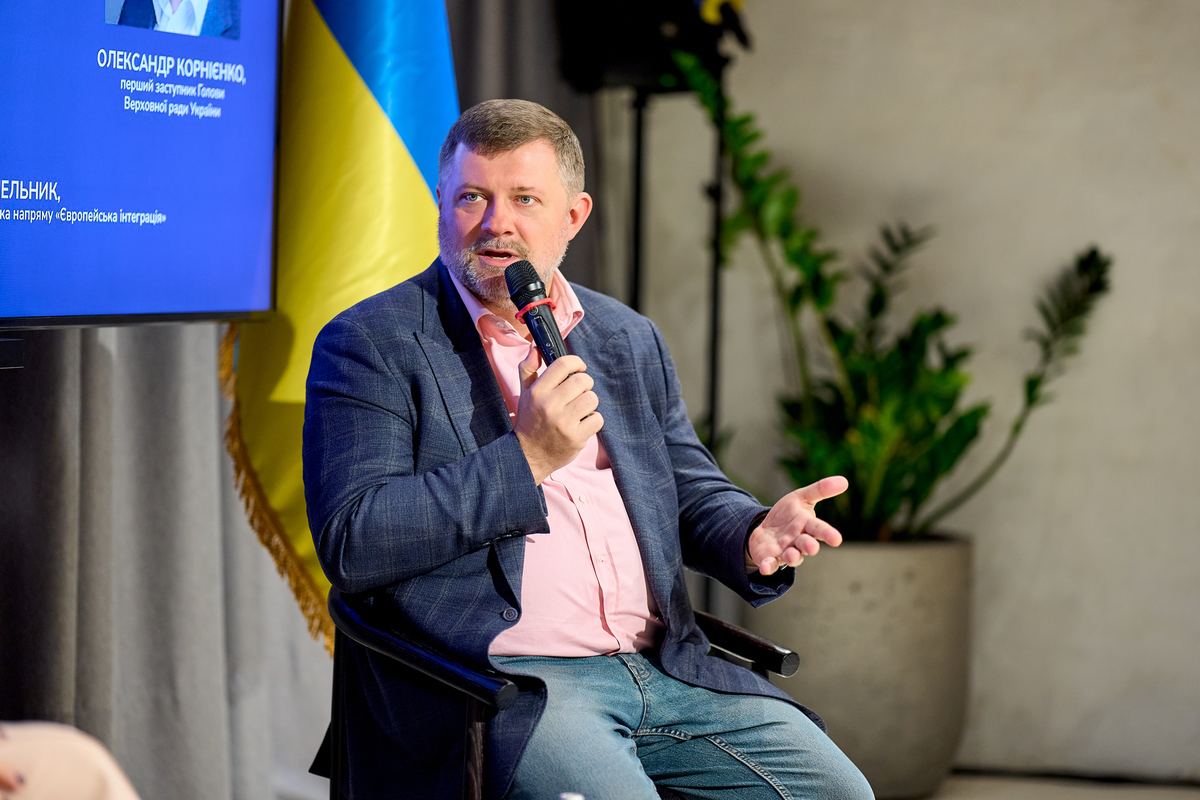
The discussion of the Report's findings and further steps was also attended by Katarína Mathernová, Ambassador of the European Union to Ukraine; Taras Kachka, Representative of Ukraine to the European Union; Oleksandr Korniienko, First Deputy Chairman of the Verkhovna Rada of Ukraine; and representatives of public authorities and the expert community.
The event was organised by the European Hub civic union with financial support from the International Renaissance Foundation and the Ukraine2EU Programme. It was held as a side event of the EU Enlargement Forum 2026, “Wider Europe – Stronger Europe”, an initiative of the European Commission.
For reference
On 5 November 2026, the European Commission published its report on Ukraine as part of the 2026 EU Enlargement Package. The document assesses Ukraine's progress in implementing reforms on its path towards European Union membership and sets out recommendations for further steps.
In the fight against corruption, the European Commission acknowledged the generally effective functioning of the institutional framework and the continued independent and effective operation of specialised anti-corruption bodies. At the same time, it emphasised the need to accelerate reforms and continue implementing the roadmaps on the rule of law, the functioning of democratic institutions and public administration reform, as well as the Action Plan on National Minorities. The European Commission's recommendations also include the adoption of a new Anti-Corruption Strategy.
The full text of the Report in English is available here.