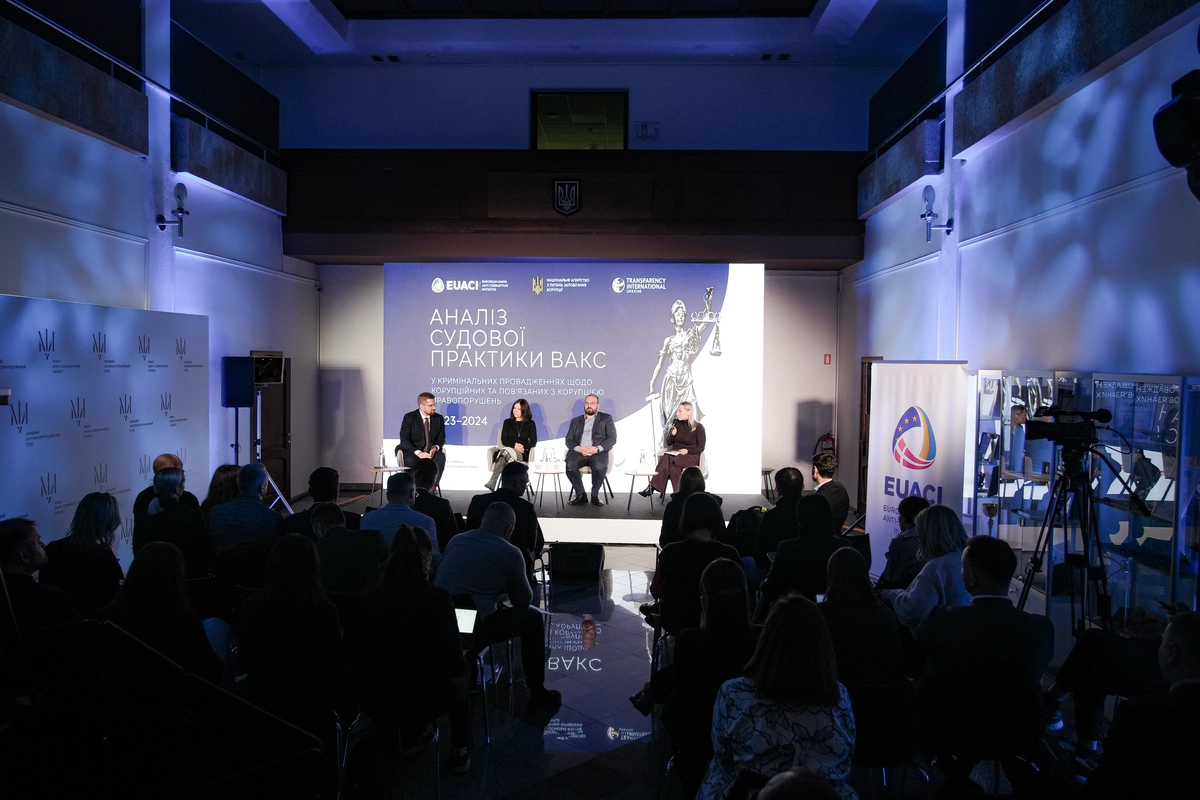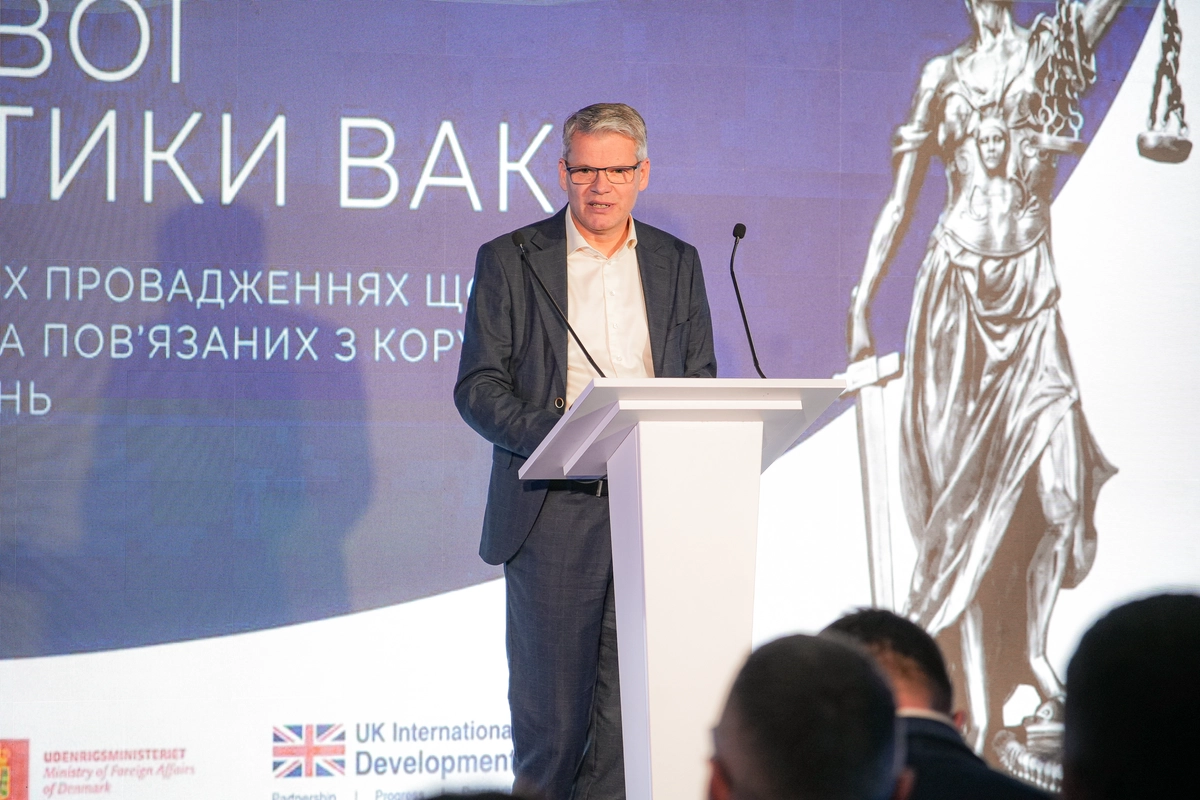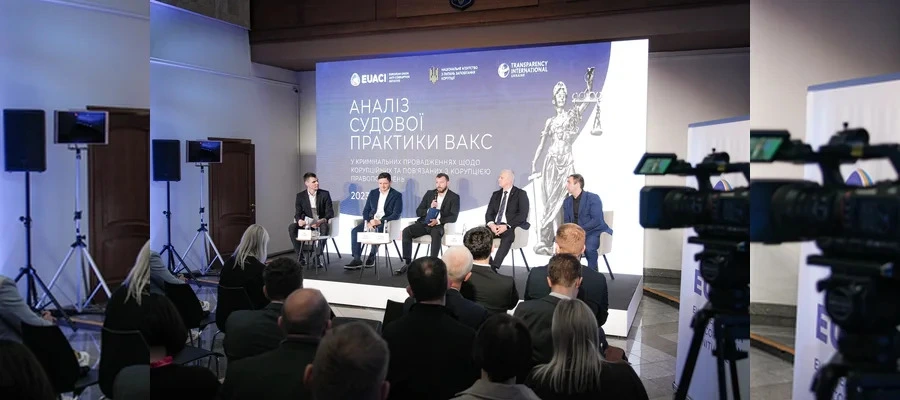
The High Anti-Corruption Court (HACC) hosted a presentation of the findings from an analysis of the judicial practice of the HACC and its Appeals Chamber (AC HACC) covering 2023–2024.
The discussion brought together judges of the HACC and AC HACC, Members of Parliament, and representatives of the National Agency on Corruption Prevention (NACP), the National Anti-Corruption Bureau of Ukraine (NABU), the Specialized Anti-Corruption Prosecutor's Office (SAPO), the Ministry of Justice, the defense bar, civil society, and international organizations.
The analysis demonstrated that on most key issues of criminal and criminal procedural law, the HACC has established a fairly consistent and predictable practice. At the same time, certain challenges remain, particularly those affecting the length of court proceedings. Specifically, the median duration of case consideration stood at 581 days, 17% of cases remained pending for more than four years, and 7.4% of proceedings were closed due to the expiration of the statute of limitations. However, in the first half of 2025, the average duration of case consideration dropped by nearly 200 days, reaching 451 days.
The authors of the study attribute this positive trend in reducing overall trial times primarily to the introduction last year of single-judge adjudication for most criminal proceedings (in the first instance), as well as an increase in the share of verdicts based on plea agreements.
Among other factors significantly impacting the effectiveness of court proceedings, the researchers highlight the abuse of procedural rights, unexcused absences of trial participants, inconsistent approaches to applying certain provisions of criminal legislation, and difficulties with applying special confiscation and approving plea agreements.
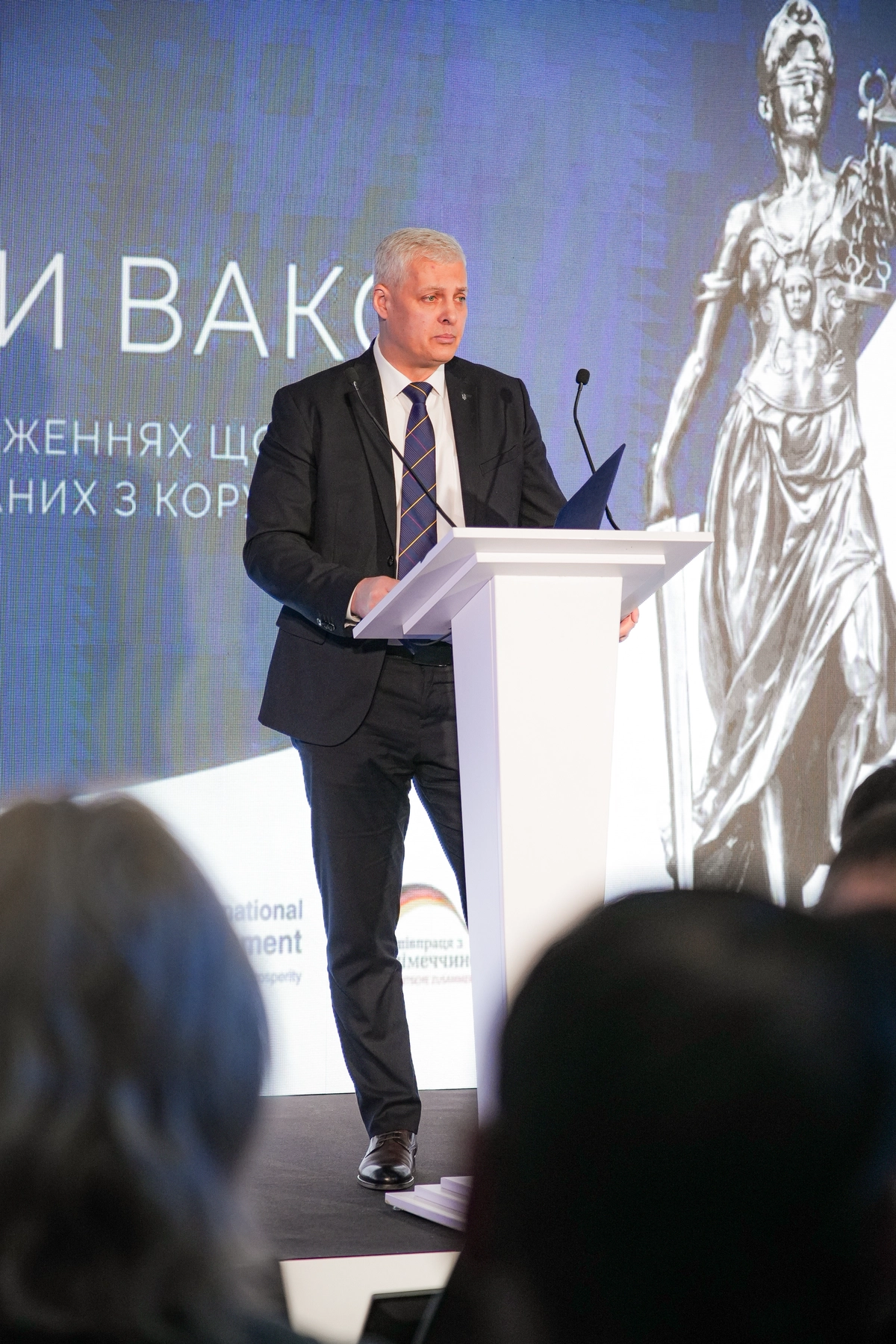
"The chosen structure and methodology of the study allowed us not only to analyze the application of current legislation, but also to identify problematic aspects of legal regulation that require additional attention and to formulate proposals for further legislative amendments," emphasized NACP Deputy Head Dmytro Kalmykov. He also underscored the need for a comprehensive approach combining legislative changes with improvements in judicial practice and court administration.
Notably, several of the study's recommendations have already been reflected in NACP legislative initiatives. Specifically, Draft Law No. 16043 aims to ensure proper momentum in case consideration by reallocating HACC resources, while Draft Law No. 16152 introduces procedural tools to counter the abuse of procedural rights. Both bills hold European integration status and are linked to Ukraine's commitments in the areas of the rule of law and anti-corruption. They are currently awaiting consideration by the Verkhovna Rada of Ukraine.
The study of HACC judicial practice was conducted by experts from Transparency International Ukraine at the request and with the support of the EU Anti-Corruption Initiative in Ukraine (EUACI).
The full text of the study is available via the link.
Presentation materials: https://cutt.ly/jyOVKLmb