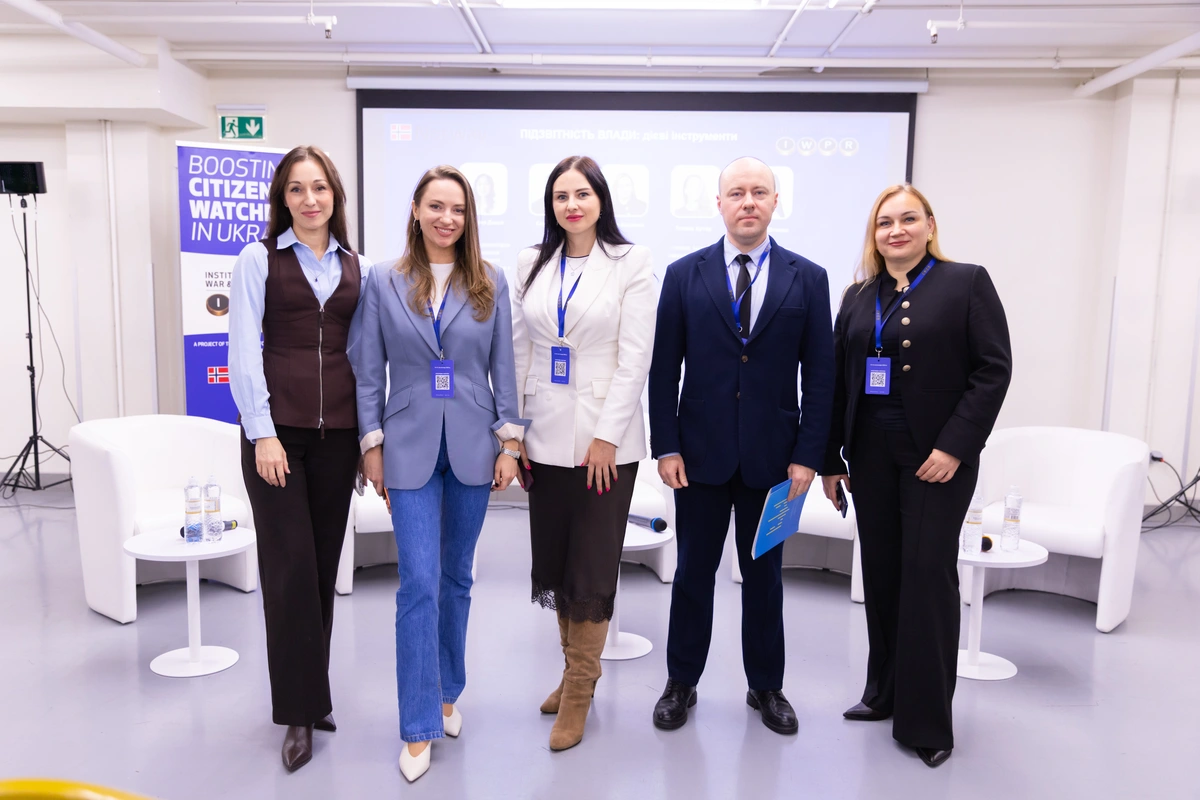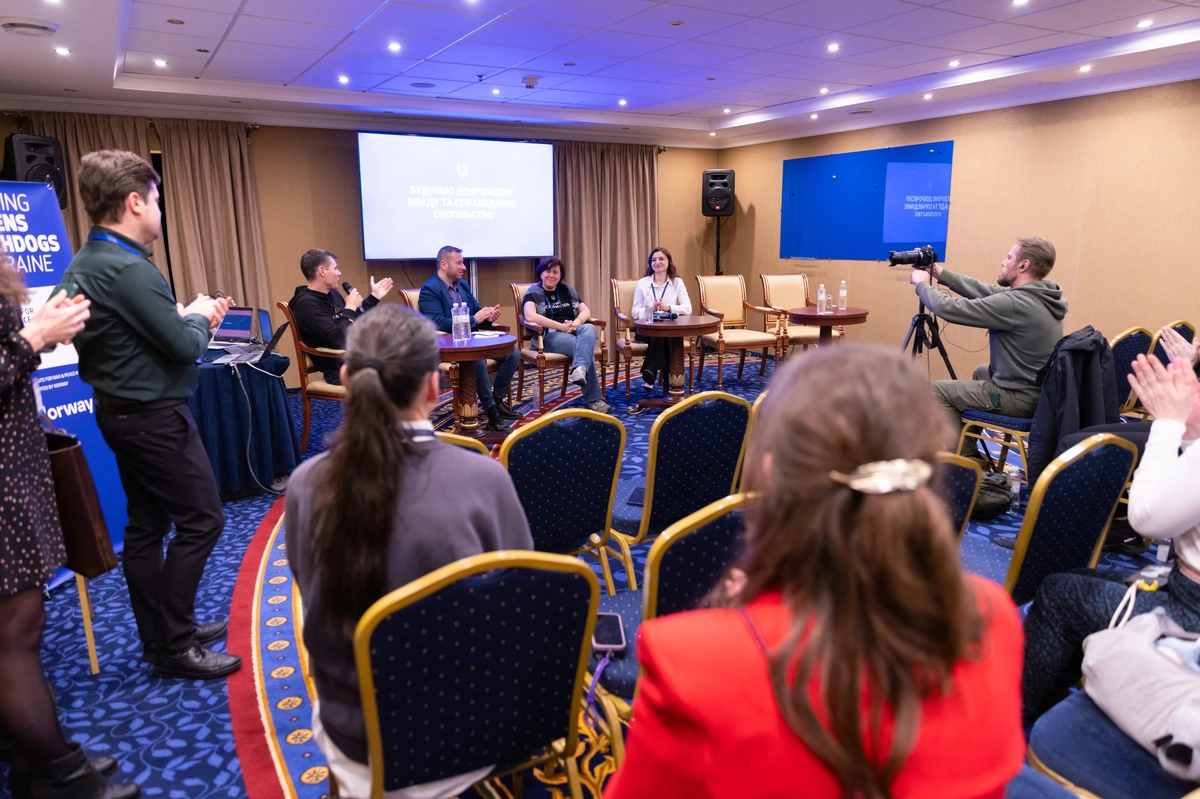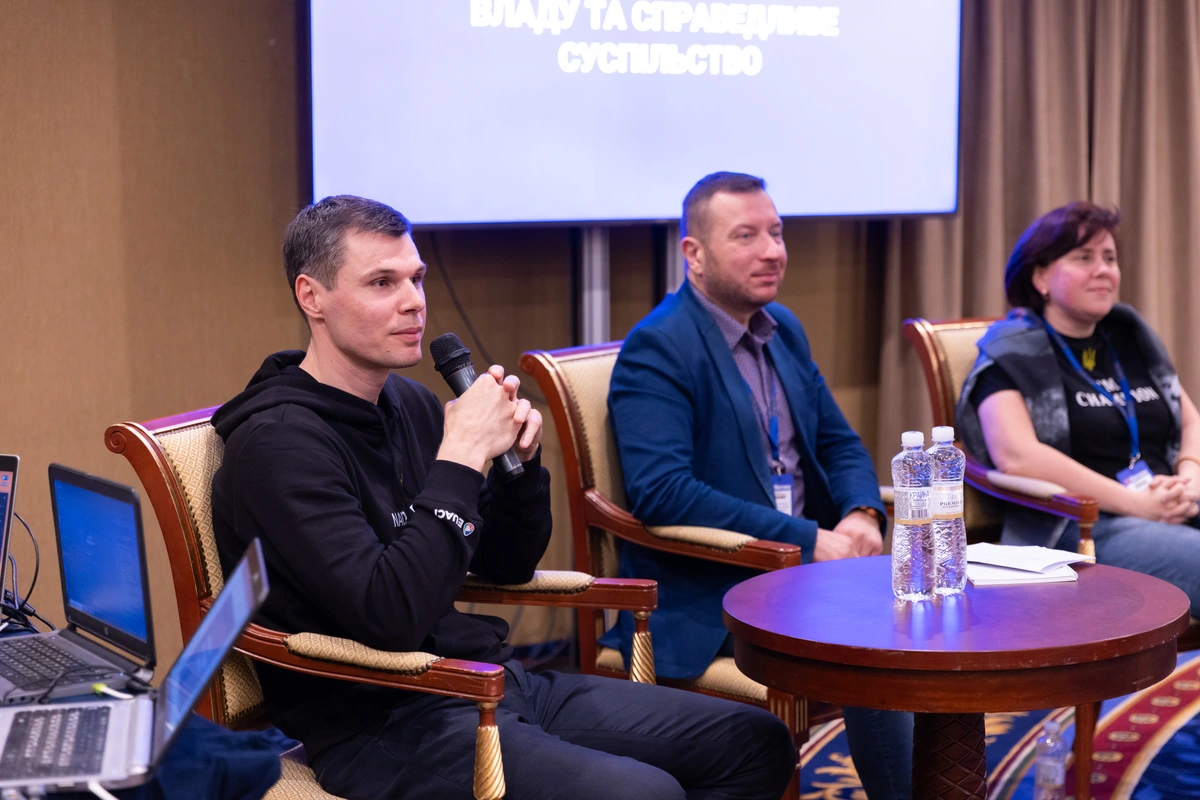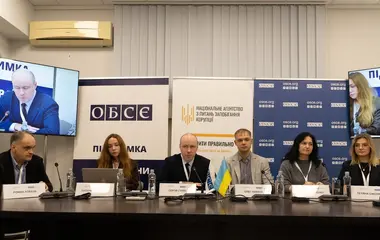

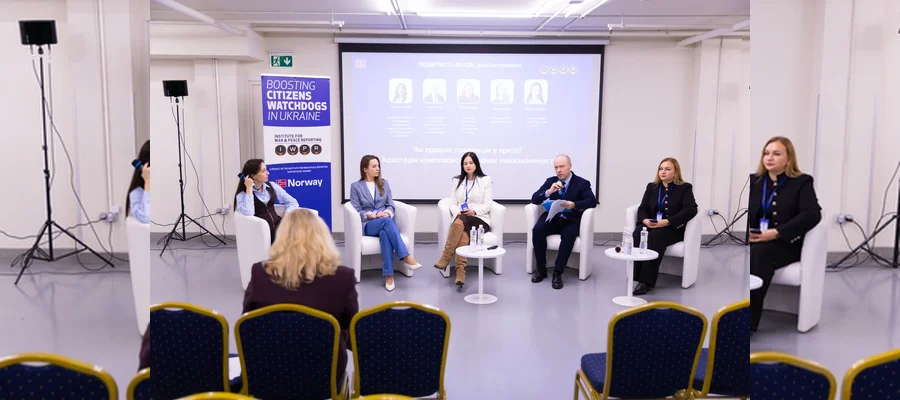
Representatives of the National Agency on Corruption Prevention (NACP) took part in the forum “Government Accountability: Effective Tools for Activists and Journalists”. NACP Deputy Head Serhii Hupiak spoke at the panel “Does Prevention Work in Times of Crisis? Adapting Compliance in Conditions of Uncertainty”.
Anna Kovtunenko, Head of the NACP’s Department of Information Systems, Analytical Work and Information Protection, presented changes to the Agency’s registers introduced in response to public requests during the panel “How Can Open Data from NACP Resources Support Investigative Journalism: Practical Tools?”
Ilona Katushynska, Head of the Department for Developing Legal Positions on Asset Declaration and Conflicts of Interest, spoke about investigative journalism from the perspective of a state anti-corruption body during the panel “The Impact of Investigative Journalism: How to Make a Story Break Through?”
Anti-corruption policy in times of crisis
NACP Deputy Head Serhii Hupiak noted that the draft Anti-Corruption Strategy identifies 16 areas with the highest corruption risks. These include security and defence, recovery, public procurement, taxation and customs. Tight deadlines, for example, when restoring energy infrastructure, increase these risks. That is why information about contractors, the scope of work and its outcomes must remain accessible for public scrutiny.
“During the war, public authorities and enterprises take on new tasks, manage different volumes of resources and change their procedures. Corruption risks change accordingly. That is why an anti-corruption programme must be a practical tool: it should help identify the most vulnerable processes, establish specific safeguards and assess whether they are working,” Serhii Hupiak said.
He recalled that in 2022 the NACP temporarily suspended the approval of anti-corruption programmes submitted by public authorities. On 1 June 2025, the procedure was resumed for programmes and amendments approved after that date. The Agency provides public authorities with methodological and advisory support in developing programmes focused on current risks and specific mitigation measures.
Serhii Hupiak stressed that anti-corruption programmes should be assessed based on the results achieved through their measures, rather than merely on the process of implementation.
“Approving a document, conducting training or introducing an inspection are necessary steps. But the key question is what has changed in the organisation’s work: has the vulnerability in the procedure been eliminated, are the established rules being followed, and does management respond to identified risks?” he said.

According to him, the public can participate at every stage: during risk assessments, by identifying problems that the organisation may not see from within; during discussions of the programme, by assessing whether the measures address these problems; and during monitoring, by checking whether the announced changes have taken place.
The NACP has also developed the Green Paper Challenges in the Functioning and Development of the Anti-Corruption Commissioner System in Ukraine. It launches a broad discussion on systemic obstacles affecting anti-corruption commissioners, including safeguards for independence, clarity of legal status and powers, staffing and resources, professional development, and management support.
Earlier, on 7 July 2026, the Agency issued its first comprehensive guidance on the work of anti-corruption commissioners: https://cutt.ly/3yDsbe6s.
NACP registers: updates introduced in response to public requests
Anna Kovtunenko, Head of the NACP’s Department of Information Systems, Analytical Work and Information Protection, presented updates to the Agency’s anti-corruption tools, developed by the NACP team in response to requests from journalists and experts. The presentation took place during the panel “How Can Open Data from NACP Resources Support Investigative Journalism: Practical Tools?”
-
Unified State Register of Declarations (https://public.nazk.gov.ua/) — the design of the public interface has been updated and made responsive; search filters have been improved; and the “Search everywhere” function now supports searching for phrases. Users can also compare declarations. In addition, the documentation and reference directories for the Public API have been expanded, and new filtering options have been added for place of employment (EDRPOU code or name), registered place of residence and actual place of residence (KATOTTG code).
-
Unified State Register of Persons Who Have Committed Corruption or Corruption-Related Offences (https://corruptinfo.nazk.gov.ua/) — the analytical map showing records by region has been restored, and analytical data broken down by articles of the Code of Ukraine on Administrative Offences and the Criminal Code of Ukraine has been expanded. Users can also view a ranking of regions by the number of records.
-
Unified State Register of Political Party Reporting (https://politdata.nazk.gov.ua/) — consolidated information from political party reports is now available, with the option to select a reporting period (for example, a specific quarter or a year). Filtering options and data export capabilities have also been expanded.
“This year, we have focused on improving the registers in response to requests from journalists and experts. It is important to be able to find the required data quickly and work with it independently using filters, declaration comparisons, data exports and the Public API. We encourage everyone to use the registers and share feedback and ideas for improving their functionality. We will continue to take constructive proposals from the public into account to the extent of our capabilities,” Anna Kovtunenko said.
The impact of investigative journalism: a government authority’s perspective
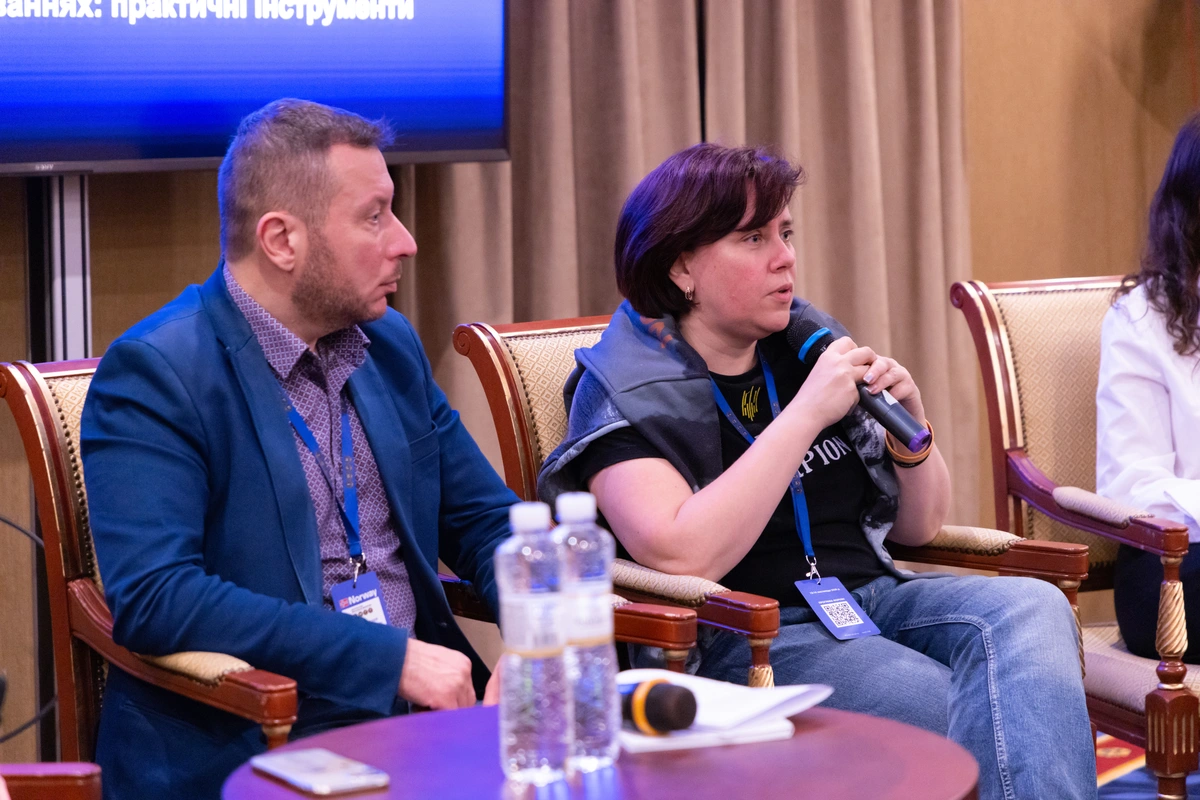
Ilona Katushynska, Head of the NACP’s Department for Developing Legal Positions on Asset Declarations and Conflicts of Interest, explained why even high-quality investigative journalism does not always lead to the expected outcomes. She spoke at the panel “The Impact of Investigative Journalism: How to Make a Story Break Through?”
According to the Institute for Regional Press Development, only one in four investigations it monitored in the first half of 2026 had a documented response or consequence, while only one in eleven led to a concrete result or change (source). Journalists at the panel shared examples of such outcomes, while Ilona Katushynska offered another perspective: how investigative materials are viewed by employees of a state anti-corruption body. She outlined three reasons why investigations may fail to produce the expected results.
-
Failure to take the legal framework into account. First, it is important to establish whether the person featured in the investigation is subject to asset declaration requirements. For example, heads of departments at higher education institutions generally do not fall into this category. It is also important to check whether the amount of inaccurate information in a declaration meets the legal threshold for liability. Administrative liability may apply when the discrepancy between the information in a declaration and the accurate information ranges from UAH 499,200 to UAH 2,496,000 (for 2025 declarations). Amounts exceeding this threshold may entail criminal liability. For smaller amounts, disciplinary liability may apply, but the NACP is not authorised to impose it on all declarants. Finally, limitation periods must be taken into account: for example, administrative liability for false information in a 2019 declaration is no longer possible, as the limitation period is two years (three years for criminal liability).
-
Failure to submit a written report to the competent authority. Public expectations that the state should respond to investigative journalism are understandable. However, it is physically impossible to monitor every investigation published in Ukraine. A written report helps ensure that information reaches the authorities empowered to act on it. The NACP’s guide Reporting Corruption provides basic information on what, where and how to report: https://cutt.ly/1yDxjd5o.
-
Failure to consider the powers of the authority being approached. For example, a request to the NACP to initiate criminal proceedings is bound to receive a formal response, as the Agency does not have and has never had such powers.
According to Ilona Katushynska, another particularly sensitive issue is the lack of media coverage before and during investigative or administrative proceedings. Journalists fear information leaks, while premature disclosure may give those under investigation an opportunity to take pre-emptive action.
“There is work to be done on both sides. That is why I once again call on the journalistic community to build a partnership. I sincerely believe in a win-win approach! The alternative is often a situation that can be explained through the Nash equilibrium: each party chooses the strategy that is best for itself, but as a result, both achieve less than they could through cooperation,” Ilona Katushynska concluded.
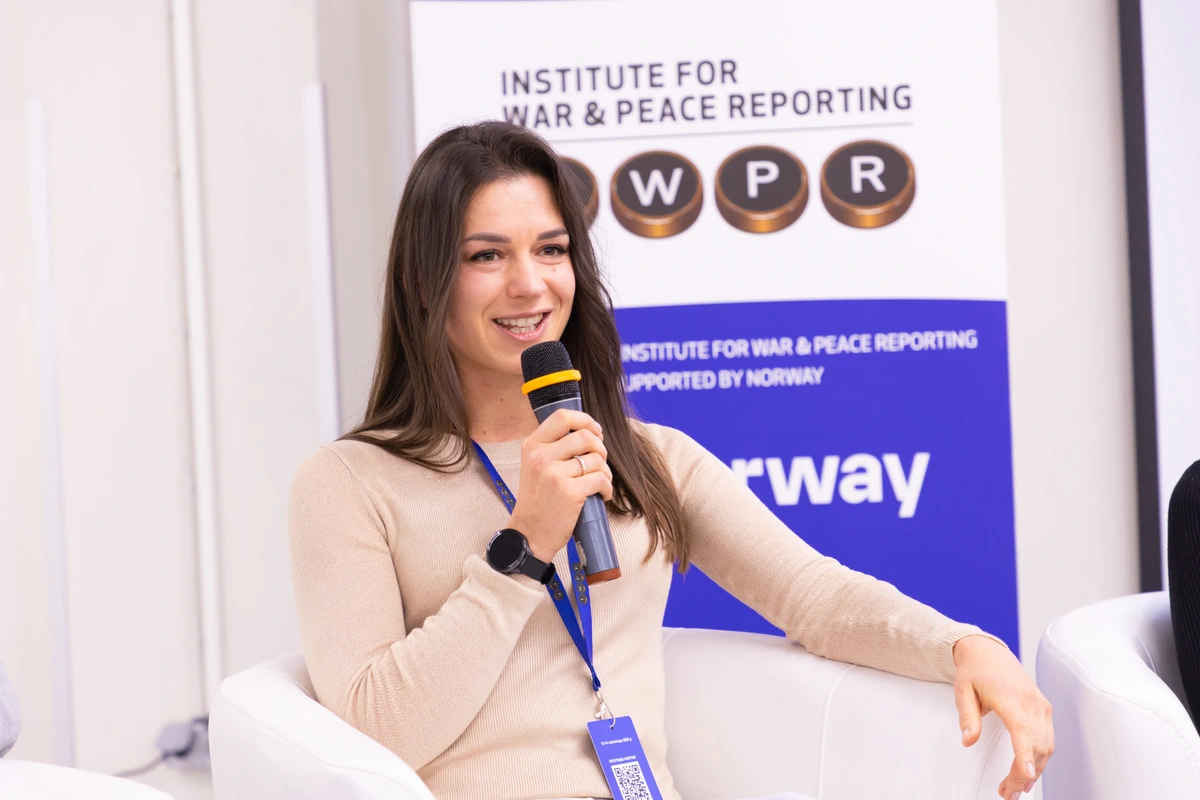
This year, the event brought together more than 190 journalists, media activists, experts and representatives of public institutions.
The forum is being held as part of the Institute for War & Peace Reporting (IWPR) project Boosting Citizens Watchdogs in Ukraine, with the support of Norad.