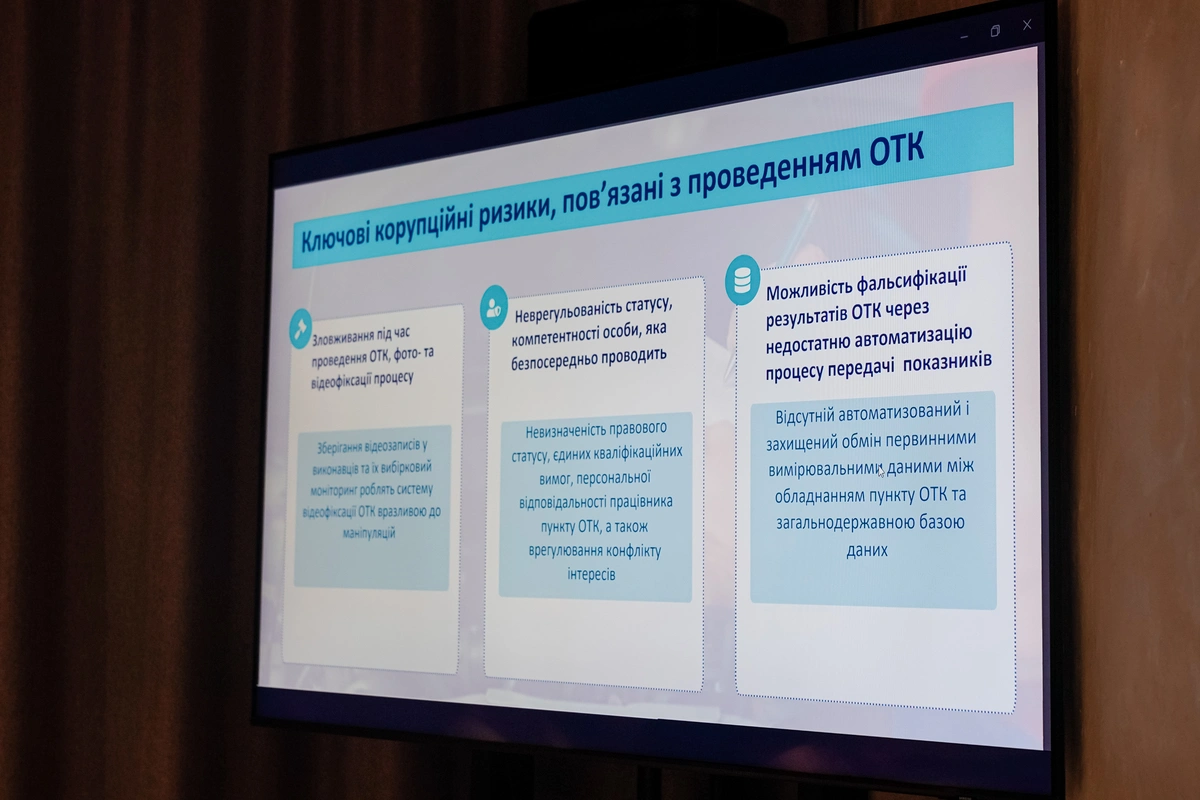


The National Agency on Corruption Prevention (NACP) presented the preliminary results of a comprehensive study titled "Corruption Risks in the Field of Mandatory Technical Inspection of Vehicles" during a public event dedicated to discussing key changes in the reform of the mandatory technical inspection (MTI) system for vehicles.
The study was conducted by NACP specialists in cooperation with the Ministry for Communities and Territories Development of Ukraine, with the support of the non-governmental organization "Together Against Corruption".
The National Program for the Adaptation of the Legislation of Ukraine to the EU Acquis identifies the absence of mandatory technical inspection for private passenger cars as one of the key problems.
Taking into account the complexity of the MTI sector and the need for further alignment of Ukrainian legislation with EU law, the Ministry for Communities Development requested the NACP to conduct a strategic analysis of corruption risks in the MTI sector to ensure the preparation of a transparent and effective legislative framework.
"Anti-corruption mainstreaming is a mandatory component of the negotiation process for Ukraine's accession to the European Union. The NACP is joining the reform of the MTI sector to minimize corruption risks and achieve concrete results on Ukraine's path toward European integration," noted Serhii Hupiak, Deputy Head of the National Agency. The study revealed systemic vulnerabilities spanning all stages of the MTI system: a fragmented market access procedure, the lack of a clearly defined legal status for the inspector (which enables the falsification of results), and the absence of an integrated oversight system.
The study revealed systemic vulnerabilities spanning all stages of the MTI system: a fragmented market access procedure, the lack of a clearly defined legal status for the inspector (which enables the falsification of results), and the absence of an integrated oversight system.
"Previous experience with the functioning of the technical inspection system has shown that without proper safeguards, the reform risks recreating the same corruption practices in a new form, but on a much larger scale," noted Olena Kryvoshei, Head of the Directorate for the Implementation of Anti-Corruption Policy in the Recovery and Socio-Humanitarian Spheres at the NACP.
Based on the results of the study, preliminary recommendations have been formulated for the Ministry for Communities Development, the Ministry of Internal Affairs, and the National Accreditation Agency of Ukraine, aimed, in particular, at implementing process automation and establishing a transparent regulatory model for the MTI system.
Work is currently underway to finalise the study to build a foundation for reforming the MTI system and preventing corruption and abuses.
The event was attended by representatives of the European Commission, the Ministry for Communities and Territories Development of Ukraine, the Main Service Center of the Ministry of Internal Affairs of Ukraine, the State Enterprise "State Road Transport Research Institute" (SE "DerzhtransNDIproekt"), as well as business and public representatives.
The summary of the study is available via the link (UA).