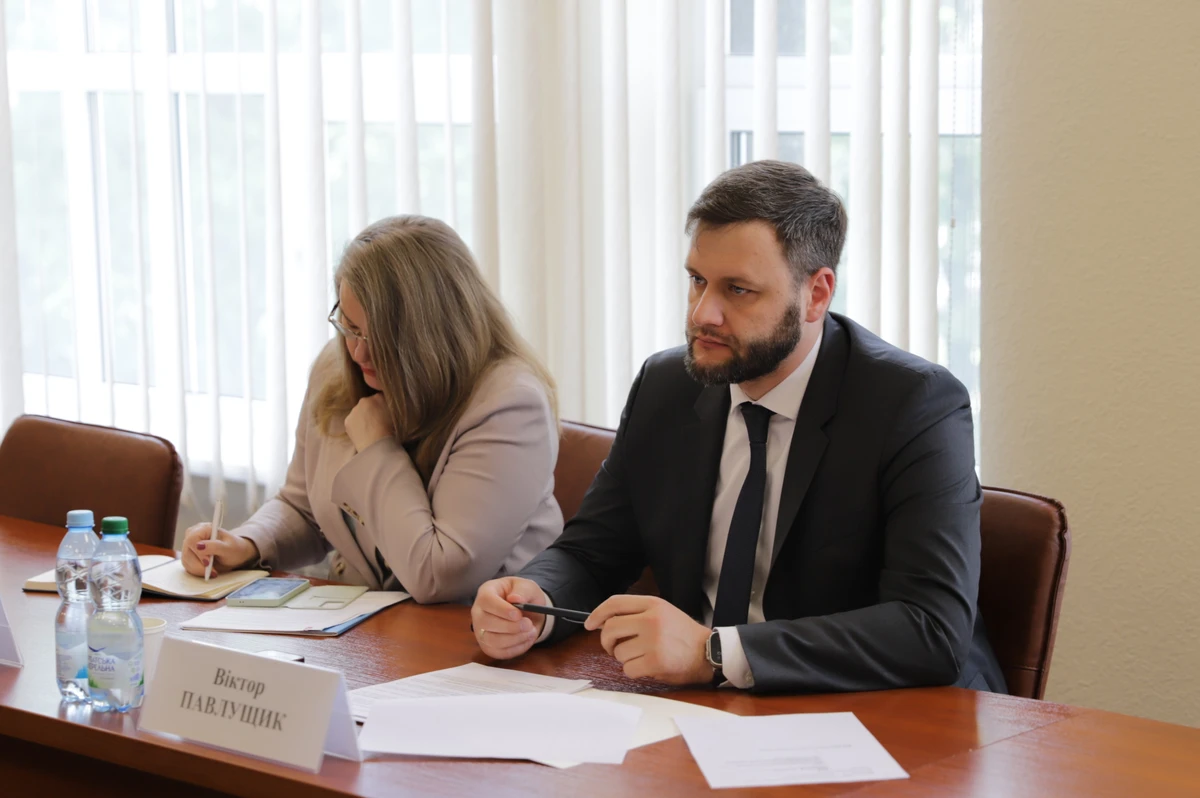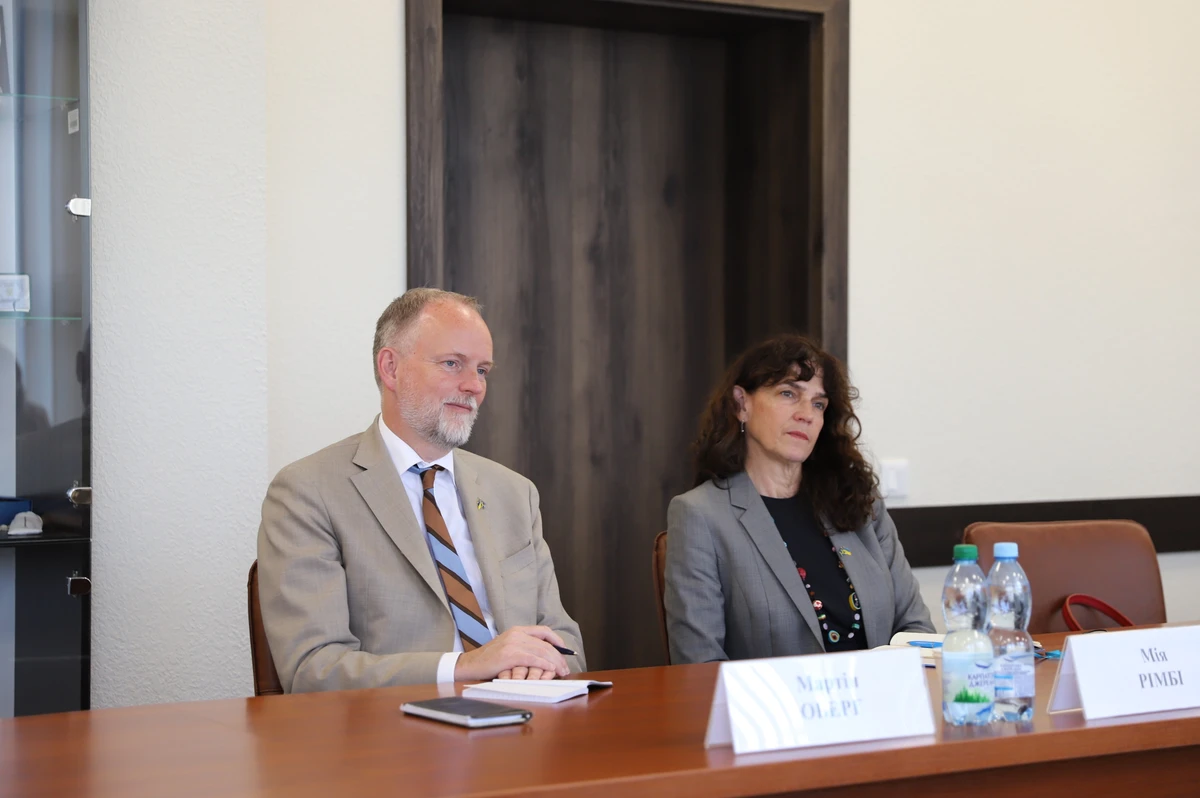

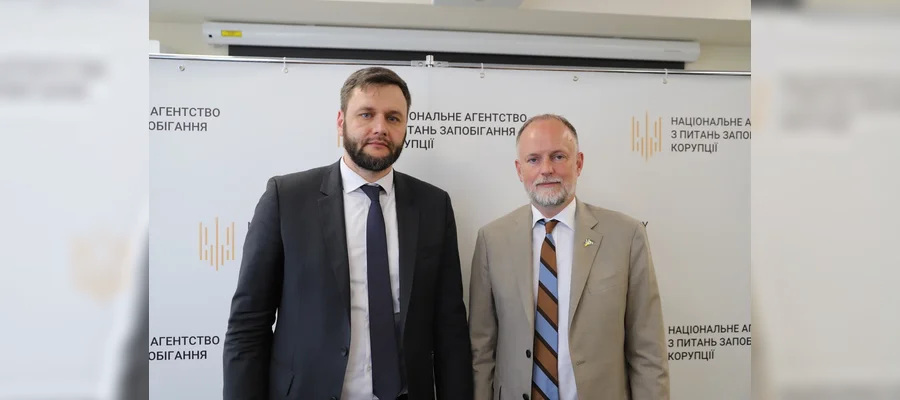
The Head of the National Agency on Corruption Prevention (NACP), Viktor Pavlushchyk, met with the Ambassador of the Kingdom of Sweden, Martin Åberg. During the meeting, they discussed deepening cooperation in corruption prevention, focusing specifically on the role of digitalising anti-corruption processes, controlling political finance, and developing modern financial control mechanisms.
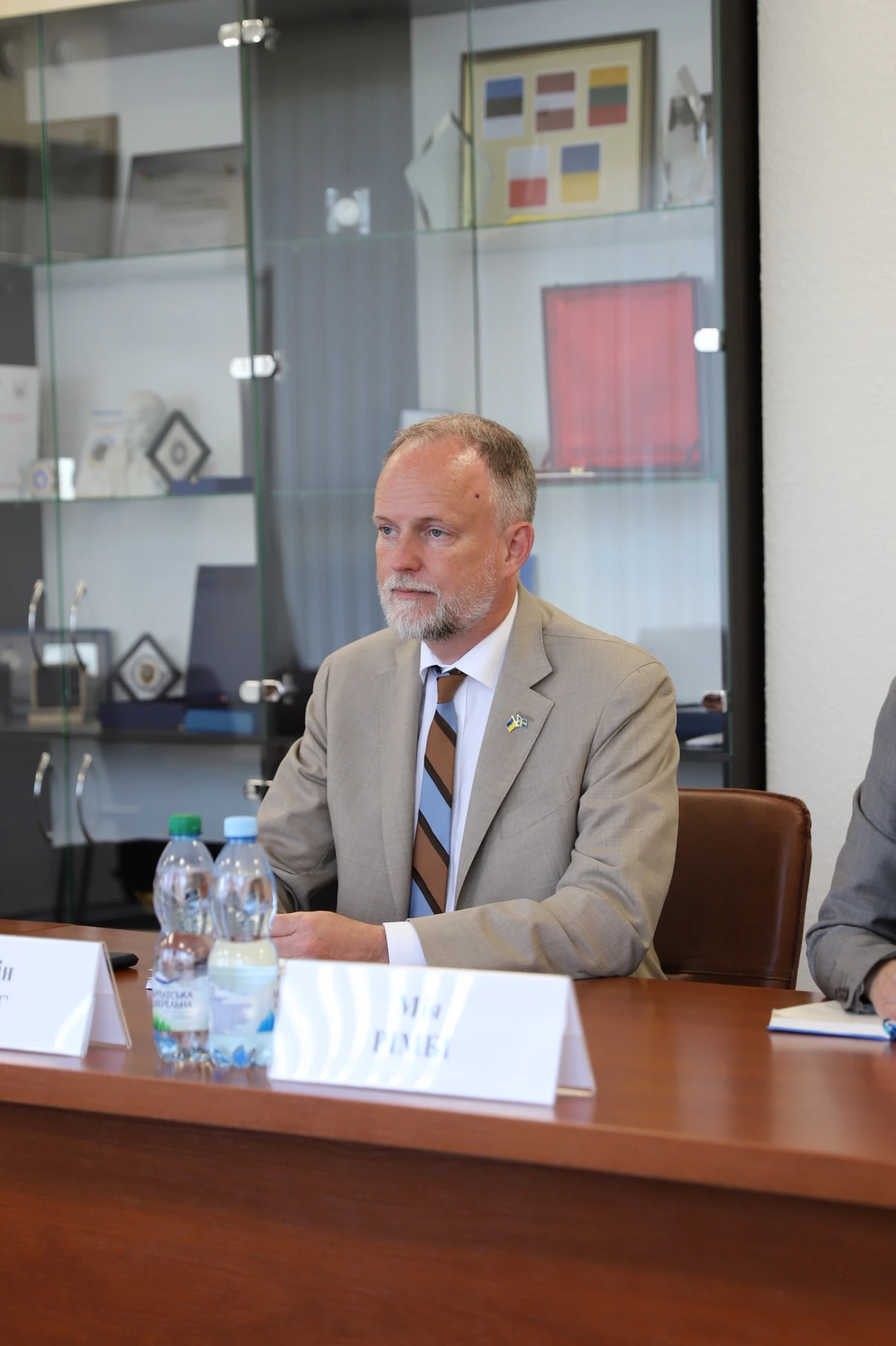
Sweden is one of Ukraine's key partners in supporting democratic reforms, developing transparent governance, and strengthening the institutional capacity of state bodies. For Ukraine, Sweden’s experience in public-sector integrity, openness in state processes, and in building a high level of public trust in state institutions is of particular importance.
During the meeting, several potential areas for further cooperation were identified, including:
-
development of digital tools for controlling political finance and election campaigns;
-
improvement of the financial control and declaration verification system, specifically regarding the verification of crypto-assets held by public officials;
-
development of analytical tools and the use of artificial intelligence technologies to detect corruption risks;
-
support for sectoral anti-corruption reforms and the implementation of the Anti-Corruption Strategy for 2026–2030;
-
expansion of expert interaction and professional development of specialists in the field of corruption prevention.
Special attention during the meeting was paid to the development of the political finance control system and the transparency of electoral processes. The discussion focused, in particular, on automating candidates' reporting, integration with banking systems, and using modern tools to analyse financial flows.
The preparation of the new Anti-Corruption Strategy for 2026–2030 was also discussed. The document is based on a conceptual approach that combines two key interconnected vectors for developing state anti-corruption policy: increasing the efficiency of the entire anti-corruption system and minimising corruption risks in the most vulnerable and strategically important areas.
Viktor Pavlushchyk emphasised that such a systemic approach, which involves sectoral reforms and the digitalisation of public services, is already demonstrating practical results in reducing petty corruption and increasing the transparency of state processes.
«Systemic reforms, digitalisation, and transparent procedures create an environment in which corruption becomes more difficult and less profitable,» the Head of the NACP stressed, noting that this is confirmed by data from the sociological study «Corruption in Ukraine 2025: Understanding, Perception, Prevalence.»
Viktor Pavlushchyk thanked Sweden for its consistent support of Ukraine, assistance in advancing democratic reforms, and shared commitment to the principles of integrity, transparency, and the rule of law.