
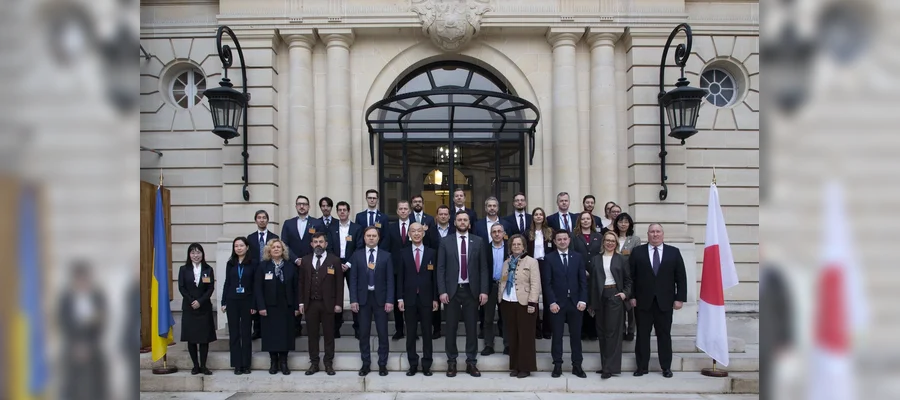
Experts and officials from the G7 countries and international organisations coordinated actions supporting anti-corruption reforms in Ukraine with representatives of Ukrainian authorities and non-governmental organisations during the fourth meeting of the Anti-Corruption Task Force for Ukraine (ACT for Ukraine), held in Paris (France).
At the meeting, Viktor Pavlushchyk, Head of the National Agency on Corruption Prevention (NACP), noted that Ukraine has reached a qualitatively new level in the context of fulfilling international obligations and developing institutional and legislative infrastructure in the field of anti-corruption policy. He recalled that last year, Ukraine received higher scores than the average for member countries of the Organisation for Economic Co-operation and Development (OECD) for the implementation of Public Integrity Indicators; the highest score in the field of anti-corruption policy among member countries of the Istanbul Anti-Corruption Action Plan; positive evaluations for effective reforms and strengthening the anti-corruption system in accordance with OECD and EU standards within the annual "Anti-corruption and Integrity Outlook in Ukraine"; and fulfilled or partially fulfilled the absolute majority of recommendations from the Council of Europe’s Group of States against Corruption (GRECO). Furthermore, the NACP received the Open Government Award for the development of the Anti-Corruption Strategy implementation system during the Ninth Open Government Partnership Global Summit. Additionally, the OECD invited Ukraine to join the Working Group on Bribery in International Business Transactions, which is a significant step toward our country's full membership in the Organisation.
“A prerequisite for achieving these results is the independence and political neutrality of anti-corruption institutions. As the body responsible for the formation and implementation of the state's anti-corruption policy, the NACP consistently adheres to these principles, showing no preference to any political or economic groups. This is particularly important given our inspection mandate regarding state funding of political parties and election campaigns, where various group interests and high corruption risks are traditionally concentrated. Under these conditions, impartiality combined with constructive institutional cooperation is a defining feature of our work on implementing anti-corruption measures,” emphasised Viktor Pavlushchyk.
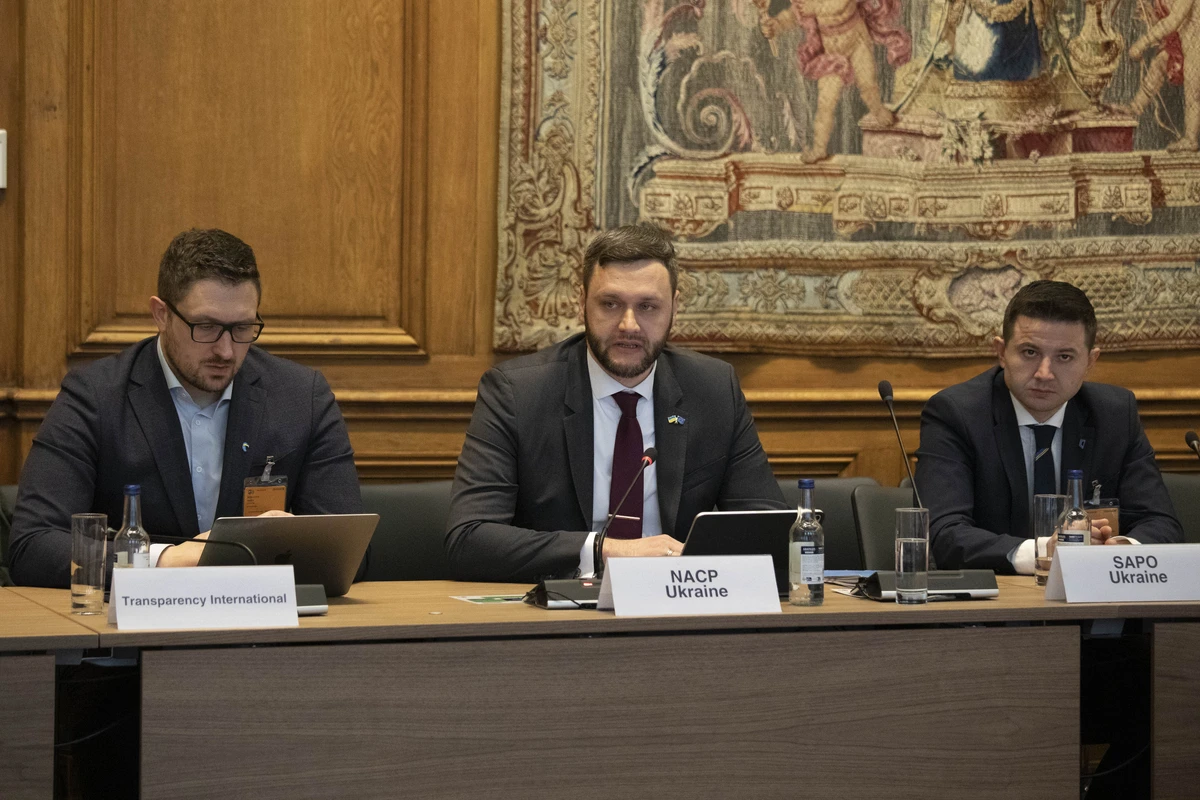
During the discussion dedicated to the identification and confiscation of assets in corruption cases, the Head of the NACP spoke about inter-agency cooperation, particularly with the Specialized Anti-Corruption Prosecutor's Office (SAPO) and the Asset Recovery and Management Agency (ARMA). According to him, within the framework of lifestyle monitoring, the National Agency has already transferred materials to SAPO in 61 cases totalling over UAH 300 million, resulting in 33 civil forfeiture lawsuits filed with the High Anti-Corruption Court (HACC) and nearly UAH 100 million recovered for the state budget. Overall, since 2019, approximately 60% of HACC decisions regarding civil forfeiture have been based on NACP materials. At the same time, cooperation with ARMA allows for the identification of illicit assets located abroad. The Agency's capabilities also significantly enhance the effectiveness of full verification of declarations by tracking the assets of declarants and their family members in foreign jurisdictions.
The Head of the NACP emphasised the need for further steps to improve the mechanisms for full verification of declarations and lifestyle monitoring (LSM). Specifically, this includes: the official recognition of the NACP as a body authorized to collect evidence and identify illicit assets; expanding the circle of persons subjects to LSM; expanding the scope of information subject to banking secrecy that the NACP can obtain in response to requests; increasing the National Agency's access to data from electronic communication providers; and taking measures to minimize risks associated with declared cash held outside the banking system, among others. Implementing these initiatives requires amendments primarily to the Civil Procedural and Criminal Codes, as well as the Laws "On Prevention of Corruption" and "On Banks and Banking Activity."
Viktor Pavlushchyk separately informed the partners about the National Agency's role in European integration procedures and the preparation of the next Anti-Corruption Strategy.
"The European integration process has brought about fundamental changes in Ukraine's anti-corruption policy—anti-corruption has ceased to be a separate block in negotiations and is now a priority in each of the 33 negotiation chapters. Under these conditions, the NACP plays a unique role by ensuring the integration of anti-corruption issues into all negotiation clusters. This means implementing corruption risk analysis, integrity guarantees, transparency standards, and compliance mechanisms into sectoral reforms—ranging from energy and transport to digitalisation and public finance. As a result, anti-corruption has become a key element of the entire architecture of Ukraine's accession to the EU," noted the Head of the NACP.
He added that the National Agency took advantage of the opportunity to integrate anti-corruption issues and utilised the analysis conducted as part of the screening of Ukrainian legislation during the development and preparation of the new Anti-Corruption Strategy for 2026–2030. The document covers an unprecedented number of state functions and focuses on the areas most vulnerable to corruption. Currently, the draft Strategy is undergoing the stage of inter-agency approvals and an EU compliance assessment. Following the completion of the coordination procedures, the NACP expects the support of the relevant draft law in the Verkhovna Rada of Ukraine.
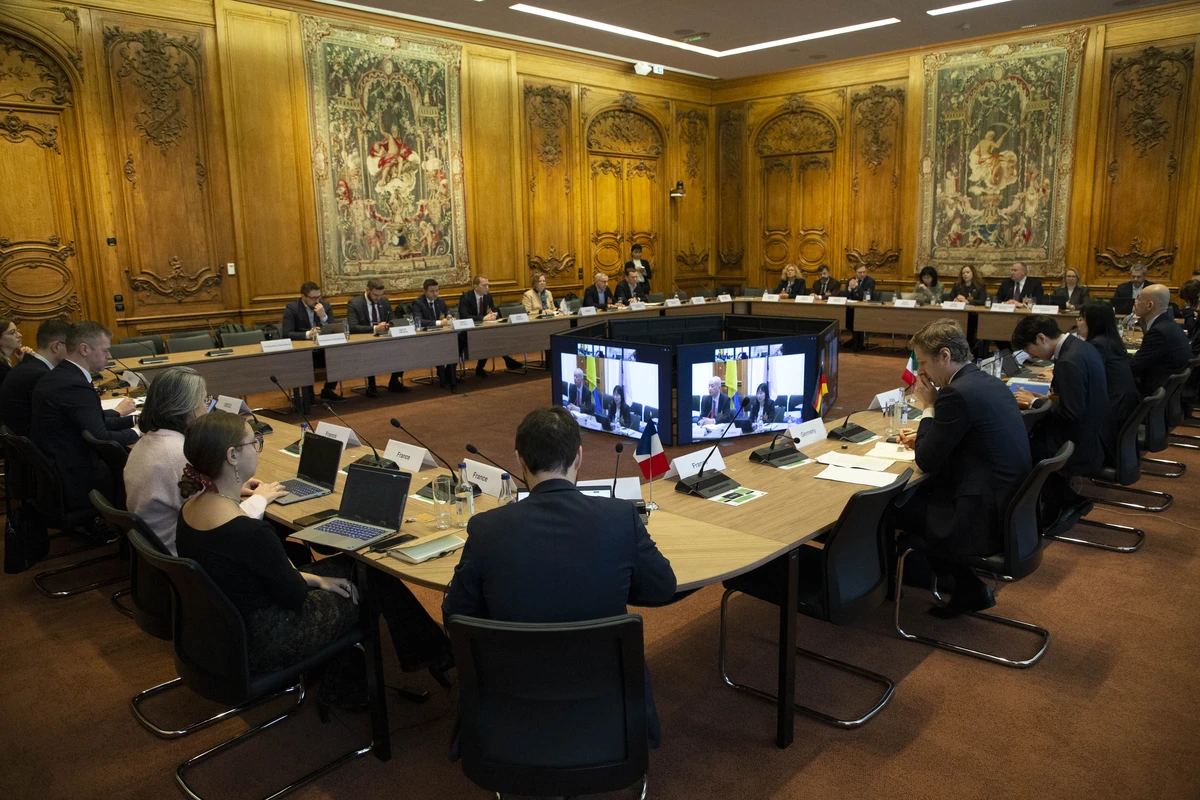
For reference. The ACT for Ukraine Task Force is a platform for exchanging information on projects supporting anti-corruption measures in Ukraine by G7 countries and international organisations, identifying problems to be addressed, and discussing measures to improve cooperation. The meeting was organised, and the project was initiated by the Ministry of Justice of Japan, which serves as the secretariat of the group.
Participants in this year's task force meeting from the Ukrainian side included representatives of the Ministry of Justice, the Office of the Prosecutor General, the National Anti-Corruption Bureau, the National Agency on Corruption Prevention, the Specialized Anti-Corruption Prosecutor's Office, the High Anti-Corruption Court, the Supreme Court, the High Qualification Commission of Judges, as well as representatives of non-governmental organisations.