
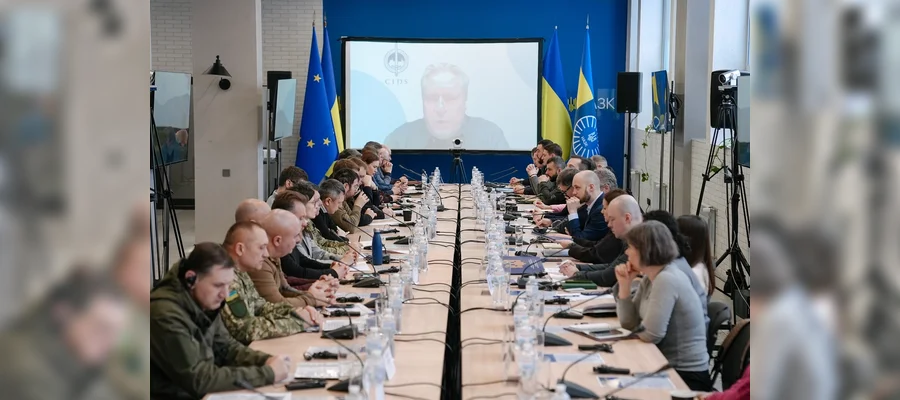
Systematic enemy strikes on Ukraine's critical infrastructure facilities aimed at weakening the state's defence capability, alongside the urgent need for large-scale construction of military engineering and fortification structures, create fundamentally new challenges for ensuring an appropriate level of transparency at all levels. An open dialogue and the joint participation of all stakeholders in defining the vector for improving approaches will allow for an objective assessment of existing challenges and the development of the most effective recommendations for countering corruption risks. I am confident that through close cooperation, we will be able to achieve significant results in building a comprehensive anti-corruption architecture. This was stated by Viktor Pavlushchyk, Head of the National Agency on Corruption Prevention (NACP), during the inaugural meeting regarding the commencement of the research into corruption risks in the protection of critical infrastructure facilities in the defence and fuel-and-energy sectors, and the construction of military engineering and fortification structures.

The discussion was joined by a wide range of international partners: the NATO Representation to Ukraine and the Alliance's Headquarters, the Centre for Integrity in the Defence Sector at the Norwegian Ministry of Defence (CIDS), the Geneva Centre for Security Sector Governance (DCAF), the EU Anti-Corruption Initiative in Ukraine (EUACI), the Basel Institute on Governance, as well as representatives of state bodies and the security and defence sector, specifically the Ministry of Defence of Ukraine, the General Staff of the Armed Forces of Ukraine, the Staff of the National Security and Defence Council of Ukraine, the Ministry of Energy of Ukraine, the State Special Transport Service of Ukraine, the Administration of the State Service for Special Communications and Information Protection, the Accounting Chamber, the State Audit Service of Ukraine, law enforcement agencies, and the public.
"The comprehensive approach applied by the NACP consists of an all-encompassing study of information from all involved stakeholders, as well as from law enforcement agencies and public organisations. This approach is specifically oriented towards the effectiveness of the strategic analysis conducted, particularly during the implementation of provided recommendations aimed at minimising corruption risks and improving existing mechanisms," emphasised Serhii Hupiak, while presenting the methodology for conducting strategic analysis of corruption risks in the security and defence sector.
Joakim Frendin, Head of the Building Integrity Team at NATO Headquarters, stressed the importance of continuing systematic cooperation and the implementation of recommendations already developed.
"We highly value the results of previous research conducted by the NACP in the security and defence sector. The identified risks are of a systemic nature, and the information gathered is extremely valuable and practical in its application. I hope that today's meeting will be a productive step forward, and we will continue to support Ukraine in building integrity," he noted.
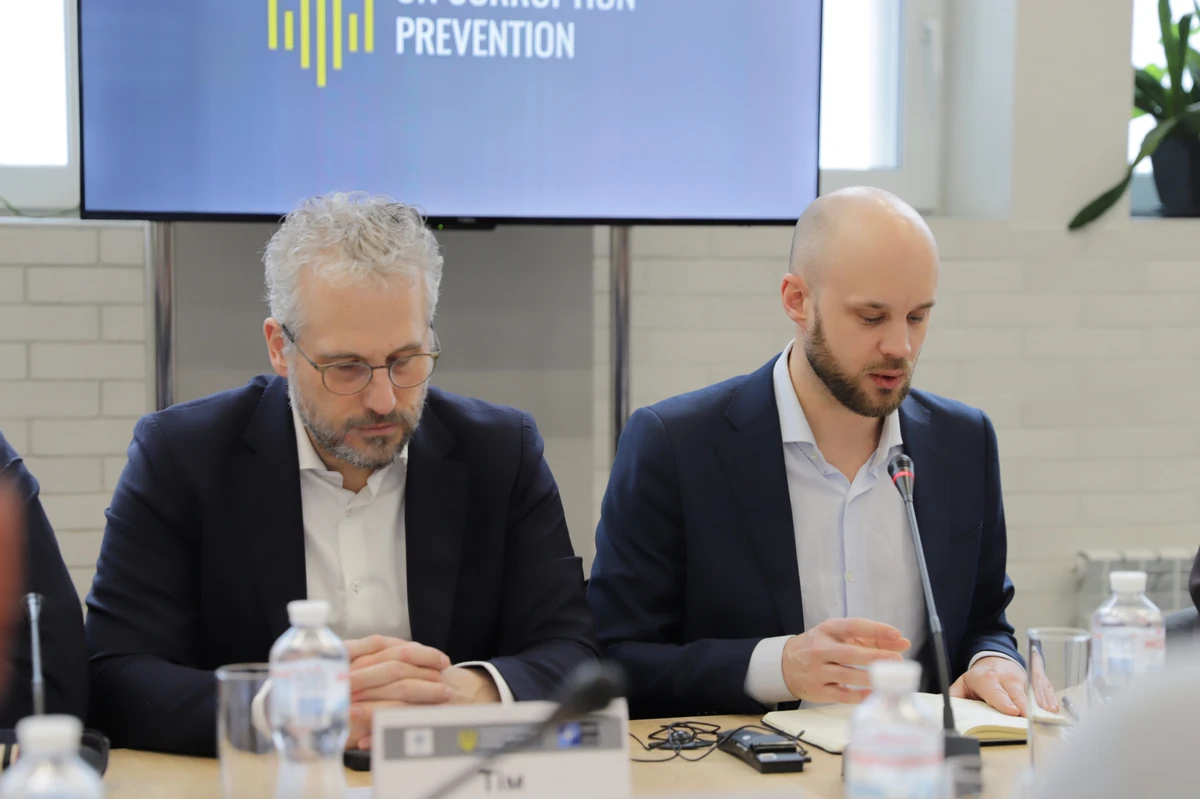
Terje Haaverstad, Director of the CIDS programme in Ukraine, also emphasised that cross-sectoral interaction is a key condition for achieving tangible results: "The cooperation of all involved stakeholders will contribute to building integrity and implementing proper procedures, particularly in the defence sector. We are ready to continue our support within the framework of the new research, as Ukraine has already demonstrated significant results. I am convinced that joint work will allow for the achievement of practical and professional solutions that will benefit the entire society and contribute to the improvement of procedures throughout the security and defence sector."
During the meeting, the challenges currently facing the institutions implementing the aforementioned powers were also discussed.
"The key objective of the research is to eliminate corruption risks and take international experience into account. It is the involvement of major stakeholders and the consideration of existing challenges that will allow for a comprehensive assessment of systemic corruption problems and risks in the field under study, and for the joint development of effective mechanisms for their minimisation," noted Marta Ivashkiv, Head of the Directorate of Integrity Policy Making in the Security and Defence Sector of the NACP.
In 2025, the NACP presented a study of corruption risks during the procurement of UAVs and electronic warfare (EW) equipment for the Armed Forces of Ukraine in 2025, which aligns with the recommendations of the Strategic Review of the defence procurement system. It identified 19 corruption risks, including granting excessive discretion to officials when determining needs for the procurement of UAVs and EW equipment without considering data on their effectiveness on the battlefield, the absence of unified requirements for counterparty verification, an imperfect pricing mechanism, uncertainty in the quality inspection procedures for UAVs and EW equipment, and a lack of control over the decommissioning and loss of UAVs by military units. Furthermore, the study contains a section dedicated to problematic aspects arising during the provision of international military assistance to Ukraine.