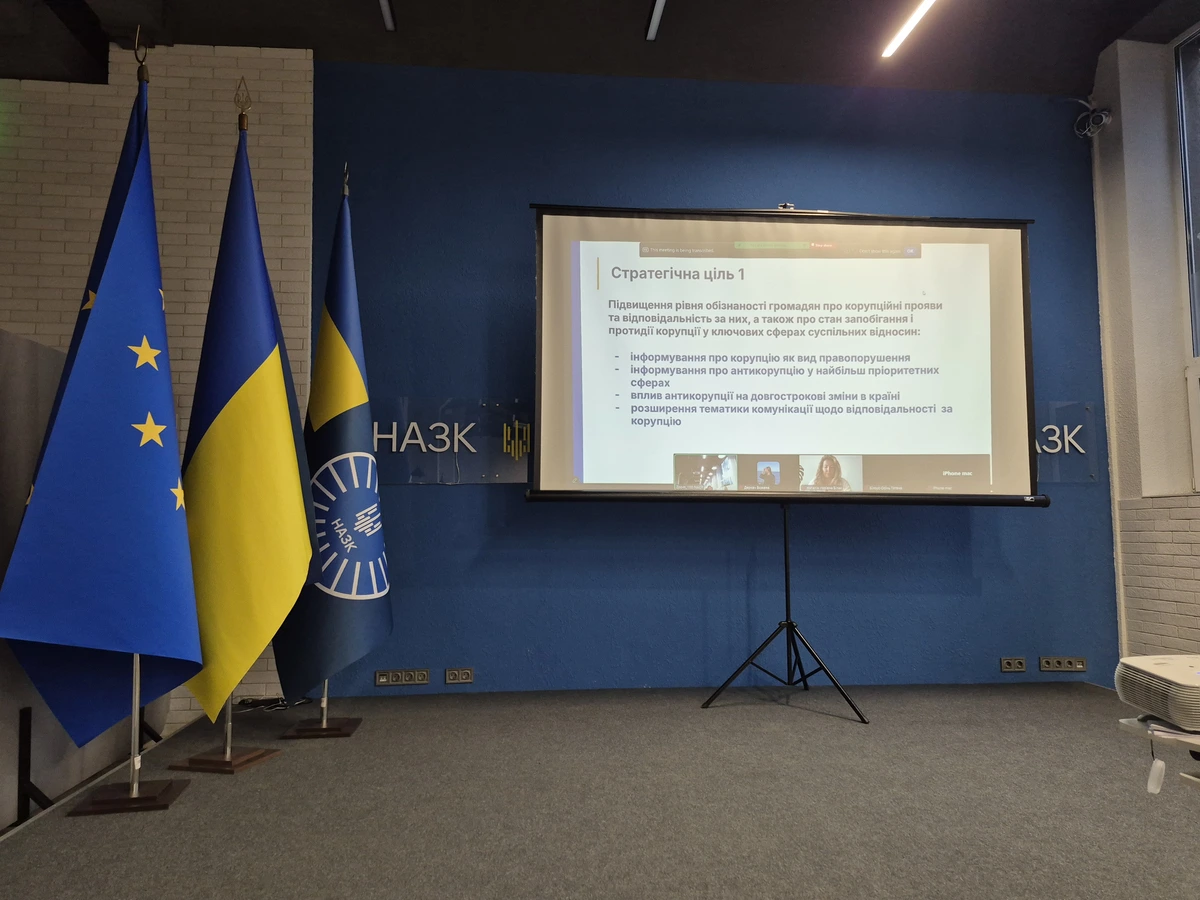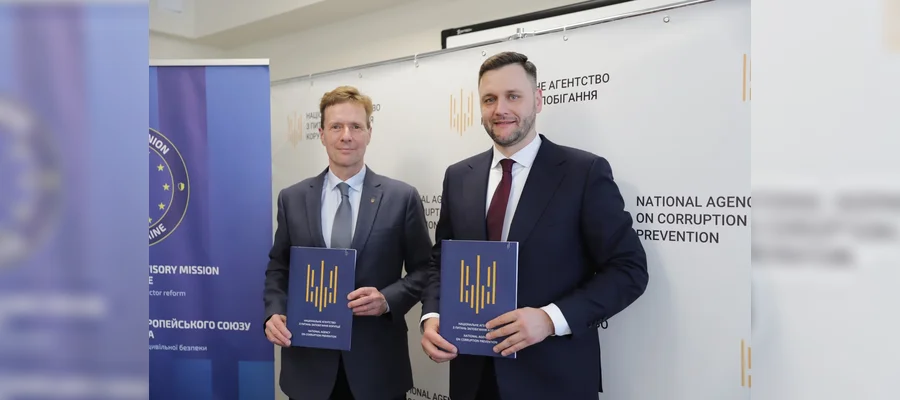

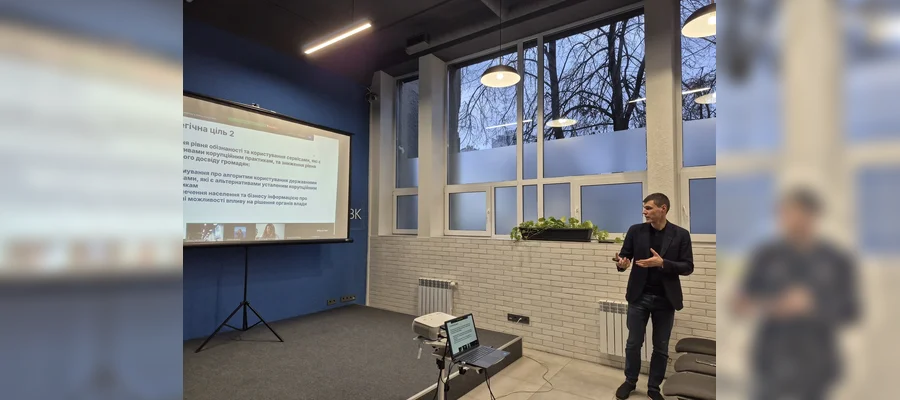
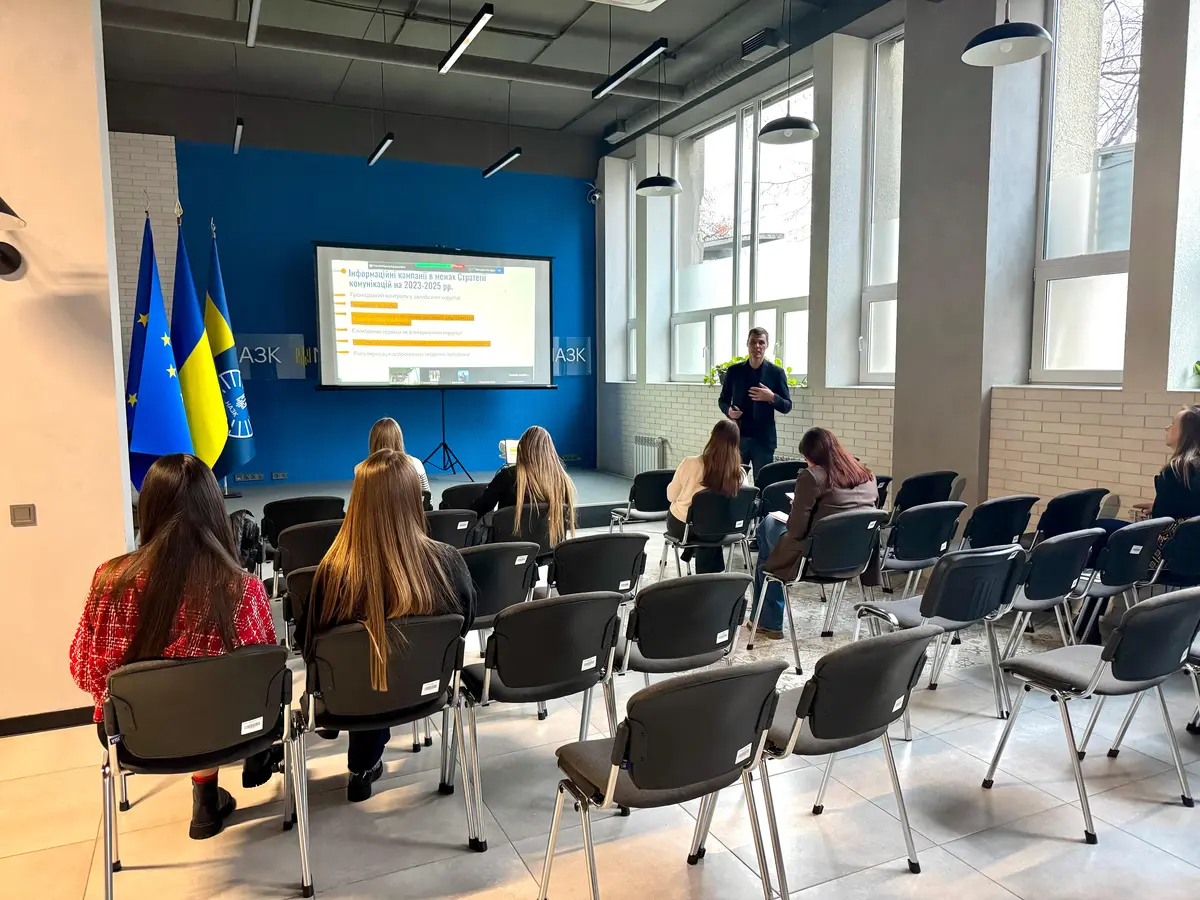
The National Agency on Corruption Prevention (NACP) held public discussions on the draft Communications Strategy for Preventing and Combating Corruption for 2026–2030.
The main provisions of the document were presented by Pavlo Buldovych, Head of the Department for Coordination of State Information Policy on Corruption Prevention at the NACP's Communications and Information Policy Directorate.
According to him, the draft of the new Strategy was developed taking into account the results of the implementation of the previous document for 2023-2025 and current social challenges. In particular, these include the high level of negative perception of corruption against the backdrop of declining trust in state institutions and the dominance in the public sphere of narratives about punishment for corruption, as well as insufficient awareness among citizens about preventive anti-corruption tools.
According to the sociological study ‘Corruption in Ukraine 2024: Understanding, Perception, Prevalence,’ in 2024, 79.4% of citizens named corruption as one of the country's key problems, and 91.4% consider it widespread. At the same time, 18.7% of citizens had personal experience with corruption. This gap illustrates one of the main challenges of the Communications Strategy: a significant part of the population does not distinguish between corrupt and non-corrupt violations and does not associate preventive anti-corruption tools with real changes in their own lives.
“Corruption has become a universal ‘negative brand’ that is often used to explain any issue. We have an extremely high public demand to combat it, but at the same time, low awareness of prevention tools and services that are alternatives to corrupt practices. The task of communications is to show the anti-corruption capabilities of such tools and encourage citizens to use them,” emphasized Pavlo Buldovych.
Therefore, the main objective of the Communication Strategy until 2030 is to equip citizens with the knowledge, skills and practical experience to use legitimate alternatives to corrupt practices. This should contribute to reducing the level of actual corruption experienced by the population and businesses and to fostering a culture of integrity. In addition, the draft Strategy also aims to increase the capacity of citizens and businesses to counteract corruption, in particular by reporting it to the competent authorities.
In general, the draft Strategy defines four key strategic objectives that will form the basis of the state information policy in the field of corruption prevention:
- Raising public awareness of corruption and accountability for it, as well as the state of corruption prevention and counteraction in key areas of public relations.
- Increasing awareness and use of services that are alternatives to corrupt practices, and reducing the level of corruption experienced by citizens.
- Increased public condemnation of all forms of corruption, reflected in the actual involvement of citizens in anti-corruption activities.
- Development of communication infrastructure for state anti-corruption policy and development of data infrastructure as a basis for implementation and evaluation of the effectiveness of the Communication Strategy.
The implementation of the Communications Strategy for 2026–2030, as in the previous period, requires coordinated work between government bodies, anti-corruption institutions, civil society and international partners.
The discussion of the draft was joined by, among others, specialists from relevant departments of the NACP, representatives of The Foundation for Institutional Development, the Youth Development Centre, and the Centre for Social and Economic Research ‘CASE Ukraine’.
We would like to remind you that as part of the work on the draft Communications Strategy for Preventing and Combating Corruption for 2026–2030, the NACP communications team held a series of consultations with representatives of civil society organizations, the media, and communications specialists from the public and private sectors. This approach allows for different views to be taken into account and expertise to be pooled in order to develop practical and effective solutions in the field of anti-corruption communication.
For more details on the results of the implementation of the Communications Strategy for Preventing and Combating Corruption for the period up to 2025, please visit: https://cutt.ly/ptfOQpAP