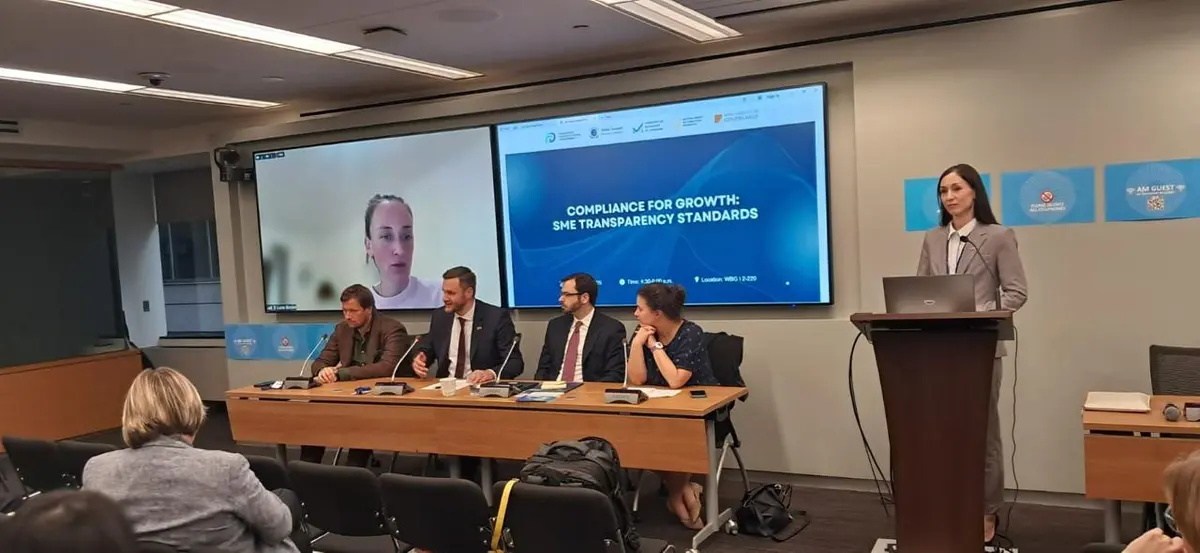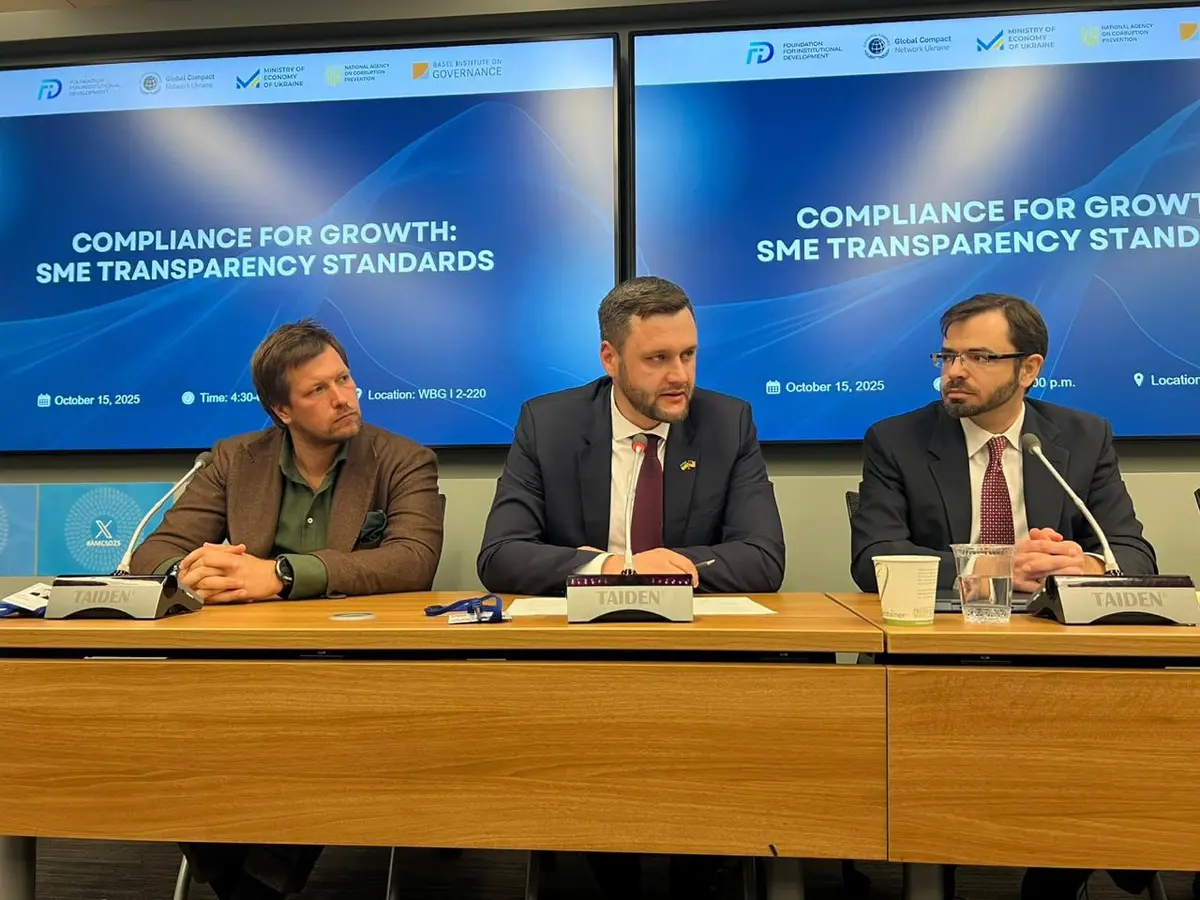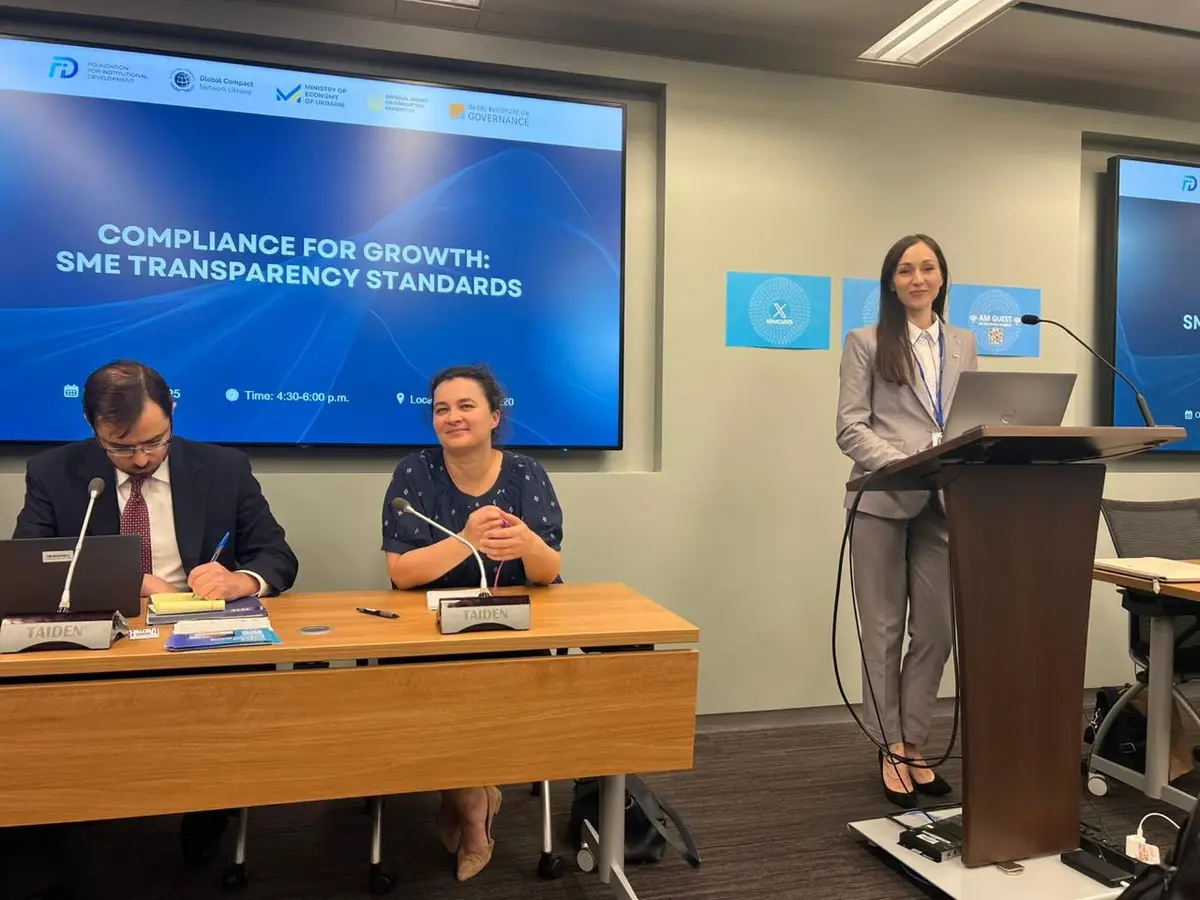

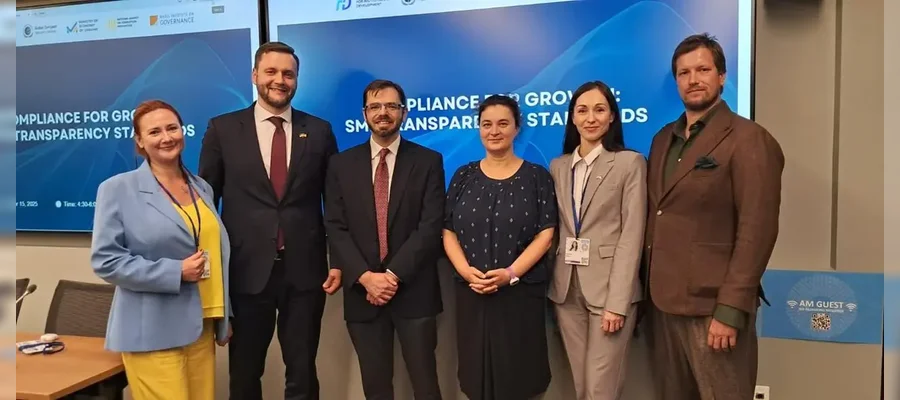
Business in Ukraine demonstrates resilience and the ability to change. Companies are implementing modern trends and technologies, responding flexibly to the challenges of martial law. Integrity is becoming an important factor in sustainable development, opening opportunities in the fields of public procurement, exports, and investments. This is especially relevant during the war, as even minor corruption undermines effective governance and market stability. This was emphasized by the Head of the National Agency on Corruption Prevention (NACP) Viktor Pavlushchyk during a discussion of challenges in conducting transparent entrepreneurship within the civil society policy forum (CSPF - 2025) in Washington.
The event was held within the official program of the Forum by the Ukrainian NGO “The Foundation for Institutional Development,” which helps build an integrity-based environment in Ukraine’s public and private sectors.
The discussion participants also included Laura Pop, Senior Financial Sector Specialist at the World Bank; Lucy Binder, Senior Governance and Integrity Specialist at the Basel Institute on Governance; Joseph Mauro, Senior Advisor, Investigations, Operations, and Strategy Department at the World Bank; Kateryna Datsko, Executive Director of the NGO “The Foundation for Institutional Development”; and Artem Khavanov, Global Compliance Director (NDA).
Laura Pop noted the ongoing cooperation with the NACP in the area of corruption risk analysis and training, as well as Ukraine’s achievements as best practices.
“Raising business awareness of integrity tools is fundamental to its development. The practical application of the recommendations of the Handbook 2.0 and the Model Code of Integrity helps companies integrate these principles into their activities, especially in the context of preparing for recovery,” said Kateryna Datsko.
Lucy Binder noted that for small and medium-sized businesses seeking to improve their ethics and compliance programs, there are three effective ways to simplify this process. Companies should move from policies based solely on rules to a values-based approach. Create a code of ethics/conduct that will serve as a guide for all other internal policies and procedures. An excellent example to follow is the World Bank’s code of conduct. Ideally, the process of developing the Code should be inclusive – involving all company employees. Such an approach encourages them to take responsibility and actively support new rules. According to her, the development and implementation of ethical standards should not add bureaucratic complexity but should become a tool for the team to create long-term value for the company.
“Such teamwork is also an opportunity to establish connections with other businesses and cooperate with governments pursuing similar goals,” noted Lucy Binder.
Integrity in business cannot be imposed by the state; however, together with involved experts, we are developing clear and practical recommendations that will help businesses establish effective approaches to integrity management. In this case, the state should not interfere but assist. The NACP sets and monitors requirements for the public sector, while for businesses, the NACP acts more as an advisor and mentor on the path to building integrity. To this end, Viktor Pavlushchyk presented to the audience free and scalable anti-corruption compliance tools offered by the NACP for businesses:
Integrity in business cannot be imposed by the state; however, together with involved experts, we are developing clear and practical recommendations that will help businesses establish effective approaches to integrity management. In this case, the state should not interfere but assist. NACP sets and monitors requirements for the public sector, while for businesses, the NACP acts more as an advisor and mentor on the path to building integrity. To this end, Viktor Pavlushchyk presented to the audience free and scalable anti-corruption compliance tools offered by the NACP for businesses:
- The Standard Anti-Corruption Program for a legal entity – a ready-made legislative foundation for companies participating in major procurements.
- The Model Code of Integrity for the private sector – a document template for any private institution designed to establish and strengthen corporate values, norms, and employee behavior rules, and to direct efforts toward building a culture of integrity in organizations and companies.
- Manual for Executives – a comprehensive practical document for systematically building ethical and effective organizations in both public and private sectors.
- The Corruption Risk Management Methodology – which defines the algorithm for managing corruption risks in company activities.
The Head of the NACP also spoke about the operation of the Unified Whistleblower Reporting Portal – a secure system through which one can quickly and conveniently submit a corruption report, monitor the status and results of its review, and obtain information about whistleblower status.