

Virtual assets have become an ideal tool for those seeking to finance politics while bypassing transparency. They allow for the concealment of the origin of funds, the circumvention of restrictions on foreign or anonymous contributions, and the instantaneous transfer of large sums across borders. The experience of neighbouring states, particularly Moldova, where massive voter bribery schemes involving cryptocurrencies and external financing were documented in 2024–2025, underscores the critical importance of effective state regulation in this area.
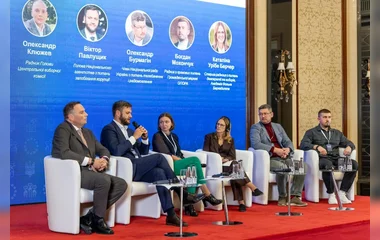
Specialists discussed these issues during an expert dialogue on the regulation of virtual assets in political financing. Participants analysed the nature of crypto-assets and their risks to the transparency of democratic processes, drawing on experiences in Romania and Moldova. Special attention was paid to the Ukrainian context: experts assessed the readiness of domestic institutions, discussed potential regulatory models, examined the role of interagency cooperation among oversight bodies, and identified next steps for legislative regulation in this area.
“For the NACP, the topic of crypto-assets within the scope of monitoring political party financing is still a new direction. To date, we have not recorded any high-profile cases in which virtual assets appeared in party reporting. At the same time, the NACP already has experience working with crypto-assets during the verification of officials' declarations. We increasingly see declarants disclosing cryptocurrency assets and are gradually developing tools to analyse this data and track transactions. Therefore, it is important to transfer this experience to the field of political finance,” noted the Head of the NACP, Viktor Pavlushchyk.
According to him, to ensure that the financing of the political process remains transparent and accountable, three steps must be secured.
“First, define clear rules for reflecting crypto-assets in the financial statements of political parties. Second, develop monitoring tools, particularly through cooperation with cryptocurrency platforms, financial institutions, and law enforcement agencies. It is also essential to strengthen international coordination,” Viktor Pavlushchyk added.

Hanna Chornutska, Head of the Department for ensuring integrity in political finance at the NACP, spoke about the specific features of auditing political party reports.
“The methodology for auditing political party reports and the declarations of public officials has significant differences. If we compare them, the issue of the source of funds is common to both types of control. However, while in declarations we verify the legality of an individual's asset acquisition, in political party reports and, accordingly, election reports (in the future), we must confirm the legitimacy of the donor. That is, ensuring that behind a digital transaction stands specifically a citizen of Ukraine, rather than a foreign government or an anonymous entity,” noted Hanna Chornutska.
According to her, the primary challenge in auditing reports containing crypto-assets will be identifying the contributor, as open databases only show a wallet number—a set of random digits—without a last name or first name. Until all exchange data is transferred to the oversight body, a party will be unable to prove who sent the funds. A second risk is associated with the volatility of cryptocurrency exchange rates, which creates a legal trap. At the time a transaction is initiated, the contribution amount may be within legal limits, but by the time it is processed, the value may have risen and exceeded those limits. This poses a risk to both the contributor and the political party.
Importantly, risks will be concentrated not within the party reports themselves, but in hidden financing networks. Therefore, the focus should not be on auditing a single report, but on detecting mass anomalies—for instance, when thousands of people in a single region with no history of digital transactions (typically students or retirees) suddenly transfer funds to a party on the same day.
Participants emphasised that Ukraine must act proactively to prevent the use of such tools during future post-war elections.
Representatives of the NACP attended the event, the Central Election Commission, the National Securities and Stock Market Commission, the Verkhovna Rada of Ukraine, the State Financial Monitoring Service, the National Police of Ukraine, the Security Service of Ukraine, civil society, as well as international experts from International IDEA and specialists from Moldova and Romania.
The event was organised under the U-VOTE project, supported by Norway and implemented by the International Institute for Democracy and Electoral Assistance (International IDEA).
Video recording: https://cutt.ly/etU0GPAh