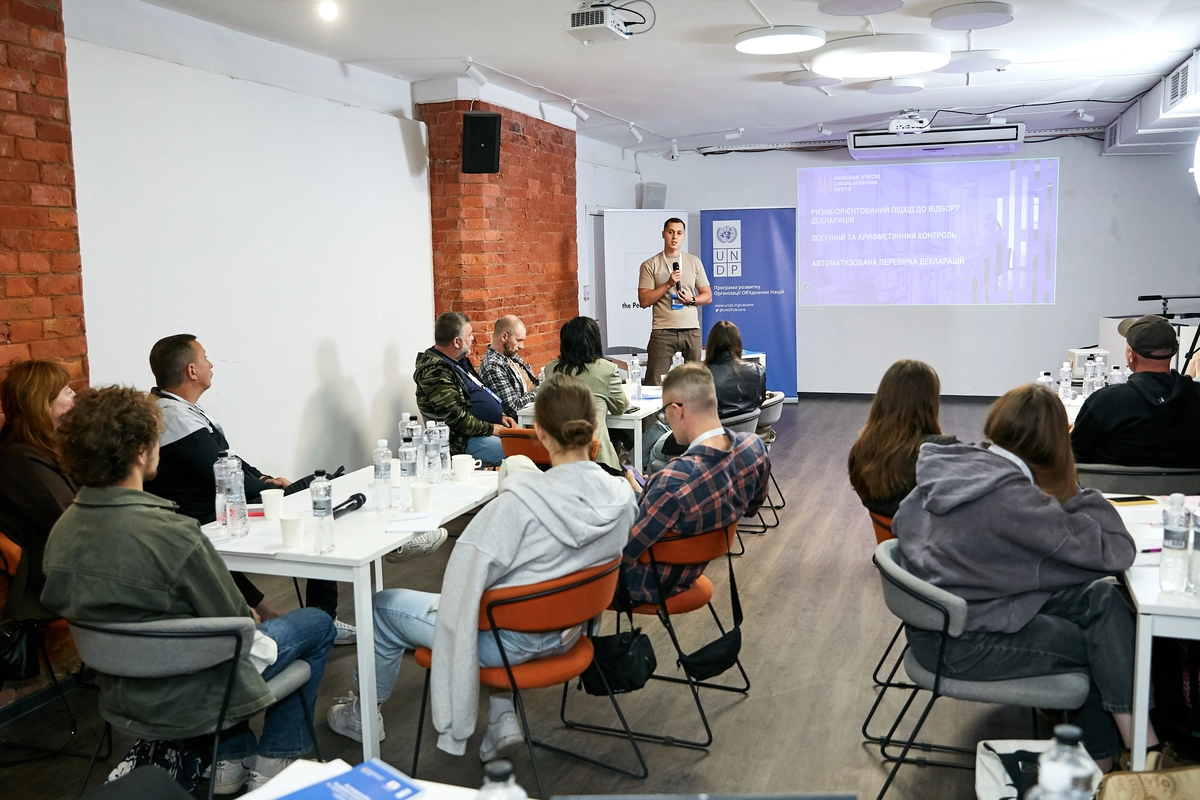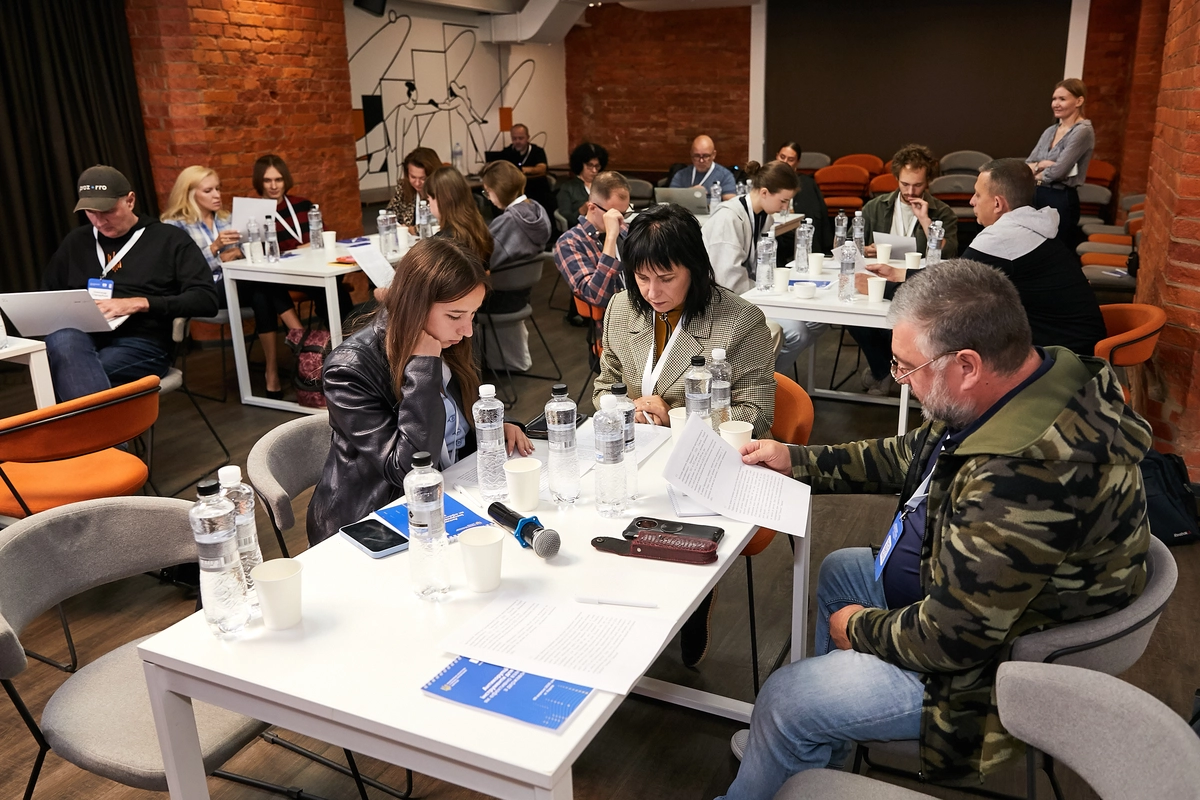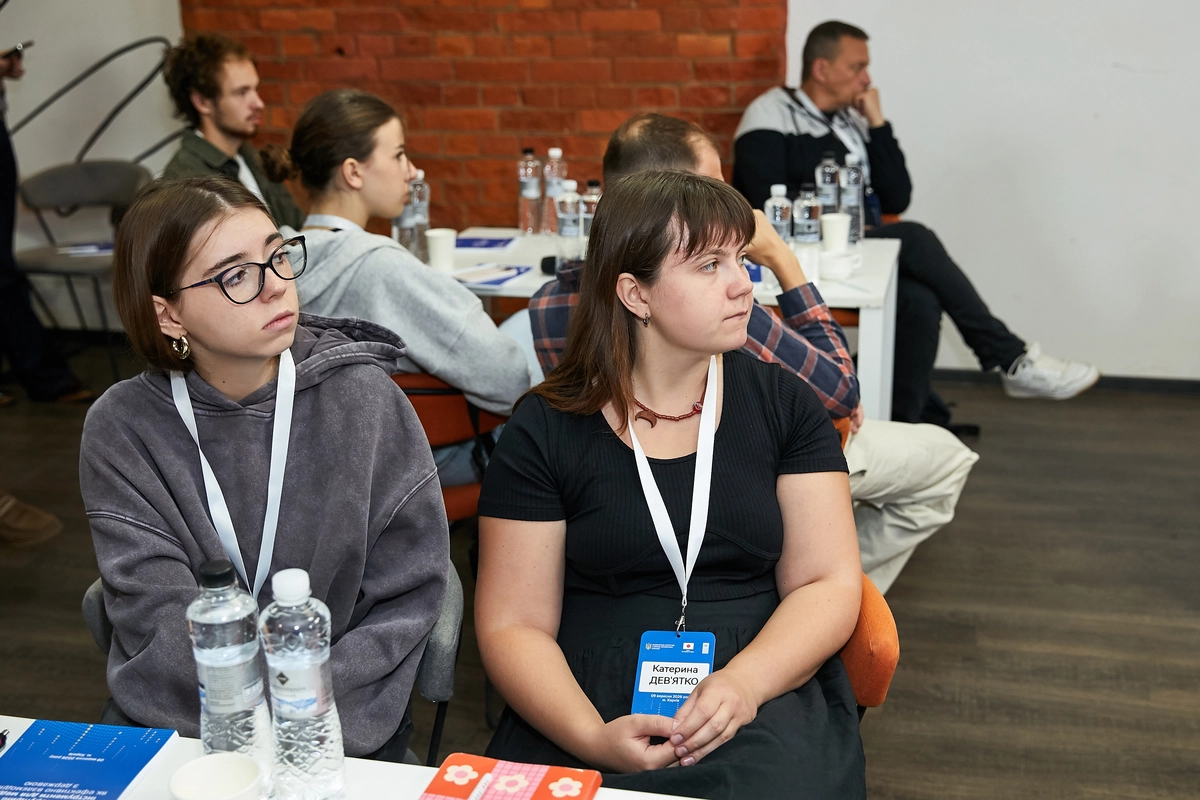


Where to search for data for an investigative report, how to verify information about an official’s assets, distinguish a corruption offence from other violations of anti-corruption legislation, and where and how exactly to report possible facts of corruption? These and other practical questions were discussed by experts from the National Agency on Corruption Prevention (NACP) with representatives of media and civil society organisations from Kharkiv Oblast during the training "Anti-Corruption Tools for Media: How to Effectively Interact with the State," organised jointly with UNDP in Ukraine with financial support from the Government of Japan.
The focus was on practical situations that journalists may encounter while preparing stories on corruption and the work of public authorities. Experts and media professionals analysed specific algorithms: how to find the necessary information, which state tools to use for this purpose, and what to do if signs of a possible violation are detected.
"Journalists are already an important part of the anti-corruption system. Their reports and coverage often become the starting point for further response by state authorities. Our task is to help make this interaction more effective: to provide media with an understanding of anti-corruption mechanisms, demonstrate the capabilities of open data and rules for working with it, so that a journalist’s report can not only draw attention to a problem but also serve as a basis for concrete legal consequences," noted Pavlo Buldovych, Head of Department at the NACP.
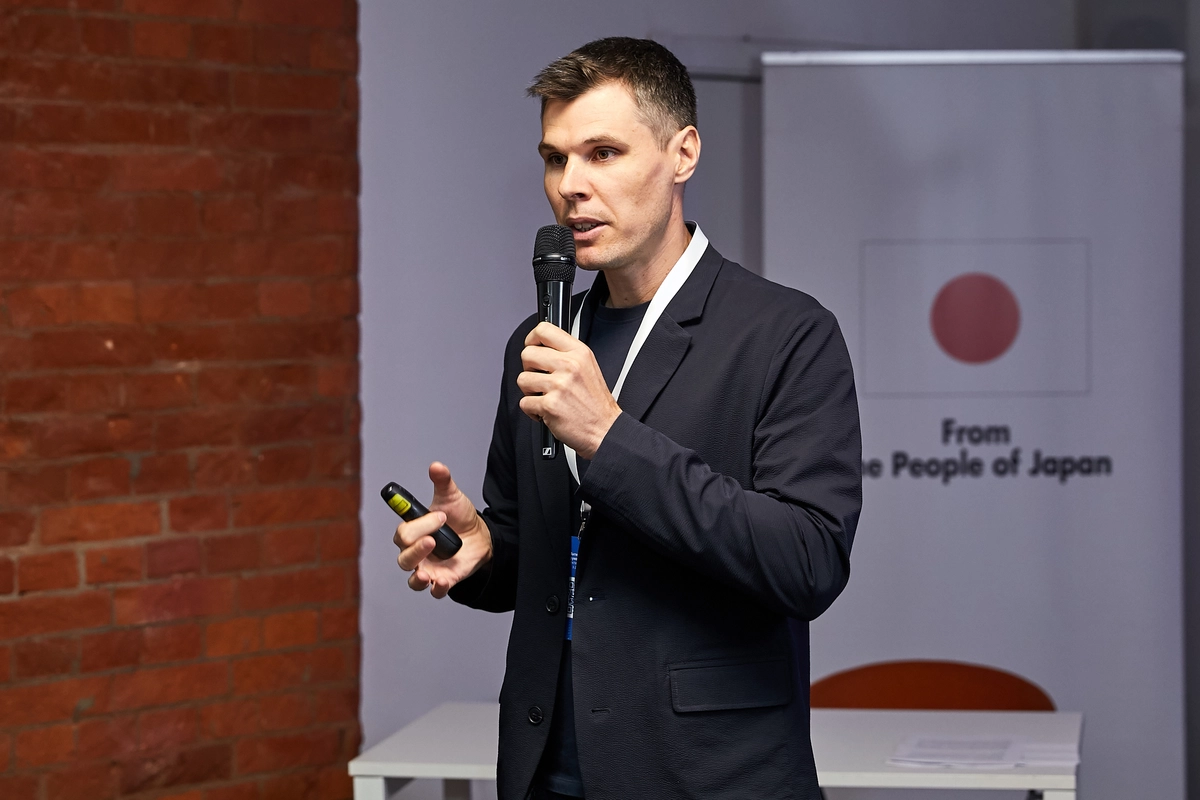
Using practical case studies, he explained how to determine whether circumstances indicate a corruption offence or another violation of anti-corruption legislation, what facts should be included in a corruption report, and which body to submit it to. He focused specifically on typical reasons why information received from the media cannot be processed effectively: from the lack of specific verifiable facts to issues of competence and procedural deadlines.
In addition, NACP experts spoke about the specifics of financial control mechanisms: how full audits of declarations and lifestyle monitoring are conducted, what data is analysed, and what a journalist should pay attention to when independently verifying the income, assets, and expenses of officials. Participants examined examples of media stories containing information that served as a basis for further anti-corruption investigations.
The NACP's digital resources were discussed separately, particularly the opportunities for working with information in machine-readable format. Such tools make it possible not only to find the required document but also to compare large datasets and identify facts that may require additional verification.
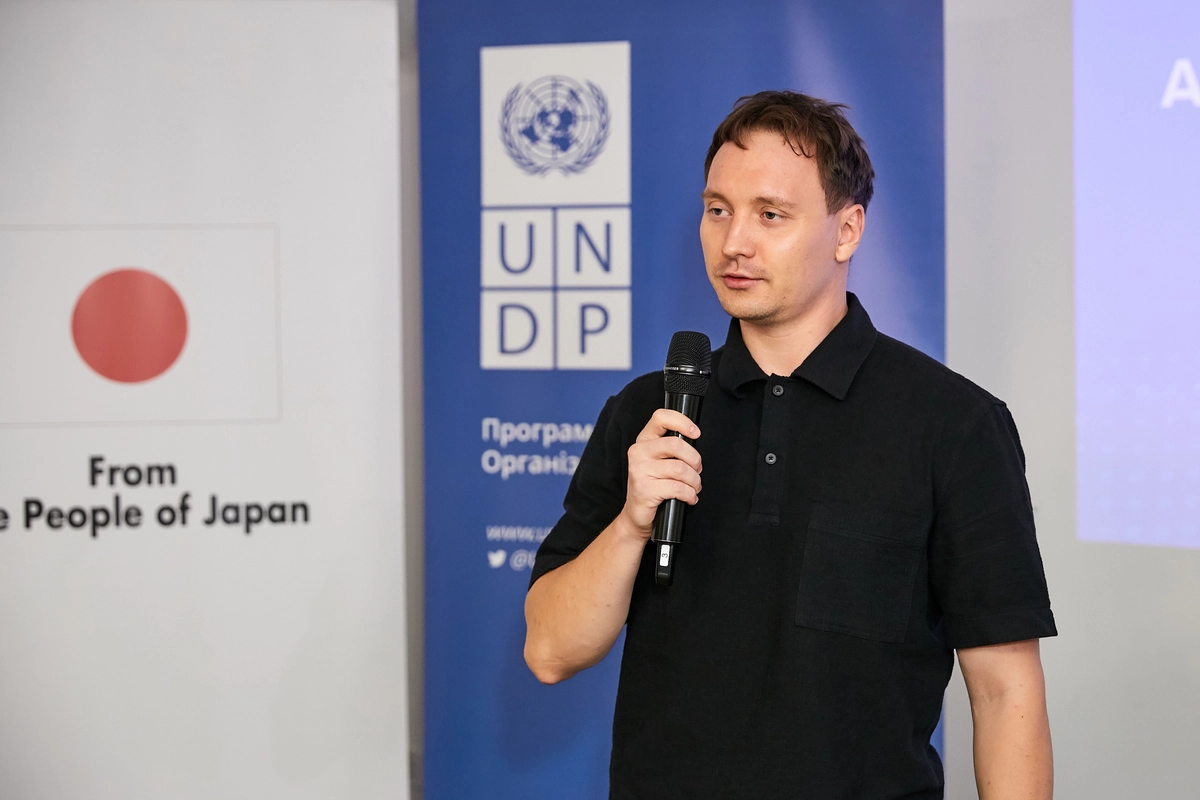
Since the quality of investigative material depends not only on the information found but also on how thoroughly it is verified, another block of the training was dedicated to fact-checking and disinformation influence. Oleksandr Horokhovskyi, analyst at the Centre for Strategic Communication and trainer at the Stratcom School, spoke about methods for verifying sources and statements, as well as typical manipulations surrounding socially significant investigations.
"For Kharkiv and the region, the topics of corruption prevention and countering disinformation are particularly important given the future reconstruction of the region. Transparency, integrity, and the capacity of media and civil society to monitor these processes must be part of the recovery," emphasized Denys Lekh, Capacity Development Specialist at UNDP in Ukraine.
The training in Kharkiv was part of a series of practical workshops conducted by the NACP for regional media. Previously, such events were held in Cherkasy, Ivano-Frankivsk, Lviv, Dnipro, and Odesa. The NACP plans to continue trainings in other regions of Ukraine. To learn about upcoming trainings and opportunities to participate, follow the Agency's official channels.
Photo: Ihor Kushnarov / UNDP in Ukraine