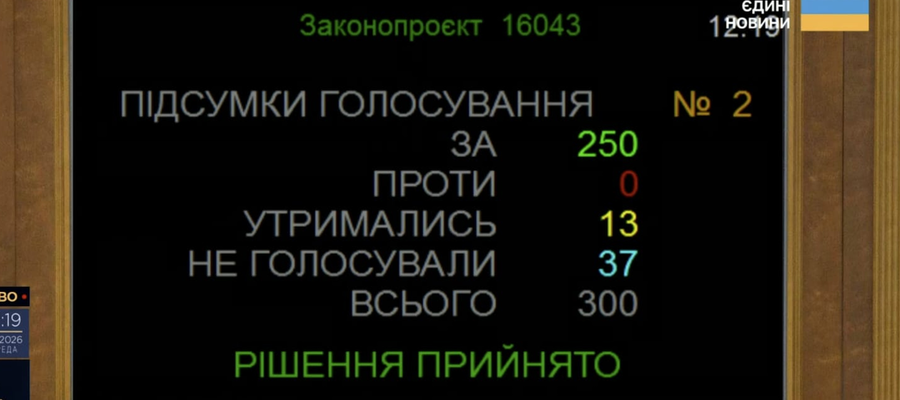
Parliament is currently considering the draft Anti-Corruption Strategy for 2026–2030 (Draft Law No. 15230-d). It was developed by the National Agency jointly with the Committee of the Verkhovna Rada of Ukraine (VRU) on Anti-Corruption Policy, with broad engagement from ministries, numerous other state bodies, leading domestic experts, experts from the European Commission and the Organisation for Economic Co-operation and Development (OECD), as well as civil society.
The National Agency calls on Parliament to consider and adopt the Anti-Corruption Strategy in the first reading, which will enable moving to the final stage of establishing a solid foundation for the next cycle of nationwide anti-corruption policy.
The modern Western European approach to minimising corruption lies in a balanced combination of corruption prevention measures, building good governance, and fostering public service integrity alongside measures for detecting corruption offences and holding perpetrators legally accountable.
Over the past decade, Ukraine has made significant progress in transitioning qualitatively from ad hoc practices of immediate response to individual challenges and problems (a fragmented, "reactive" policy) to a systemic, consistent, and proactive anti-corruption policy.
While state anti-corruption efforts were previously largely focused on resolving the most acute point problems requiring urgent solutions, today anti-corruption policy is increasingly grounded in data, forecasting, risk assessment, and eliminating the extensive network of root causes of corruption.
Such an approach entails not only detecting offences and bringing wrongdoers to account, but also creating mechanisms for state functioning, administrative processes, business regulation, oversight functions, and the provision of administrative services that structurally prevent corruption or reduce it to an absolute minimum.
A solid foundation for this transition was established through Ukraine's achievements in 2014–2025:
- Bringing anti-corruption, criminal, and administrative offence legislation into alignment with key international standards and European Union legal acts in this domain;
- Establishing and ensuring high efficiency and independence of anti-corruption institutions focused on preventing and combating high-level corruption (primarily referring to the NACP, National Anti-Corruption Bureau, Specialized Anti-Corruption Prosecutor's Office, and High Anti-Corruption Court).
However, a pivotal role in driving this "transition" was played by the currently effective Anti-Corruption Strategy and the State Anti-Corruption Program. In 2020–2026, they introduced a conceptually new approach to formulating and implementing Ukraine's nationwide anti-corruption policy, which is currently built around simultaneous progress toward two primary objectives:
- Ensuring high efficiency and continuous development of the general system for corruption prevention and counteraction;
- Minimising corruption in sectors that are most affected by corruption and strategically vital for the state, through systemic sectoral reforms aligned with EU legal acts and incorporating global best practices.
An important stage in the development of this system was also the introduction of modern approaches to coordination, monitoring, and evaluation of anti-corruption policy implementation. In particular, a state-of-the-art Information System for Monitoring the Implementation of State Anti-Corruption Policy was developed and deployed, which was recognised by the OECD at the end of 2025 as a leading European and global practice.
These and numerous other efforts by Ukraine have contributed to a gradual and sustainable reduction of corruption levels in Ukraine, while simultaneously increasing transparency and integrity in the operation of state authorities and local self-government bodies.
Specifically, according to regular sociological survey data, between 2008 and 2025 the scale of personal corruption experience among the population residing in Ukraine decreased by more than 3.7 times: from 67.8% in 2008 to 41.5% in 2018, and to 18.2% at the end of 2025.
In particular, between 2015 and 2025, the proportion of the population that experienced corruption decreased significantly in healthcare services (from 76% to 24%), school education (from 67% to 13%), interactions with law enforcement officials (from 62% to 26%), and energy company services (from 30% to 18%). Between 2015 and 2024, citizens' corruption experience also declined in privatisation, land ownership and use (from 50% to 34%), registration and privatisation of real estate (from 49% to 34%), and the judiciary (from 48% to 25%). Particularly noteworthy is the positive trend in the provision of administrative services delivered via ASCs: in 2021–2025, the share of citizens who encountered corruption there dropped from 11% to 5%.
Despite this, as numerous surveys show, corruption in Ukraine is still recognised as one of society’s most critical problems and an obstacle to the further growth of the Ukrainian economy (specifically its liberalisation, building a competitive environment, and attracting investment).
Corruption hampers Ukraine's European and Euro-Atlantic integration, significantly reduces the state's defence capabilities, and represents a key risk in implementing post-war reconstruction.
Therefore, Ukraine must continue implementing a comprehensive, balanced, progressive, and proactive anti-corruption policy by adopting and properly implementing the Anti-Corruption Strategy and the State Anti-Corruption Program for the upcoming period.
The objective of the proposed Anti-Corruption Strategy is not only to achieve a significant reduction in corruption levels in Ukraine, but also to establish and advance the principles of democracy, the rule of law, and good governance, ensure economic and social development, and support Ukraine in acquiring full membership in the European Union and the North Atlantic Treaty Organization.
To achieve this, the Anti-Corruption Strategy applies the conceptual approach outlined above, which focuses on simultaneously ensuring the fulfilment of two strategically vital tasks:
- Ensuring high efficiency and continuous development of the general system for corruption prevention and counteraction (Section I of the Strategy).
- Minimising corruption in sectors most affected by corruption and strategically vital for the state, primarily through systemic sectoral reforms aligned with European Union legal acts and implementing global best practices (Section II of the Strategy).
Section II of the draft Strategy, dedicated to minimising corruption in priority sectors—primarily through systemic sectoral reforms—is the largest in terms of initiatives and potential positive anti-corruption, economic, social, organisational, managerial, and other impacts.
At the same time, the sectoral reforms embedded in the draft Strategy are synchronised with Ukraine's European integration commitments as well as the expectations of the European Commission defined in the list of interim benchmarks; thus, the Strategy will provide an additional stimulating effect on the quality and speed of their implementation.
For more details on the approaches to selecting priority sectors and reforms, as well as the path the NACP has travelled from concept to implementation in the draft strategy, see "Anti-Corruption Strategy for 2026–2030: The Path from Idea to a Comprehensive State Solution."
In implementing the aforementioned reforms, the draft Strategy thoughtfully employs anti-corruption tools verified both nationally and globally, in particular:
- Minimising and optimising the functions of the state and local self-government, with a focus on deregulation;
- Automation, depersonalization, remote access, as well as the implementation of other tools designed to minimise the human factor;
- Expanding access to information for citizens and business.
The use of the latter two tools will make it possible to create irreversible technological safeguards, in which every algorithm, public register, and digital platform guarantees equal and clear rules of the game, transparency, and the highest level of protection for public resources.
The development and adoption of the new Anti-Corruption Strategy is also a European integration commitment for Ukraine, stipulated, at a minimum, by the following:
- Point 23.5 of the interim benchmarks on Ukraine’s path toward European Union membership;
- Measure No. 2 of Strategic Result No. 1 under Subsection 2.1 of Section II "Fight against Corruption" of the Rule of Law Roadmap;
- European Commission recommendations provided in the Reports on Ukraine’s Progress under the Enlargement Package (2024, 2025);
- Point 9.1 of the Rule of Law Action Plan, identified by Ukraine and the EU as priorities for implementation in 2026;
- Step No. 4.5 of Reform No. 2 under the "Fight against Corruption and Money Laundering" section of the Ukraine Facility Plan, the fulfilment of which is a condition for Ukraine to receive €420 million in financial support from the European Union.
The NACP is convinced that a systemic, consistent, balanced, coordinated, and predictable anti-corruption policy must have a solid foundation, which the new Anti-Corruption Strategy is intended to become.
We hope that Parliament will be able to consider and adopt the draft of this strategic document in the first reading in the near future.
For its part, the National Agency stands ready for constructive cooperation within parliamentary procedures and for providing analytical support in refining the draft strategy.