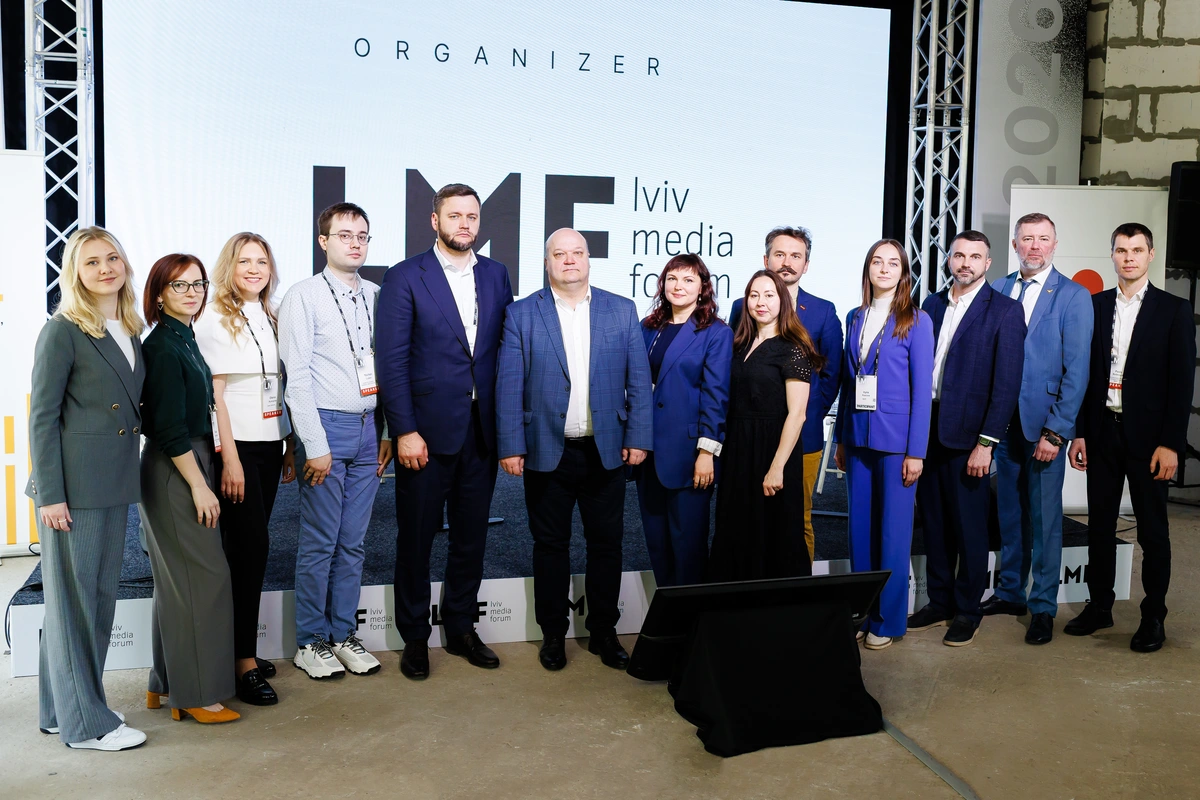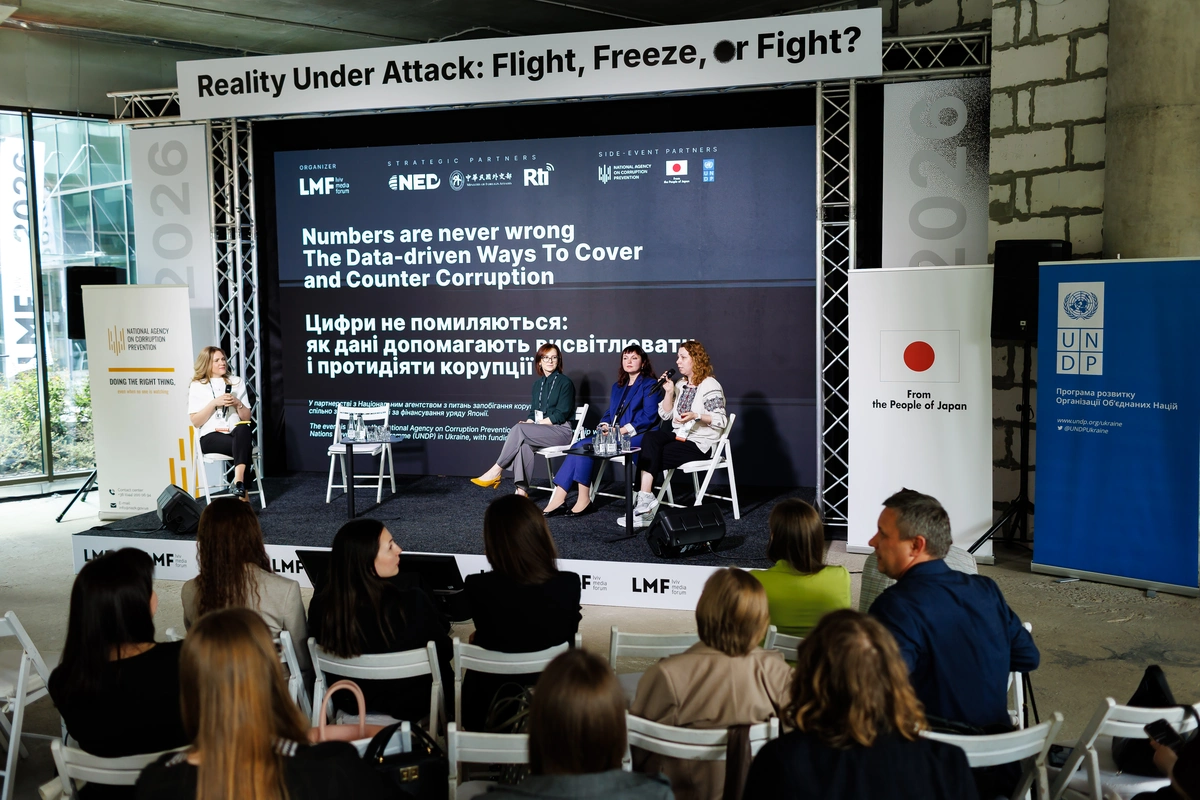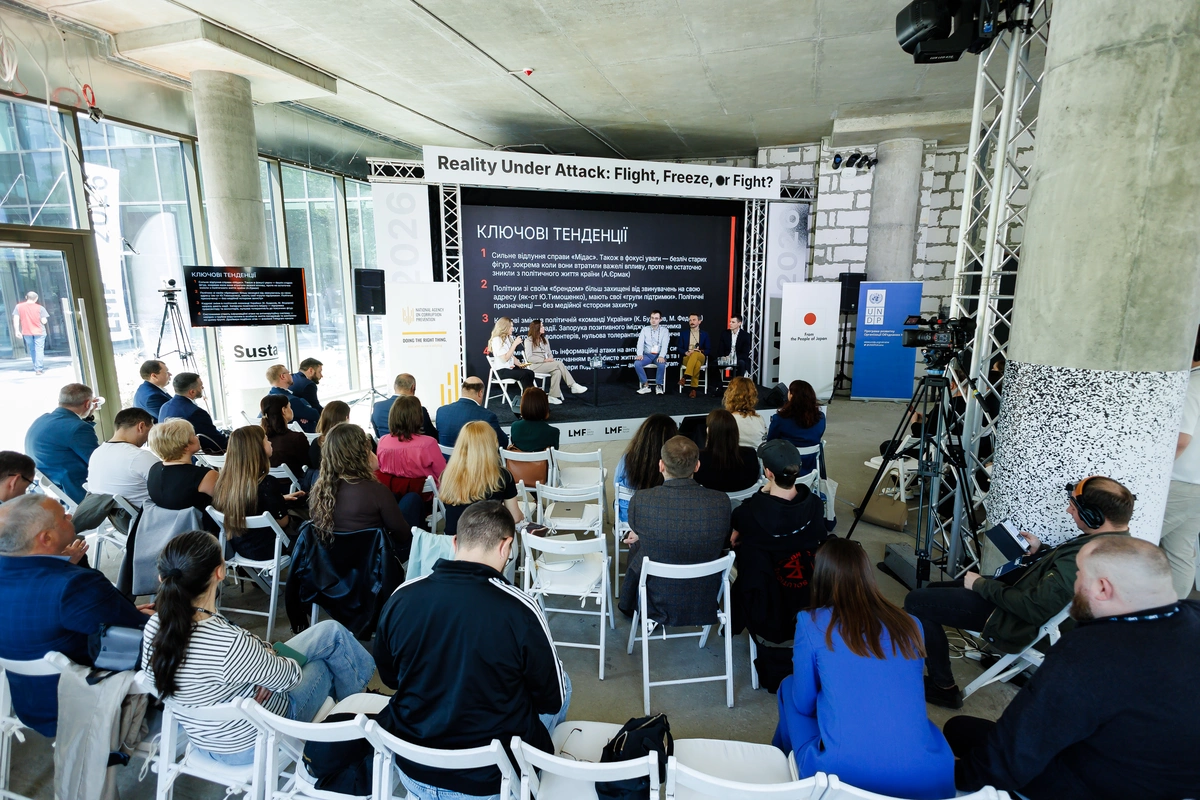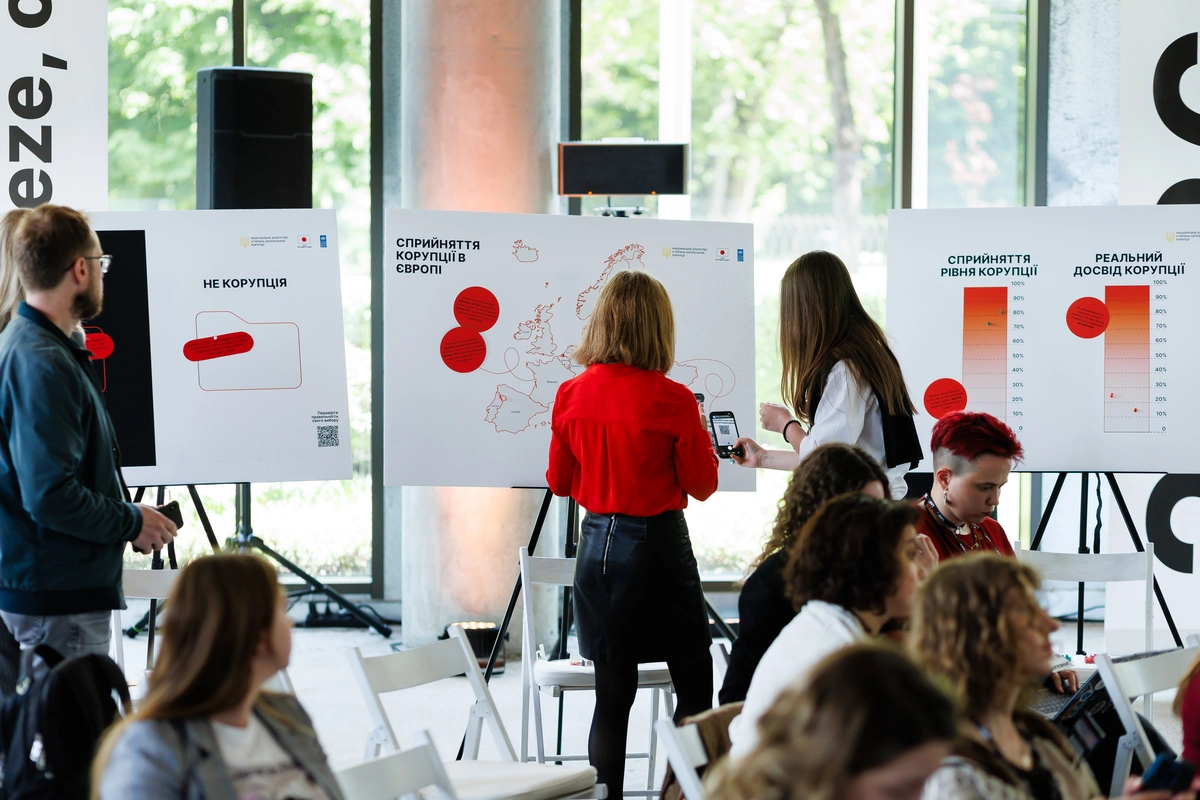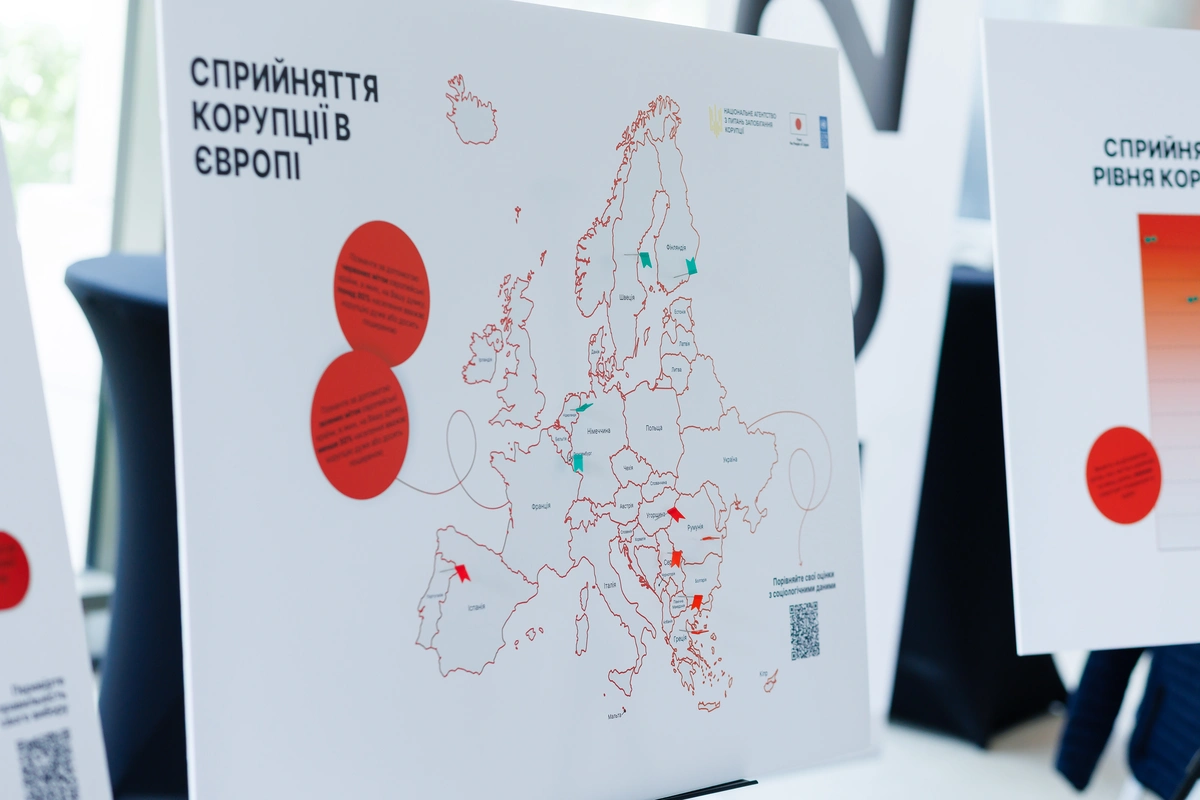

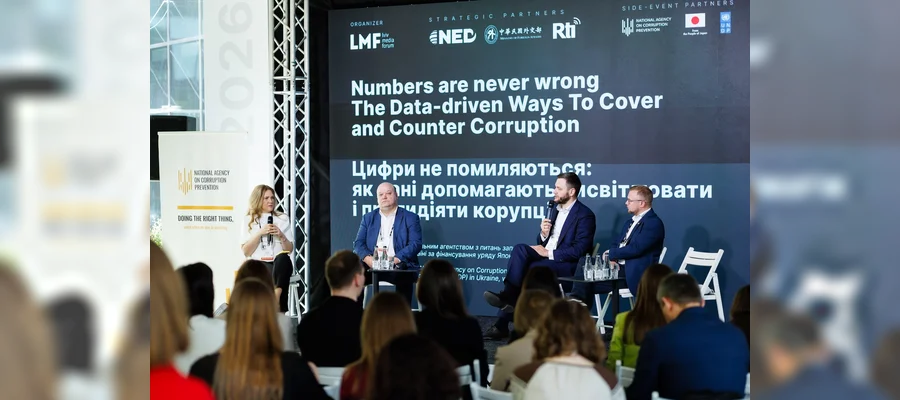
As part of the Lviv Media Forum 2026 (LMF 2026) international conference, a side event titled "Numbers are never wrong: the data-driven ways to cover and counter corruption" was held. Experts, journalists, government officials, and representatives of civil society and international organisations discussed the role of analytics in building trust in the state and shifting narratives about "total corruption" in Ukraine.
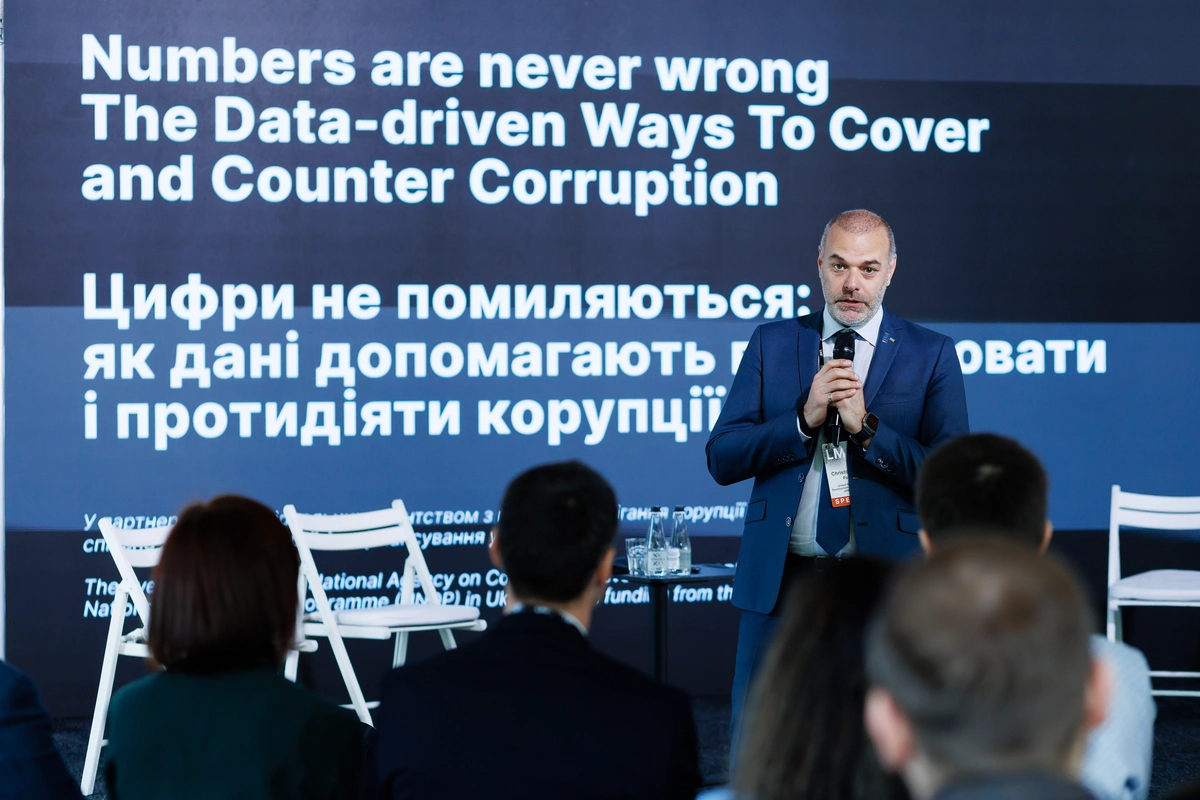
The event was opened by Viktor Pavlushchyk, Head of the National Agency on Corruption Prevention (NACP), and Christophoros Politis, UNDP Deputy Resident Representative in Ukraine.
"For the NACP, data serves as the foundation for shaping anti-corruption policy in the state. For instance, the Anti-Corruption Strategy for 2026–2030 was developed based on a series of studies that made it possible to identify key areas and problems to be addressed. Numbers certainly do not lie, but they must be used correctly. It is numbers and data that allow us to analyse the implementation of anti-corruption measures in the long term," noted NACP Head Viktor Pavlushchyk.
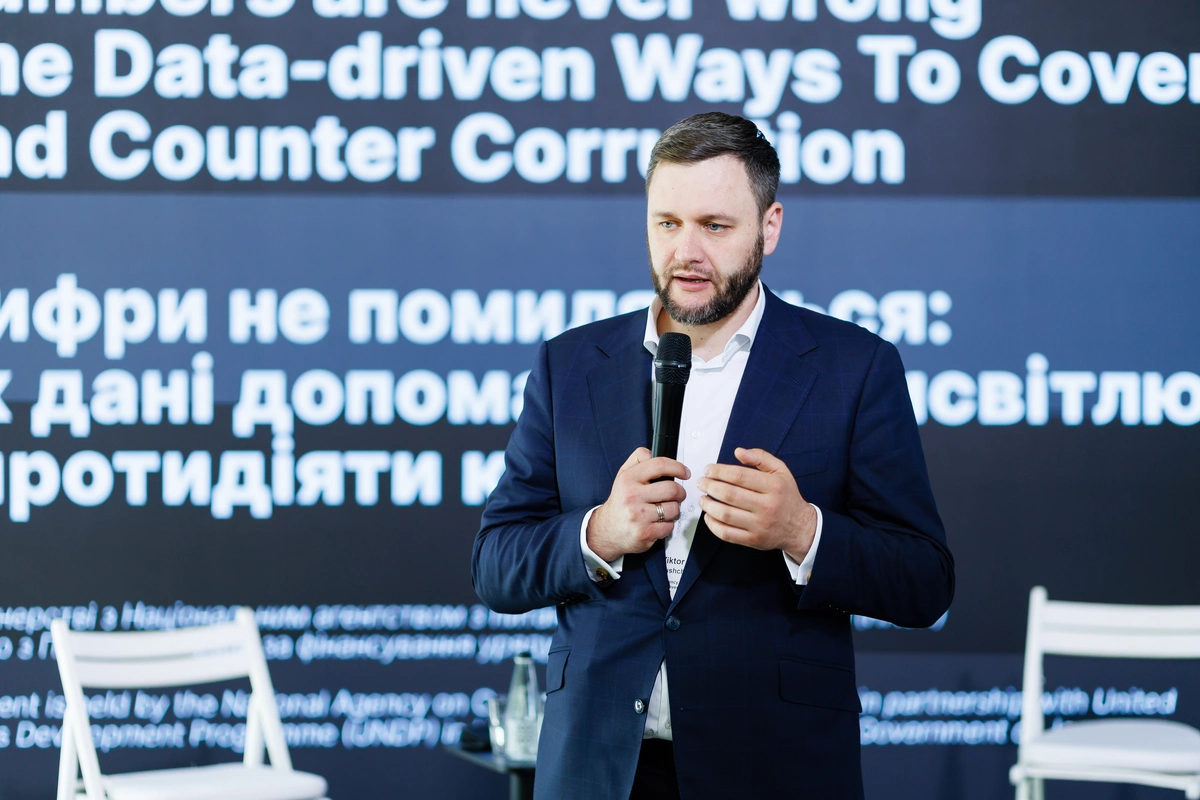
In his turn, Christophoros Politis emphasised that anti-corruption efforts are directly linked to trust in the state:
"For UNDP, it is crucial to support discussions like this one, as anti-corruption efforts are directly linked to trust in the state. Today, 69% of Ukrainians report a decline in trust towards central institutions, while only 9% demonstrate a high level of media literacy. Under such circumstances, the exact way corruption is discussed in society is extremely important. Both exaggeration and sweeping things under the rug can be equally harmful. This is why UNDP supports an approach where discussions on corruption are grounded in facts, data, and reliable analysis, enabling a better understanding of the situation and more informed decision-making," noted Christophoros Politis, UNDP Deputy Resident Representative in Ukraine.
Perception of corruption and the impact of disinformation on citizens
During the first session, experts discussed how the perception of corruption is shaped, what disinformation narratives exist, and how to debunk them. One of the key topics of the discussion was the gap between citizens' perception of the level of corruption and their experience.
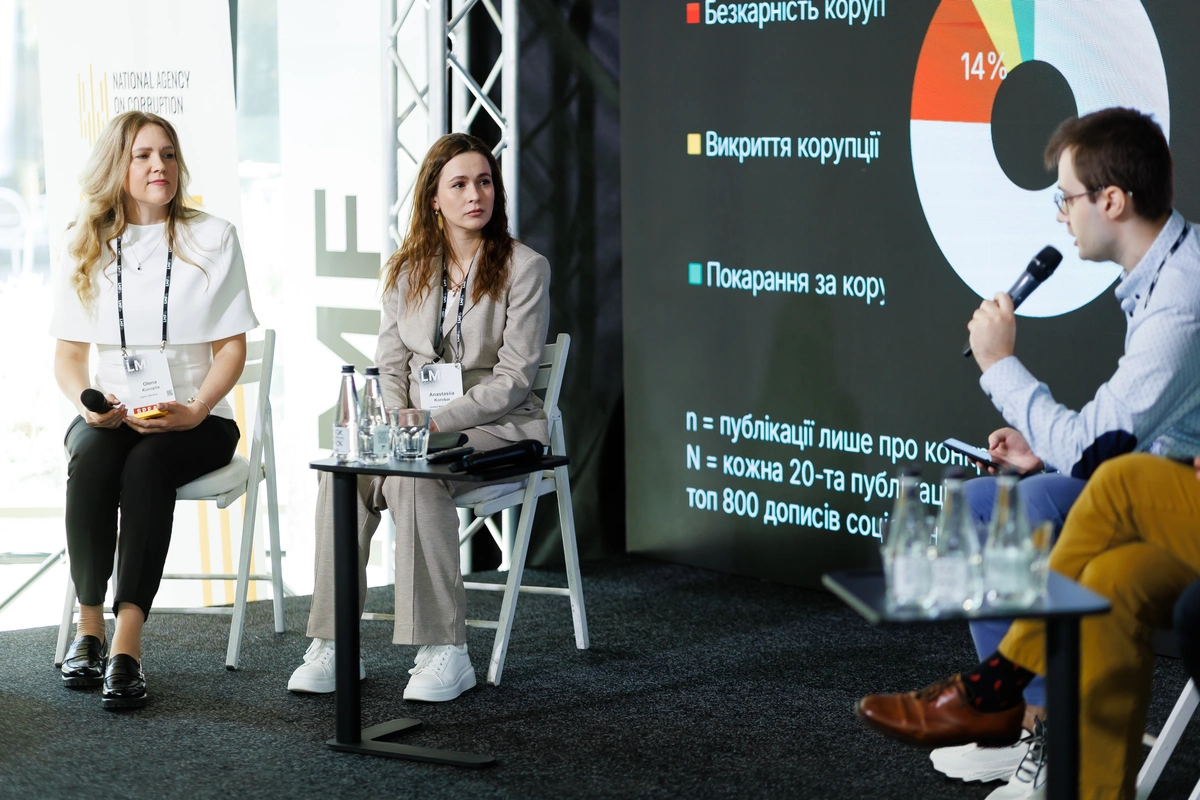
Yevhen Luzan, Senior Analyst at the Center for Content Analysis, spoke about trends in media coverage of corruption. According to him, journalists consistently pay attention to this topic, with over 20,000 reports appearing quarterly. However, media and social networks tend to focus rather on high-profile names and reactions to news hooks (e.g., searches, notices of suspicion), while court hearings are tracked only in resonant cases—typically by specialised publications. Ultimately, verdicts account for less than 5% of reports, while 76% in the media (and 51% on social networks) focus on procedural actions.
Yevhen Luzan added that topics such as digitalisation, reducing the regulatory burden, and other corruption prevention measures remain outside the scope of discussion.
The persistent narrative of a "totally corrupt state" is actively fueled by russian disinformation. Mykola Balaban, a representative of the Centre for Strategic Communications, noted that russia uses corruption not just as a propaganda theme but as one of the central tools in information attacks against Ukraine. These narratives are continuously disseminated to both Ukrainian and foreign audiences, as well as international partners.
"For russian influence operations, corruption is a very convenient topic. It is emotional, sensitive, and tied to trust in the state, the sense of justice, the war, mobilisation, international aid to Ukraine, and ultimately Ukraine's future. That is precisely why russia is trying to turn it from a real social problem into a tool to delegitimise Ukrainian statehood," Mykola Balaban noted.
In 2023, experts analysed 130,000 reports in the Ukrainian segment of the internet and social networks, detecting 86 significant information activities showing signs of an information operation on the topic of corruption. This means a new attempt at influence was recorded approximately every two days. Currently, this activity remains at the same level.
Pavlo Buldovych, Head of the Department for Coordination of State Information Policy on Corruption Prevention at the NACP, pointed out that NACP's sociology actually reflects many interesting and practical insights, including a ranking of the most corrupt spheres, a list of the most common corrupt practices in each sphere, and information on the initiators of corrupt situations.
"The public perception of corruption as a major problem is combined with low awareness and practical engagement of citizens in countering it. For instance, over 90% of the population considers corruption a serious problem, yet at the same time, between 18% and 70% cannot clearly identify it, failing to distinguish it from other violations. The most telling gap is recorded between the perception of the level of corruption and the actual corrupt experience of citizens. Over the past 20 years, nine out of ten Ukrainians have consistently believed that corruption in their country is very or somewhat widespread. Over the same period, the number of citizens with actual corrupt experience has decreased more than 3.5 times (from nearly 70% in 2007 to 18% last year)," Pavlo Buldovych stated.
Anastasiia Korobai, UNDP in Ukraine Project Manager, added that it is important to study behavioural patterns of corruption at different levels. For example, citizens trust local authorities more, yet the utilisation rate of whistleblowing tools there remains low. Only 2% of citizens have experience reporting corruption. While 60% of Ukrainians know how to report it, they choose not to do so due to potential consequences, such as termination of employment, or because they do not see cases that have actually succeeded.
How to shift the narrative about "Total corruption" in Ukraine
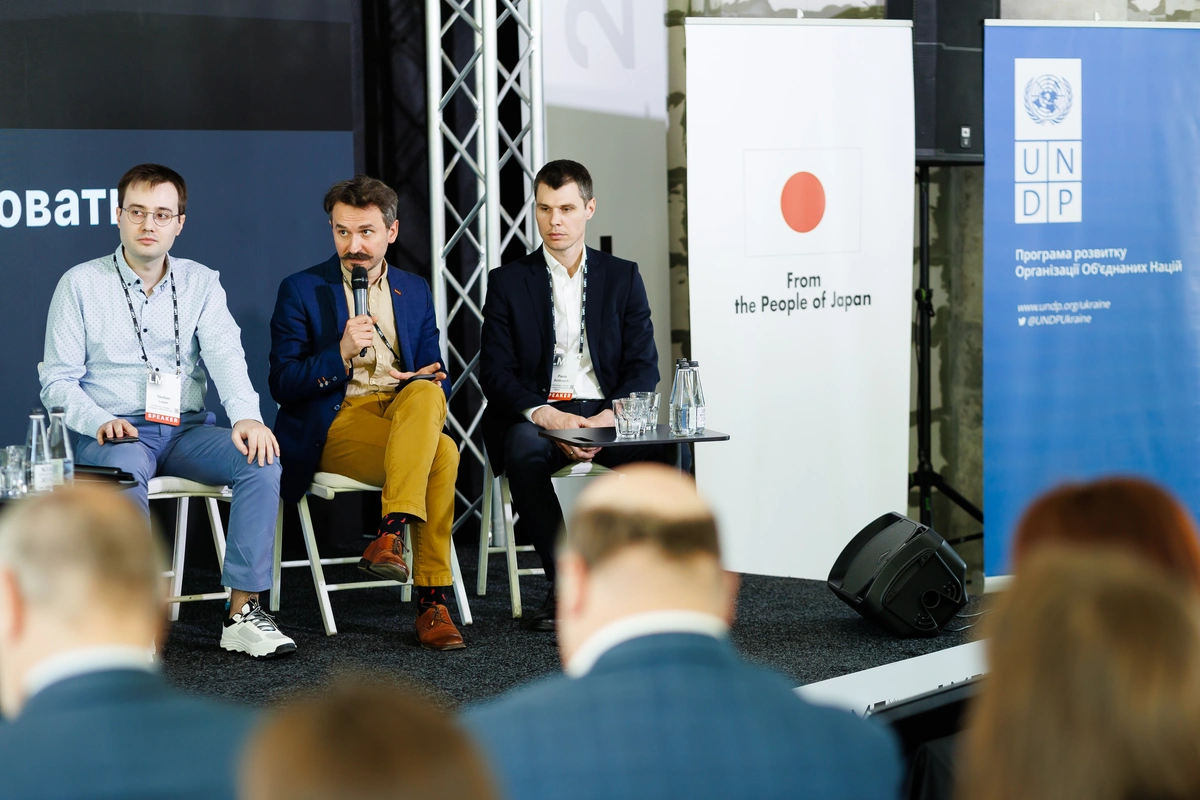
Answers to this question were proposed by Valeriy Chaly, Ambassador Extraordinary and Plenipotentiary, Ambassador of Ukraine to the USA (2015–2019), Chairman of the Board of the Ukraine Crisis Media Center (UCMC), and Ołeh Biłecki, TV and radio journalist, host of Radio NV.
According to Valeriy Chaly, now that an active process of exposing corruption has begun in Ukraine, its perception index is naturally rising. However, we must convince European partners that in the process of Ukraine's accession to the EU, requirements and evaluations should be guided not only by processes but also by specific results of anti-corruption measures. At the same time, the authorities in Ukraine also need to pay closer attention to the advice of partners when implementing reforms in the law enforcement sector that are vital for citizens.
"The Corruption Perceptions Index does not correlate directly with the level of trust in the authorities. In Ukraine, despite existing problems, trust in the executive branch is objectively higher, given that everyone is united during the war. At the same time, the situation in the country cannot be assessed as total corruption. There is a clear formula for reducing the level of corruption: avoiding monopolies, eliminating discretion (the right of an official to make decisions at their own discretion), and ensuring transparency. An official must also not have the ability to dilute responsibility through collegial decisions. I believe that in Ukraine's reality, there is also a great demand for the inevitability of punishment. We need a systemic fight against top-level political corruption and real, dynamic decisions that would restore the trust of citizens and our international partners," Valeriy Chaly noted.
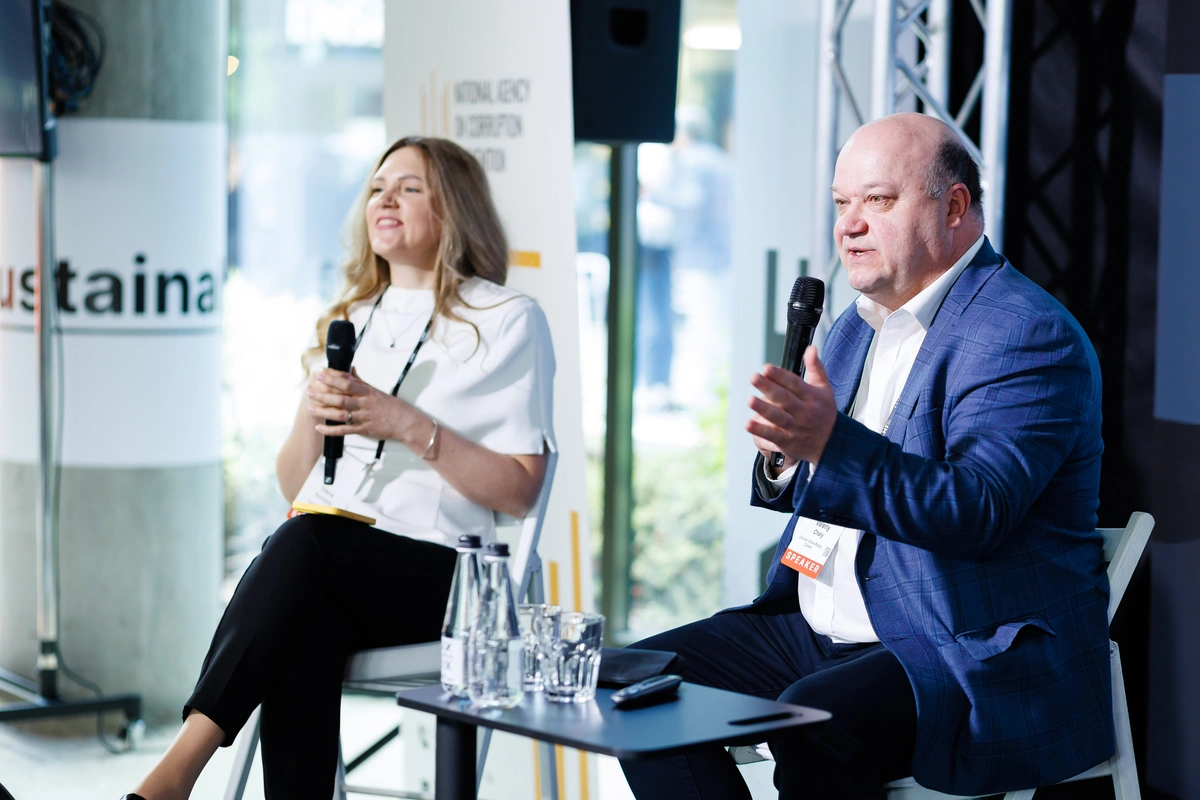
Ołeh Biłecki presented the media community's perspective on how a journalist can achieve a compromise between the professional duty to report the truth and the responsibility not to fuel hostile disinformation narratives about a "totally corrupt country."
The journalist noted that attempts to conceal problems are ineffective, as foreign audiences have access to information and therefore instantly detect insincerity. The main task of communication is to debunk the myth of Ukraine's alleged "pathological infection" with corruption. Instead, it is necessary to communicate that every society experiences corruption, but the key point is that Ukrainian society does not tolerate it, as evidenced by the protests in July last year.
Ołeh Biłecki also drew parallels with Poland, where anti-corruption agencies (specifically the Central Anti-Corruption Bureau) and high-profile cases against former high-ranking officials (such as Zbigniew Ziobro) similarly often become objects of politicisation and intense debate.
"The world must see that there is a third actor in Ukraine—civil society, which actively corrects the actions of the state, does not tolerate abuses, and is the main driver of change," the journalist summarised.
Digital tools for corruption prevention
The concluding session of the event was dedicated to the practical use of open data.
Oksana Kopiichuk, Legal Advisor at Transparency International Ukraine, presented the "HACC Decided" platform (https://hacc-decided.ti-ukraine.org/uk), which allows tracking the progress of cases in the High Anti-Corruption Court from suspicion to verdict. The website aggregates nearly 125,000 court documents, over 550 profiled cases, around 4,000 video broadcasts of hearings, and more than 500 news pieces written directly from the courtroom. Cases can be searched by the defendant's last name, proceedings number, Criminal Code article, or decision type. The platform also features analytical materials from TI Ukraine lawyers—deep dives into specific high-profile cases and anti-corruption processes in general, all written in plain language.
Alyona Sadovska, Deputy Head of the Department for Coordination of State Information Policy on Corruption Prevention at the NACP, spoke about the six digital resources of the NACP. According to her, the public section of the information system for monitoring the implementation of state anti-corruption policy (ISM SACP, https://dap.nazk.gov.ua/) allows citizens to track the dynamics and effectiveness of the implementation of measures under the State Anti-Corruption Program (SACP). The restricted section, to which 109 implementing government bodies are connected, is intended for planning and reporting to the NACP on the execution of these measures.
According to Yevheniia Drozdova, Head of the Data Journalism Department at Texty.org.ua, the anti-corruption data infrastructure in Ukraine is one of the most developed: a significant portion of key registries and datasets is accessible openly and via API. Thanks to this, journalists have to file freedom of information requests significantly less often compared to dealing with many other public information administrators.
The participants summarised that data openness, its constant use by government authorities, systemic prevention, and professional communication are effective tools for preventing corruption and overcoming narratives.
As a reminder, the LMF 2026 conference took place on May 14–16, 2026, in Lviv. The event was attended by over 700 participants from 36 countries. The focus theme of the conference was "Reality Under Attack: Freeze, Flight, or Fight?" The LMF 2026 conference traditionally gathered foreign and Ukrainian media professionals working in an international environment—public intellectuals, researchers, politicians, representatives of the civil sector, and international organisations.
The event was implemented by the NACP jointly with UNDP in Ukraine, funded by the Government of Japan.
Video recording link: https://www.youtube.com/watch?v=CDV55k22amo
Photo: Orest Filin / UNDP in Ukraine