


The housing construction sector is critically important for Ukraine. Providing the population with affordable and safe housing directly impacts the recovery of communities and the displacement of millions of people affected by the war. Therefore, preventing potential corrupt abuses in this field is one of society's key demands. How can we form the basis for systemic changes capable of protecting investors' interests and restoring trust in Ukraine's primary housing market?
Specialists from the National Agency on Corruption Prevention (NACP), together with experts from the OSCE Support Programme for Ukraine, have prepared a comprehensive study: “Corruption risks associated with the procedure of investing in and financing the construction of residential real estate using non-state funds attracted from individuals and legal entities: modelling and proposals for their minimisation/elimination.” The study is intended to serve as the foundation for a comprehensive strategy to reform this industry.
“The construction sector ranks among the top 7 most saturated with corruption risks. Therefore, the topic of this research is highly relevant in the context of preventing corruption. Furthermore, amid the war, significant destruction, and internal displacement, it is especially important to ensure that people seeking new homes are protected from potential abuses,” noted Serhii Hupiak, Deputy Head of the NACP, during the presentation of the study.
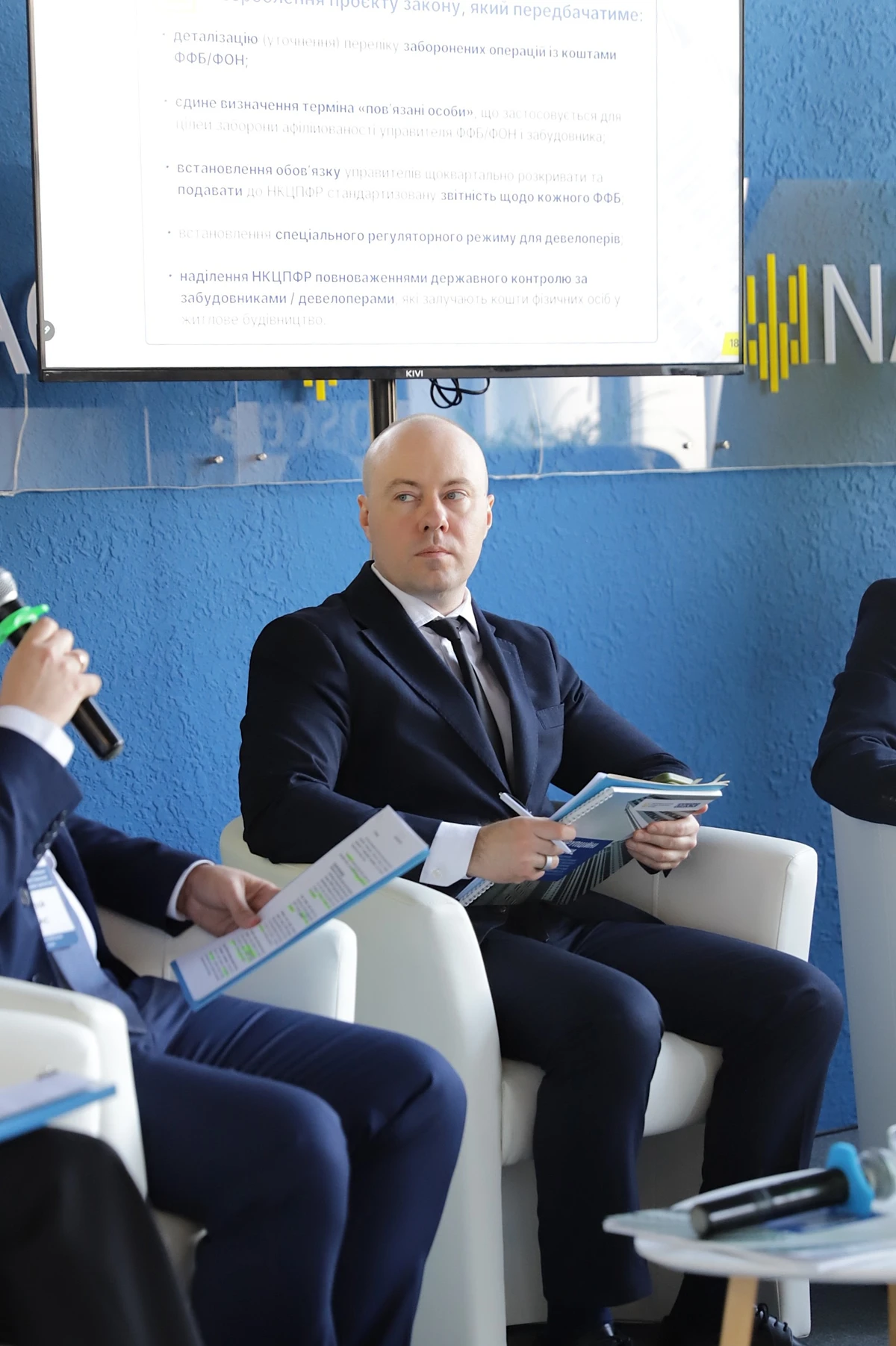
Financing residential construction by attracting funds from individuals and legal entities traditionally belongs to sectors with an increased level of corruption risks. The high cost of objects, long investment cycles, a complex multi-level system of permitting procedures, and the multiplicity of involved entities create an environment where even minor gaps in legal regulation or weak institutional control can transform into systemic abuses.
At the same time, the war has significantly changed market functioning conditions, as emphasised by the participants of the study's presentation.
“Since the beginning of the full-scale invasion, the need for housing for millions of Ukrainians has remained one of the state's key challenges. As a result of the war, more than 14% of the country's housing stock has already been damaged or destroyed, which significantly increases the need for transparent, safe, and efficient housing construction mechanisms. That is why eliminating corruption risks in this area is critical. Transparent rules, proper investor protection, and clear financing mechanisms will allow for the attraction of additional private capital and international support into a sector that remains one of the most important today,” stated Nataliia Kozlovska, Deputy Minister for Communities and Territories Development of Ukraine.
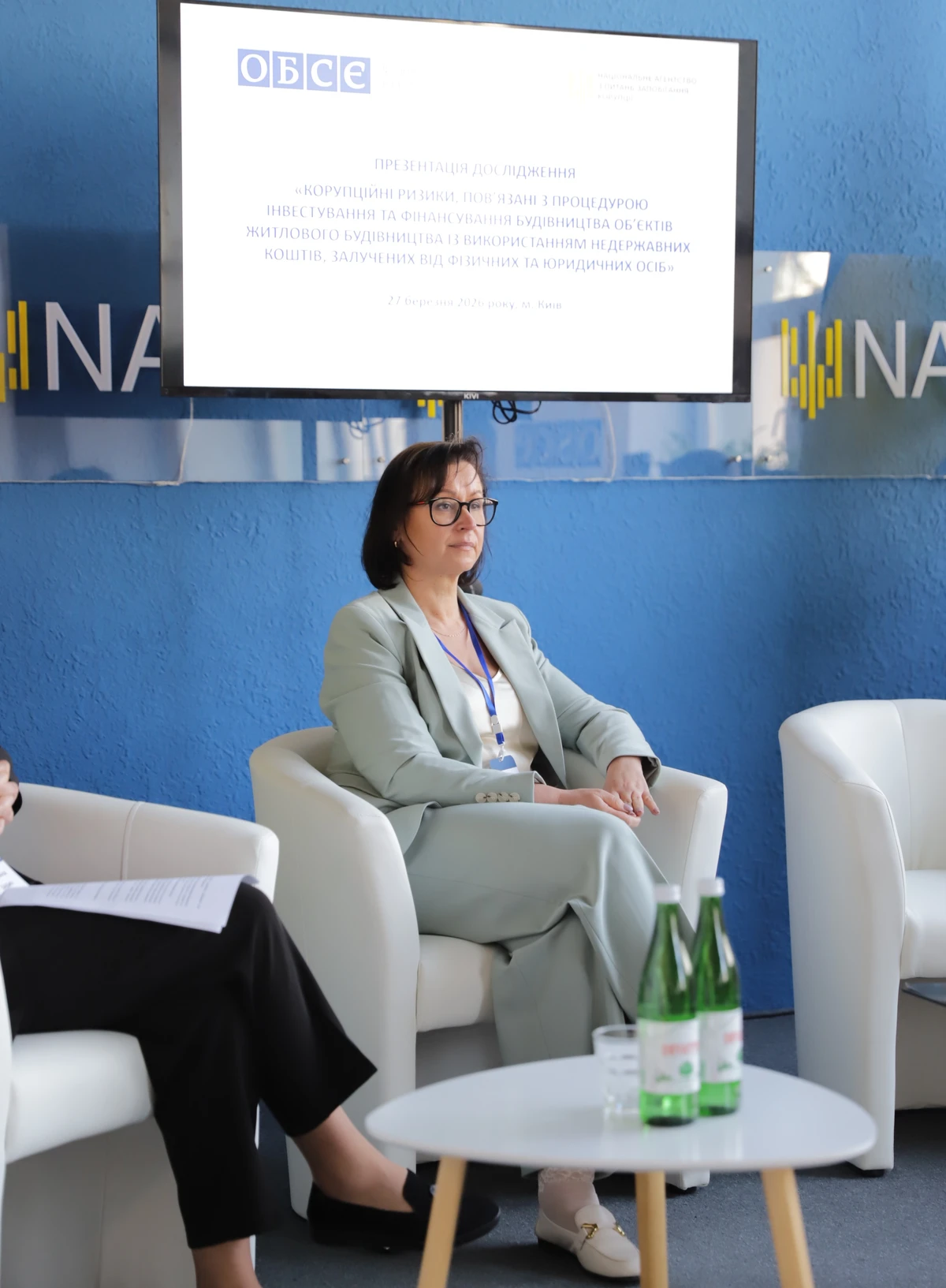
Arsen Ilyin, a member of the National Securities and Stock Market Commission (NSSMC), noted that the commission collaborated quite fruitfully on the study and thanked everyone involved.
“However, as of now, the landscape has changed. This will need to be taken into account moving forward. The very issue of Construction Financing Funds has shifted significantly because there are fewer of them. One reason is that developers can now organise sales directly themselves,” he added.
According to Natalyia Stupnytska, Head of the Projects Component (Democratisation and Good Governance, Rule of Law and Human Rights) of the OSCE Support Programme for Ukraine, the transparency of investment and construction financing mechanisms is a matter of trust—the trust of citizens, investors, and international partners. Today, in the context of Ukraine's reconstruction, these issues take on particular importance.
“The study offers a systemic view of corruption risks in residential construction financing and focuses not only on analysing already recorded violations but also, and most importantly, on identifying legal and institutional vulnerabilities. Such an approach allows for proactive action: identifying risks at early stages and forming clear, practical recommendations to increase the transparency and efficiency of regulation,” noted Nataliia Stupnytska.
Within the framework of the study, 10 corruption risks were identified, the mechanism for investing in housing construction was analysed, and key problems that may contribute to the emergence of corruption risks were determined, including:
- Imperfections in the regulation of Construction Financing Funds (CFF) and Real Estate Operations Funds (REOF);
- Lack of control over developers' activities;
- Fragmented state supervision.
The study also focuses on modelling possible corruption risks, which allows for the early identification, assessment, and control of potential threats.
Based on a thorough analysis of information, NACP experts developed strategic recommendations to increase transparency and regulatory efficiency in this field. Among the recommendations, it is proposed to develop regulatory acts that provide for:
- Detailing (clarifying) the list of prohibited operations with CFF/REOF funds;
- A uniform definition of the term “related parties” is to be applied for the purpose of prohibiting affiliation between a CFF/REOF manager and a developer;
- Establishing a special regulatory regime for developers who attract non-state funds for residential construction.
In addition, it is recommended to consider implementing a comprehensive approach to controlling residential construction financing. This approach combines an assessment of the type of construction object, the method of attracting funds from individuals, and the existence of a registered special property right to the unfinished construction object or future real estate object.
“The issue of risks in the field of construction investment is about the insecurity of investments and about trust, which has been undermined by the fact that some unscrupulous developers failed to meet their obligations in the past—we have a certain negative legacy. We are constantly launching initiatives that minimise corruption risks,” noted Oleksandr Novytskyi, Head of the State Inspectorate for Architecture and Urban Planning of Ukraine (DIAM). One of the latest innovations, according to him, is the introduction of the “Transparent Construction” mobile application, initiated by DIAM together with the Ministry for Communities and Territories Development and the Ministry of Digital Transformation. Starting April 1, this application will become mandatory for inspectors of all state architectural and construction control bodies when certifying objects for operation.

The presentation of the study was attended by representatives of the National Securities and Stock Market Commission of Ukraine, the State Inspectorate for Architecture and Urban Planning of Ukraine, the Ministry for Communities and Territories Development, the Bureau of Economic Security of Ukraine, the National Anti-Corruption Bureau of Ukraine, regional military administrations, non-governmental organizations, the business community, and the scientific community.
The study is available via the link.