
The real corruption experience of the population in several sectors with which citizens interact most frequently decreased last year compared to 2024. Positive shifts were recorded in the areas of construction, land relations, activities of the Ministry of Internal Affairs (MIA) service centers, as well as in the areas of connection/maintenance of electricity, gas, and water supply, public kindergarten services, and healthcare. This is evidenced by the results of the nationwide sociological study “Corruption in Ukraine 2025: Understanding, Perception, Prevalence,” conducted by the sociological company Info Sapiens at the request of the National Agency on Corruption Prevention (NACP) with the support of the EU Anti-Corruption Initiative (EUACI).
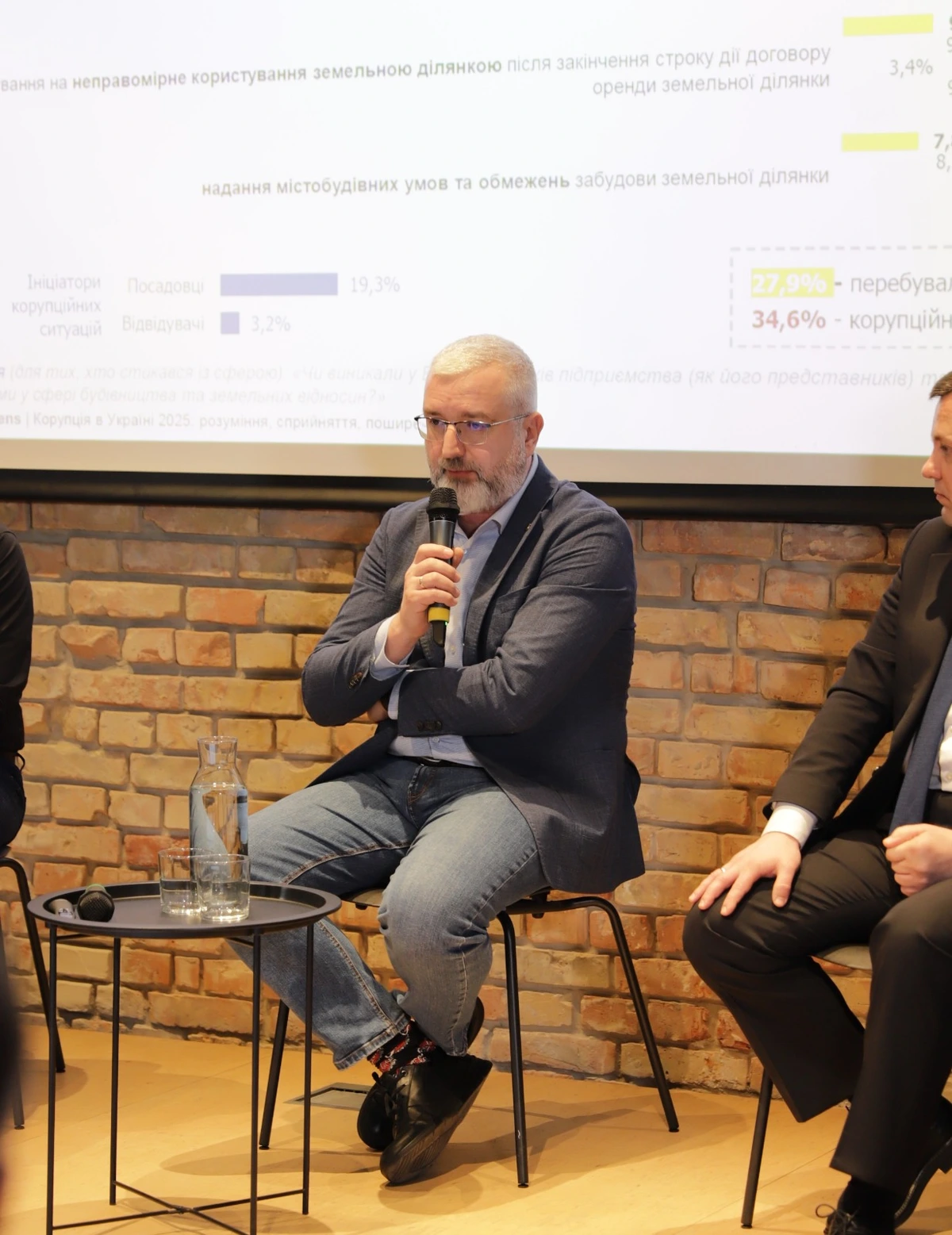
The most significant decrease in the population's corruption experience occurred in the construction and land relations sector: in 2024, 44.1% of those who had contact with this sector encountered corruption, while in 2025, it was 31.8%. However, despite the positive dynamics, this sector has been assessed as the most corrupt for the second consecutive year.
“The decrease in the population's corruption experience is due to a series of decisions. The first and most important is land deregulation and decentralization. Many permits, expert assessments, and approvals that previously created corruption risks were canceled. Also, for the duration of martial law, the free privatization of state and communal land, which previously created huge temptation and demand for corruption, has been suspended. Another important decision in the land sector is digitalization. Previously, an extract from the cadastre or a land valuation extract was issued with a human signature and in manual mode, provoking corruption. As soon as the extract was automated, these abuses disappeared,” noted Andrii Martyn, Senior Project Manager for Agrarian and Land Policy at the Reform Office of the Cabinet of Ministers of Ukraine.
According to the survey data, one of the leaders in terms of the population's corruption experience is the healthcare sector. At the same time, a consistent trend toward a decrease in this indicator has been observed since 2023, and last year, 24.2% of medical service recipients reported corruption situations.
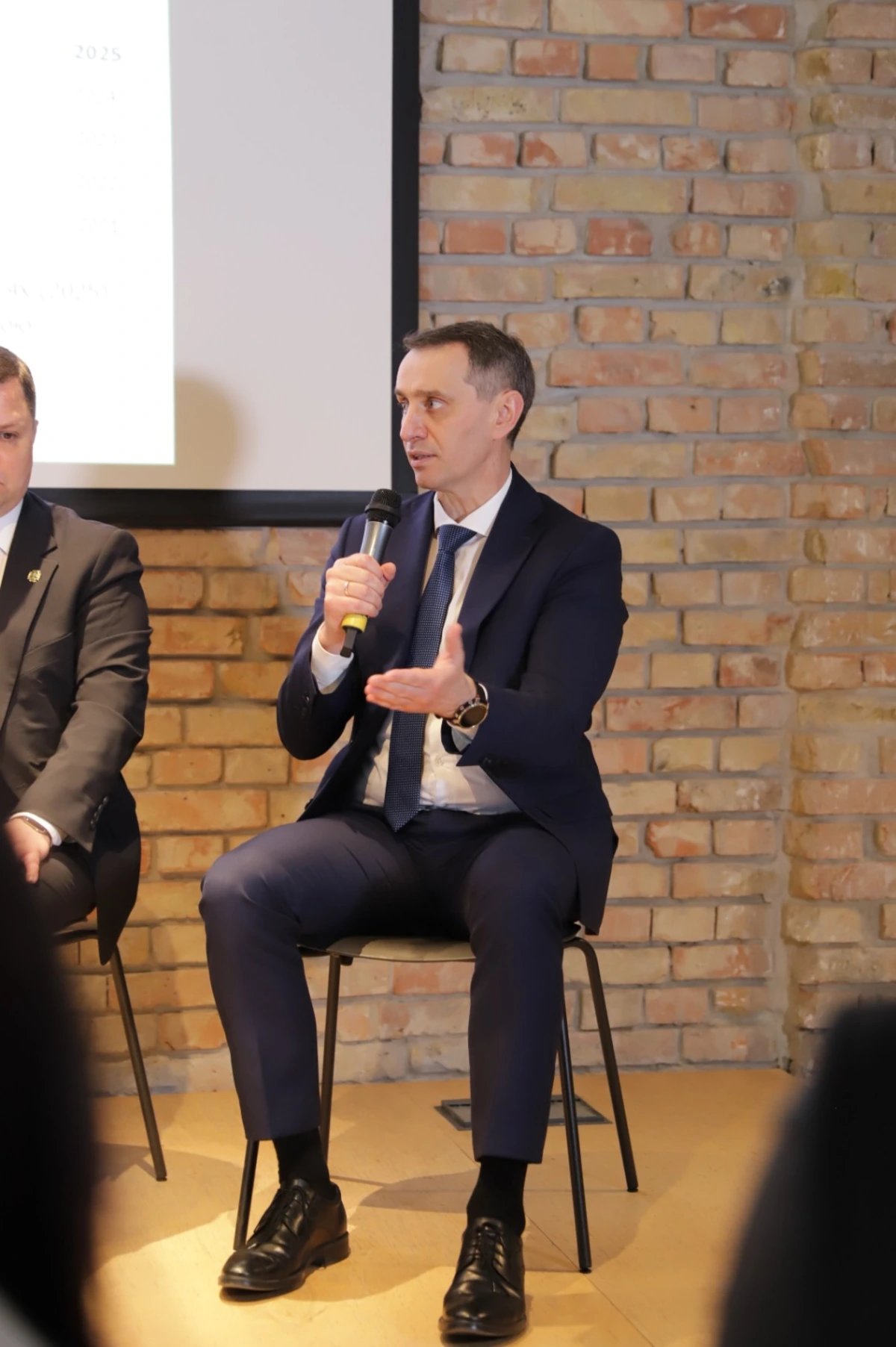
“We do not ignore the problems in the healthcare sector but work systematically to resolve them. Step by step, we are changing approaches–through digitalization, transparent procedures, and the regulation of specific areas. This allows us to reduce corruption risks and make the system more understandable for the patient. It is fundamental for us that the patient receives everything guaranteed by the state without additional informal costs. The changes we are implementing are aimed precisely at this. The data presented in the study confirm that these decisions are yielding results. The medical system must operate under clear and honest rules. We are open to dialogue with medical institutions regarding working conditions and financing, but any violations and abuses must receive an appropriate response. Our task is to consolidate these changes and ensure their sustainability so that people in every community receive high-quality and free medical care,” said the Minister of Health of Ukraine, Viktor Liashko.
Among the key implemented solutions are: the reform of the Medical and Social Expert Commission (MSEC) and the launch of a new system for assessing a person's daily functioning, as well as the launch of new digital services: electronic distribution for internships, an electronic waiting list for endoprosthetics, and a job portal for medical professionals.
The indicators of corruption experience remain high in the areas of law enforcement and crime prevention (26%) and higher education institutions (24.6%). The prevalence of corruption, based on the population's experience, has practically not changed in these areas over the past year.
As noted by Yevhen Krapyvin, a lawyer and head of the “Law Enforcement” track at the Laboratory for Legislative Initiatives, when assessing the law enforcement sphere, respondents focused on corruption during the verification of military registration documents by police and Territorial Recruitment Center (TRC) representatives. In addition to personal experience, population assessments are largely based on how this topic is covered in the media.
The corruption experience of citizens when visiting MIA service centers has decreased over the last year from 26.1% to 16.2%, and when receiving services for the connection and maintenance of electricity, gas, water supply, and sewage systems, from 24.1% to 18.1%. Among other sectors, it is also worth noting preschool education, where a significant decrease in the corruption experience indicator to 9% was recorded, continuing a steady downward trend since 2023 (when 27% of respondents reported corruption in kindergartens).
The lowest level of corruption in 2025 was traditionally recorded in the activities of Administrative Service Centers (ASC) – only 5% of visitors encountered corruption when applying to these institutions.
Unlike the general population, business representatives noted significant changes in receiving public services in only one area – customs. In 2025, 21.8% of entrepreneurs encountered corruption during customs control or the processing of customs documents, whereas between 2022 and 2024, more than 35% of business representatives had such an experience.
As noted by the Deputy Head of the State Customs Service, Vladyslav Suvorov, the key drivers of this positive dynamic were the development of the customs simplification system and automated customs clearance.
“Over the past year, we have implemented automatic customs clearance for enterprises with the status of Authorised Economic Operator (currently 117 companies) and companies that received the 'release at location' simplification (currently 170 companies). Separately, I will note the changes in the remuneration system. Officials directly involved in customs clearance receive higher salaries than back-office employees, which helps reduce the risks of petty corruption. At the same time, a significant portion of corruption cases recorded in the statistics is related to processes of direct interaction between business and customs, where risks arise at points of contact and require shared responsibility and preventive mechanisms from both sides,” said Vladyslav Suvorov, Deputy Head of the State Customs Service.
According to business experience, the most corrupt sectors are construction and land relations (34.6% of those who applied), the provision of services for the connection and maintenance of electricity, gas, water supply, and sewage systems (31.7%), and the activities of law enforcement agencies (26.8%). The lowest indicators of corruption experience among businesses are in the sectors of recovery (reconstruction) and public procurement (12.7% and 12%, respectively).
The results of the study can be found at the link.