

Preventing corruption is a cross-cutting element of all negotiating clusters in the European integration process. No chapter of the EU acquis can be closed without proper anti-corruption safeguards, and the responsibility for their implementation lies not only with anti-corruption bodies, but also with every public authority and local self-government body.
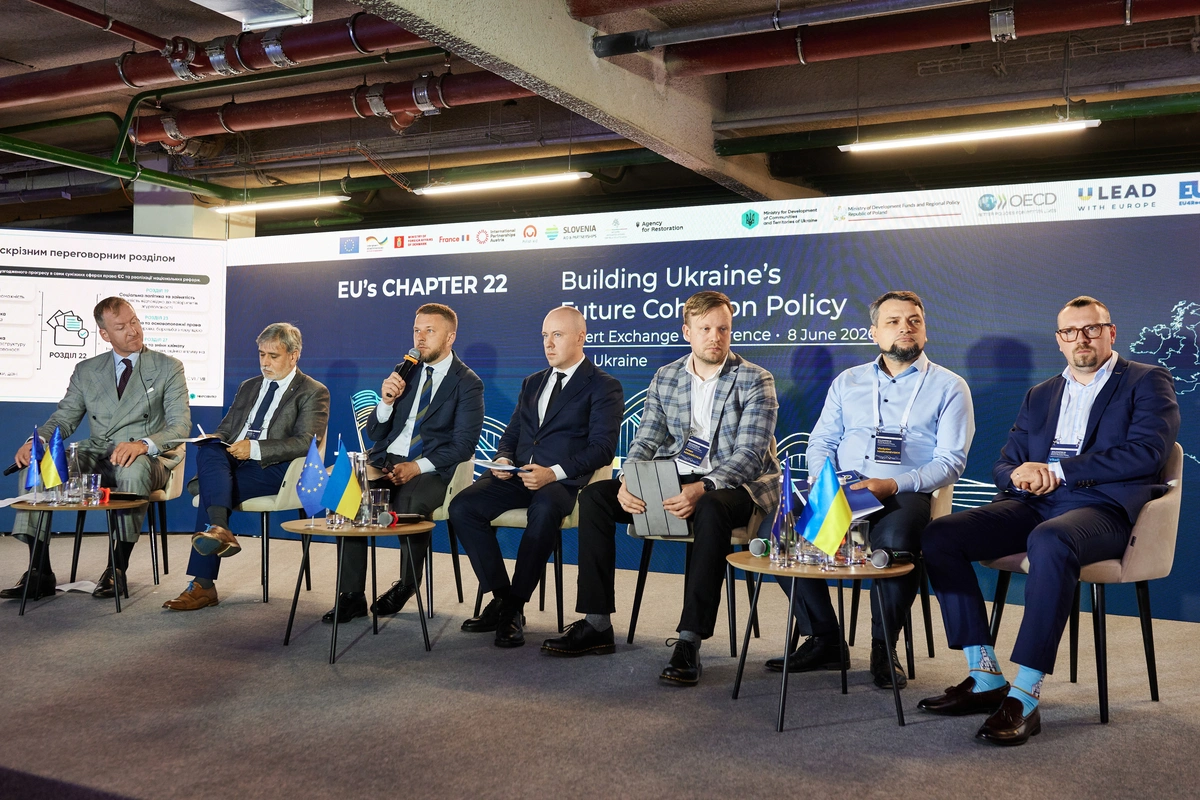
This was emphasised by Serhii Hupiak, Deputy Head of the National Agency on Corruption Prevention (NACP), during the expert conference "EU Chapter 22: Shaping Ukraine's Future Cohesion Policy."
Serhii Hupiak noted that an effective system of preventing corruption is a prerequisite for the proper management of public resources and the successful implementation of the EU cohesion policy. That is why the ability to independently identify and effectively manage corruption risks is becoming a key element of the institutional capacity of public authorities.
"We are moving from the stage of policy formulation to the stage of demonstrating concrete results. For Ukraine, in the context of European integration, what matters is not declarations of intent, but real changes and measurable results," the Deputy Head of the NACP emphasised.
He outlined the key tools that the NACP is consistently implementing to strengthen the anti-corruption capacity of authorities at all levels:
Anti-corruption programs as a risk management tool. In 2025, the NACP resumed the approval of anti-corruption programs and changed its approach to them. Anti-corruption programs must be a working tool for risk prevention, not a formality. In particular, more than 30 government authorities involved in the Ukraine Facility already have such programs. The Agency also provides methodical and practical support for their high-quality implementation.
Development of the institution of anti-corruption commissioners. The Agency is transforming the role of anti-corruption commissioners from "controllers" into internal experts who know how to identify risks and propose effective solutions.
Strategic analysis of corruption risks. The NACP prepares comprehensive studies in strategically important areas most affected by corruption: public procurement, reconstruction, forestry, etc. These materials contain practical recommendations for government authorities, the parliament, and authorised persons, and are already being used in the development of anti-corruption programs.
Anti-corruption expertise of regulations acts as a "filter" at the stage of drafting legislation, especially regarding the allocation of funds and public investments, to prevent the embedding of corruption schemes. Thus, throughout 2025 and early 2026, the NACP analysed dozens of draft regulatory acts related to public investment, agriculture, procurement, etc. As a result of this work, corruption-producing factors were identified and eliminated in hundreds of documents.
Separately, Serhii Hupiak emphasised the importance of the "tone from the top," which entails the responsibility of the heads of government authorities to create conditions for the work of anti-corruption commissioners and the implementation of anti-corruption mechanisms.
"Preventing corruption is a shared responsibility of all state institutions. Only through high-quality interaction, effective risk management, and achieving concrete results will we be able to fulfil the tasks of European integration and strengthen citizens' trust in the state," he concluded.
The conference was organised by the Ministry for Communities and Territories Development of Ukraine and the "U-LEAD with Europe" Programme, with the participation of the OECD, the Ministry of Development Funds and Regional Policy of the Republic of Poland, and EU4Reconstruction. Representatives of Ukrainian state bodies, European Union institutions, international partners, EU member states, regional and local authorities, and the expert community took part in the discussion.
For reference. Chapter 22, "Regional Policy and Coordination of Structural Instruments", is one of the 35 negotiating chapters in the process of Ukraine's accession to the EU. It establishes requirements for the public investment management system and the use of EU financial instruments, particularly regarding strategic planning, monitoring, financial control, and risk management.
One of the key conditions for meeting the requirements of Chapter 22 is the presence of effective mechanisms for integrity and preventing corruption, which ensure the transparent, efficient, and accountable use of public funds in accordance with European Union standards.