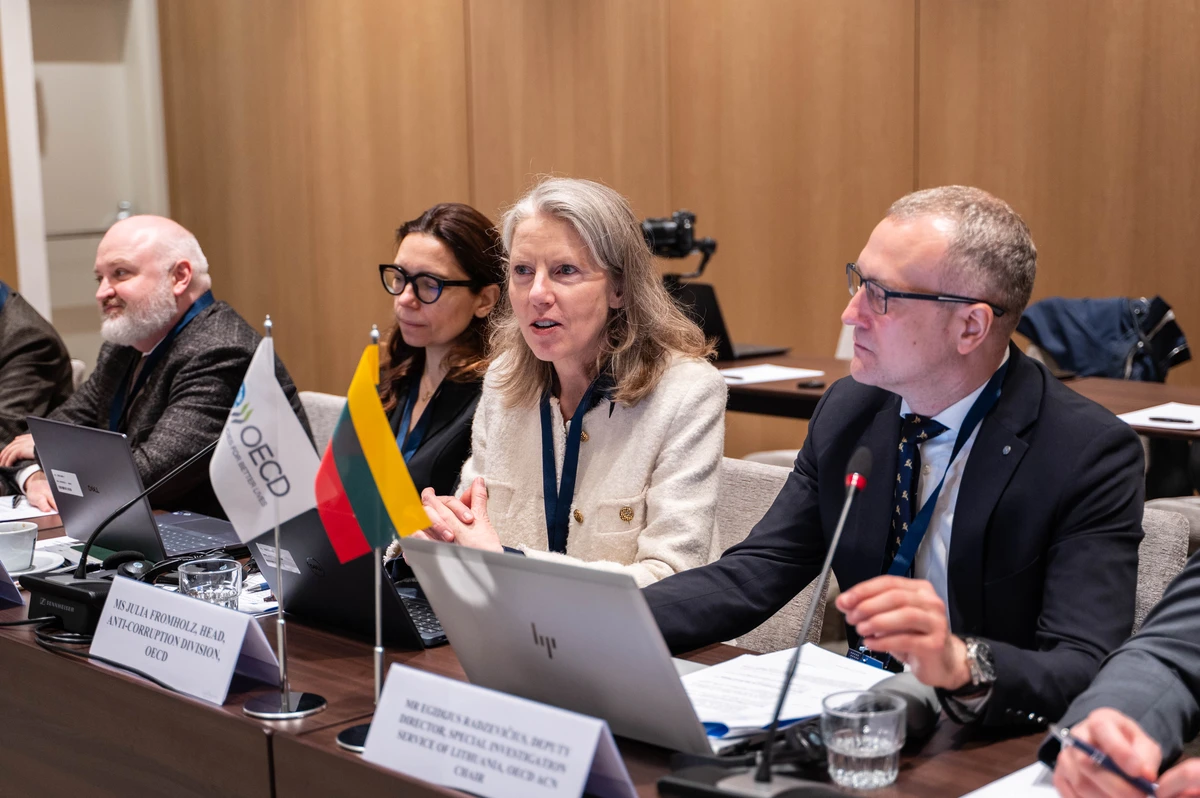


Viktor Pavlushchyk, Head of the National Agency on Corruption Prevention (NACP), took part in the Strategic Dialogue of anti-corruption leaders within the framework of the Anti-Corruption Network of the Organisation for Economic Co-operation and Development for Eastern Europe and Central Asia (ACN OECD), which took place in the city of Vilnius (Lithuania).
The event was attended by representatives of more than 20 countries, including heads of anti-corruption institutions, national coordinators of the network, as well as representatives of the ACN Secretariat and OECD experts.
The participants summarised the results of the implementation of the ACN work program for 2023–2026 and discussed the formation of a new document for 2027–2030. It was about, in particular, priority directions of further work of the ACN OECD, the potential for implementing the sixth round of monitoring of the Istanbul Anti-Corruption Action Plan, and key areas of activity of the OECD Law Enforcement Network (LEN). In addition, they discussed the need to integrate measures for the implementation of anti-corruption mainstreaming in vulnerable sectors into the activities of the ACN.
Following the results of the meeting, the participants confirmed their shared commitment to reforms and outlined specific commitments to support effective evidence-based anti-corruption policy, strengthen the protection of whistleblowers, promote business integrity, strengthen transparency and accountability mechanisms, ensure the integrity of public procurement, introduce effective liability of legal entities for corruption offenses, intensify the fight against international bribery, support the independence of anti-corruption and law enforcement institutions, strengthen the capacity of law enforcement agencies, protect civil society, as well as implement anti-corruption measures in sectors with a high level of corruption risks. A joint statement of the participants of the Strategic Dialogue will be published in the near future, which will further form the basis for the development of the ACN OECD program for 2027-2030.
“Ukraine's participation in the ACN OECD is of strategic importance, especially in the conditions of war and large-scale post-war recovery. This makes it possible to focus on the leading international standards of integrity, which is critically important for the effective management of public resources and increasing trust from potential investors. Such participation directly supports the European integration course of Ukraine, and regular assessments and recommendations become a reliable guide in the process of implementing anti-corruption reforms,” the Head of the NACP noted.
Participation in the Strategic Dialogue confirms Ukraine's active role in the regional anti-corruption agenda and is an important element of the country's European integration course.
ACN OECD is a regional work program within the framework of the OECD Working Group on Bribery, founded in 1998. Its mission is to support member countries in preventing and combating corruption through country analyses, networks of practitioners, and individual technical assistance. In 2025, Lithuania became the first country to chair the ACN.
The Istanbul Anti-Corruption Action Plan is a regional peer review program launched in 2003 within the framework of the ACN OECD, which supports reforms by conducting analysis and monitoring the implementation of recommendations that promote the best international standards. It provides reviews of 10 countries in the OECD Anti-Corruption Network: Ukraine, Armenia, Georgia, Kazakhstan, Kyrgyzstan, Moldova, Mongolia, Tajikistan, Azerbaijan, and Uzbekistan.
In September 2025, the OECD published a report on the results of a comprehensive assessment of Ukraine's anti-corruption policy as part of the fifth round of monitoring of the Istanbul Anti-Corruption Action Plan. Among the key achievements of Ukraine noted by the OECD are a modern, inclusive system for monitoring and evaluating the anti-corruption strategy, progress in strengthening the protection of whistleblowers, strengthening of specialised anti-corruption institutions, as well as key legislative reforms.