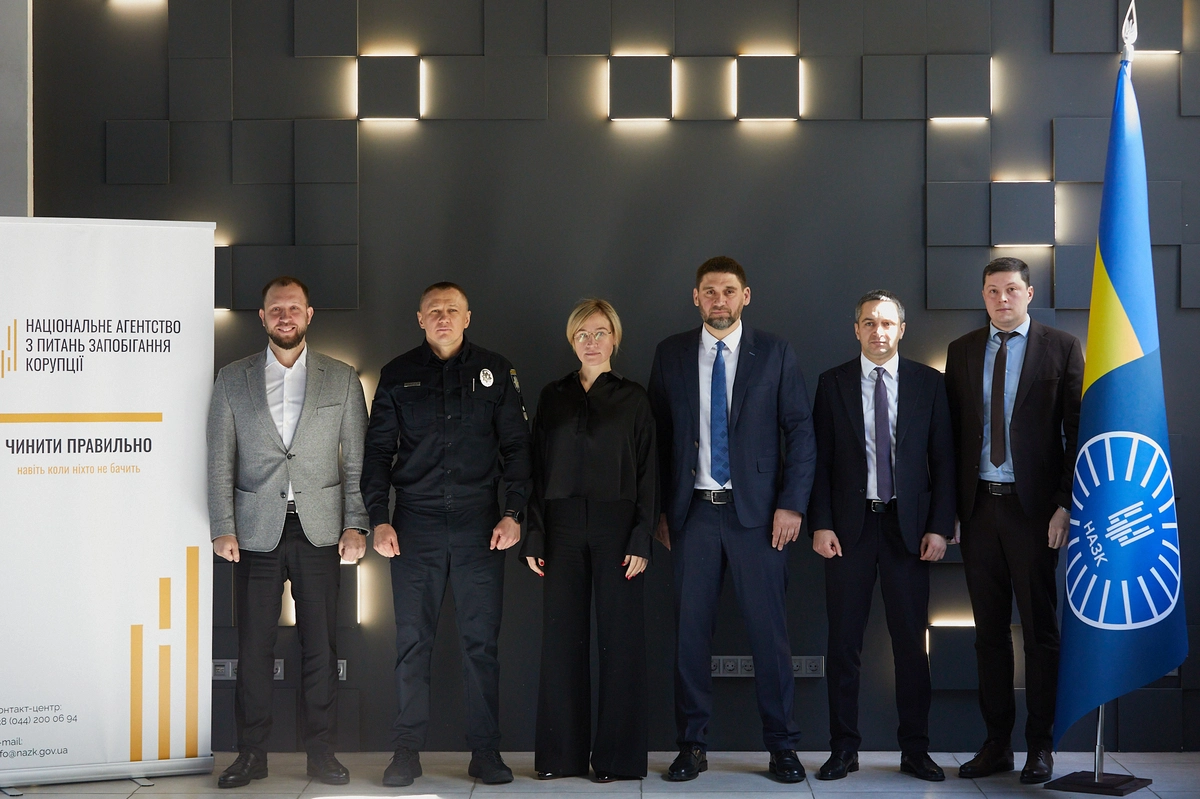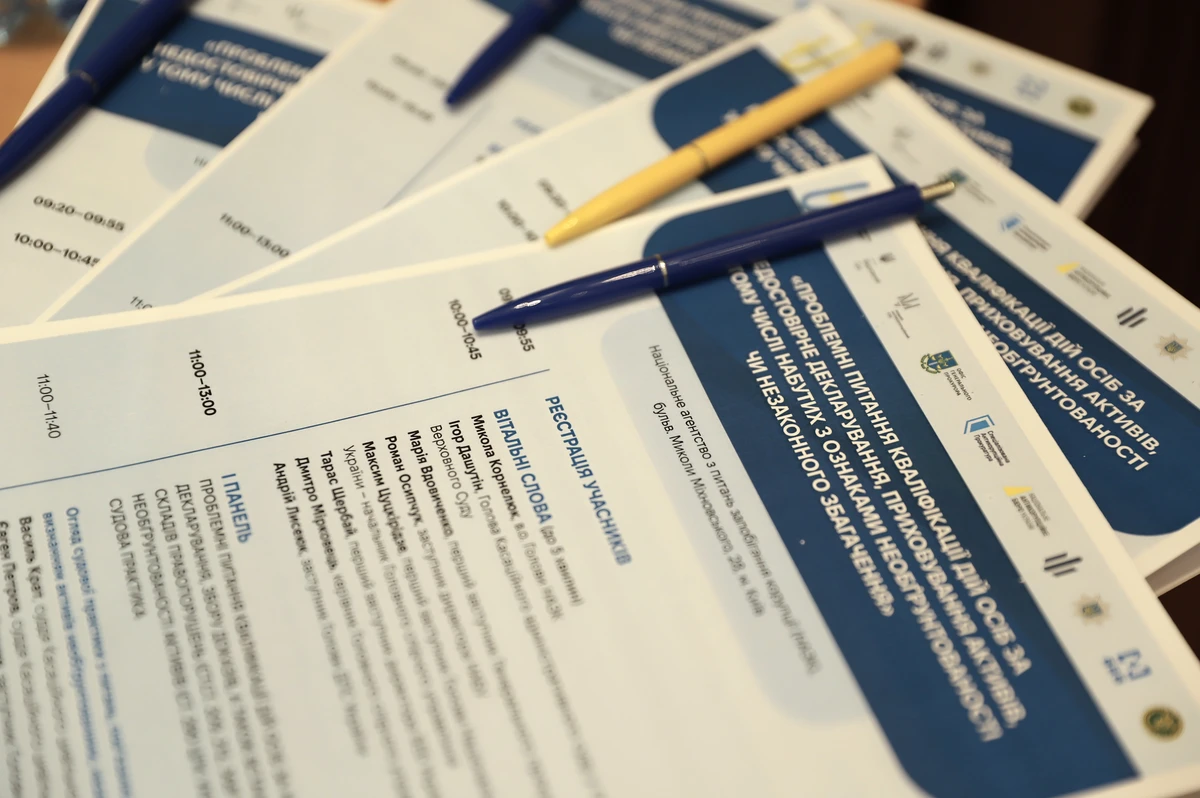


The National Agency on Corruption Prevention (NACP) has initiated, for the fourth time, a roundtable discussion on the topic: “Problematic issues in qualifying actions related to false asset declarations, concealment of assets, including those acquired with signs of unjustified origin or illicit enrichment.”
Judges of the Supreme Court, the High Anti-Corruption Court (HACC), the Appeals Chamber of the HACC, the Kyiv Court of Appeal, as well as representatives of the Office of the Prosecutor General and regional prosecutor’s offices, the Specialized Anti-Corruption Prosecutor’s Office (SAPO), the National Anti-Corruption Bureau of Ukraine (NABU), the State Bureau of Investigation (SBI), the National Police of Ukraine (NPU) and their territorial units, the Economic Security Bureau of Ukraine (ESBU), and the State Tax Service of Ukraine (STS) joined the professional discussion.
“To establish a comprehensive declaration system—both as a preventive tool and as a mechanism for holding individuals accountable—it is critically important to ensure a shared vision and unified approaches at all stages: during the qualification of false declarations, the determination of asset value for initiating civil forfeiture, and the identification of signs of illicit enrichment. Following the restoration of the declaration system in 2023, we have been systematically monitoring investigative and judicial practice in cases of this category and working to ensure consistent approaches to its application. Based on the NACP’s work, materials have been submitted to law enforcement agencies, which have led to the initiation of around 700 criminal proceedings related to violations in the field of financial control. Courts have already issued 58 guilty verdicts that have entered into legal force, and another 86 individuals have been held administratively liable for false declarations. The HACC has issued more than 40 decisions in cases on the civil forfeiture of unjustified assets, 70% of which are based on NACP materials. This confirms the importance of further aligning approaches and strengthening interagency cooperation,” emphasised NACP Deputy Head Mykola Korneliuk during the opening of the event.
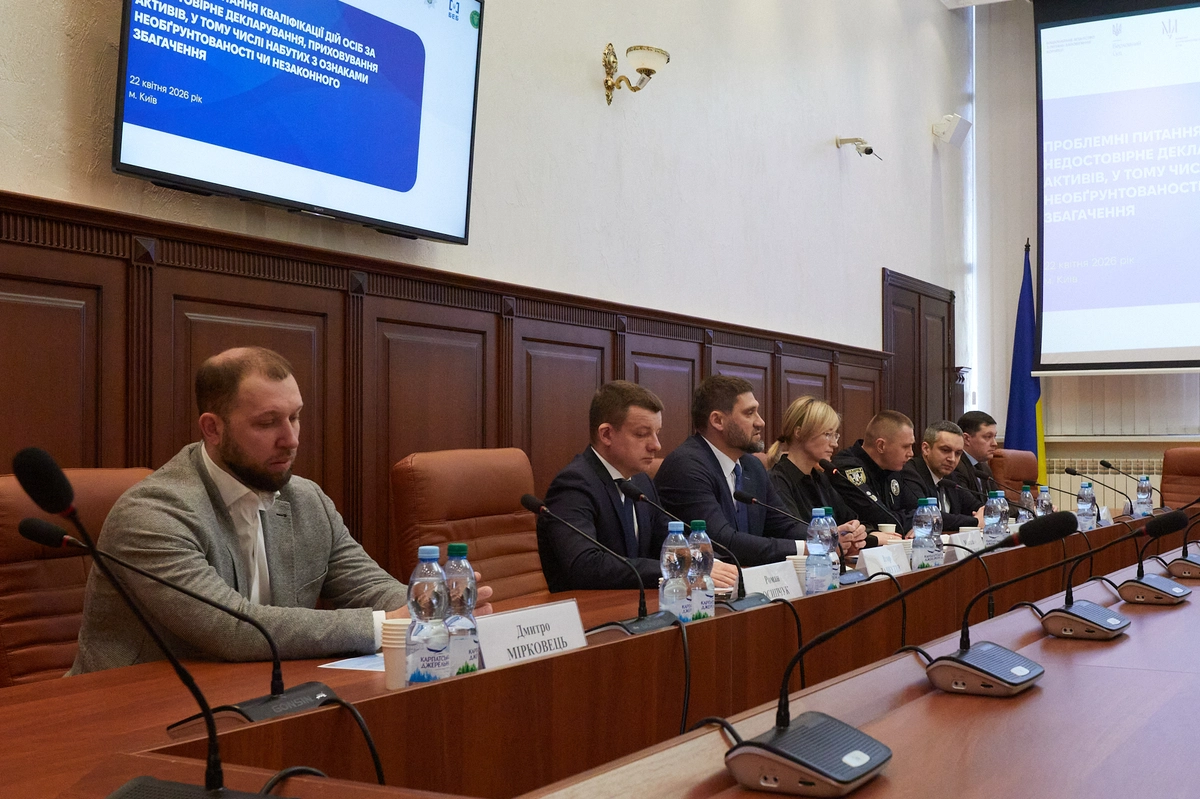
The importance of the issues raised for discussion, as well as the need for such platforms for professional dialogue, finding solutions to problematic issues, and improving interagency cooperation, was highlighted in the opening remarks by Ihor Dashutin, Head of the Administrative Cassation Court within the Supreme Court, Mariia Vdovychenko, First Deputy Prosecutor General, Maksym Tsutskiridze, First Deputy Head of the National Police of Ukraine – Head of the Main Investigation Department, Taras Shcherbai, First Deputy Director of the Bureau of Economic Security of Ukraine, Dmytro Mirkovets, Head of the Main Investigation Department of the State Bureau of Investigation, and Serhii Lyseuk, Deputy Head of the State Tax Service.

Vasyl Krat, a judge of the Civil Cassation Court within the Supreme Court, outlined the differences in the legal consequences of the invalidity of a contract in private law and public law spheres, in particular for recognising assets as unjustified and their recovery to state revenue, focusing on the approach of the Civil Cassation Court within the Supreme Court to such processes.
Yevhen Petrov, a judge of the Civil Cassation Court within the Supreme Court, also highlighted the specifics of legal regulation, the standards of proof for establishing that assets are unjustified, and problematic issues arising during the consideration of cases on recognising assets as unjustified.
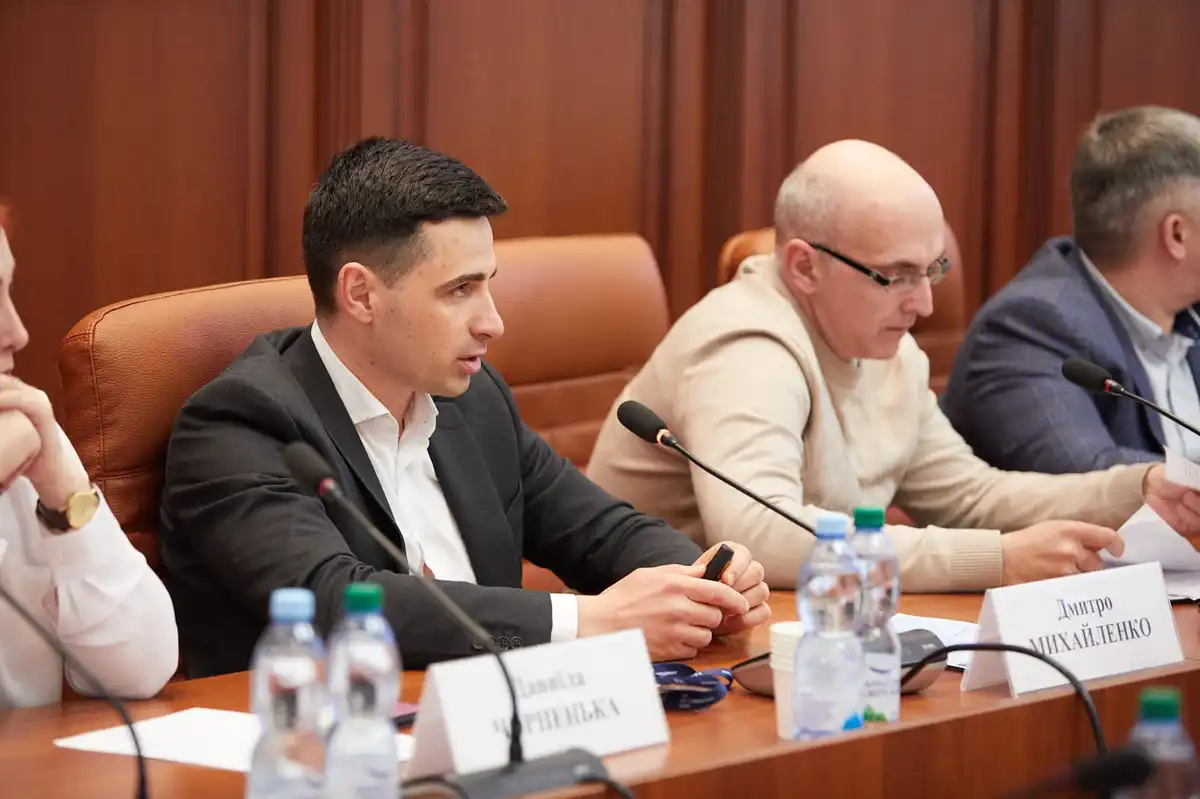
Dmytro Mykhailenko, Deputy Head of the High Anti-Corruption Court (HACC), using examples of court decisions, outlined the specifics of recognising assets as unjustified, including in cases of their transformation into other assets, and also drew attention to the peculiarities of calculating limitation periods in cases of this category.
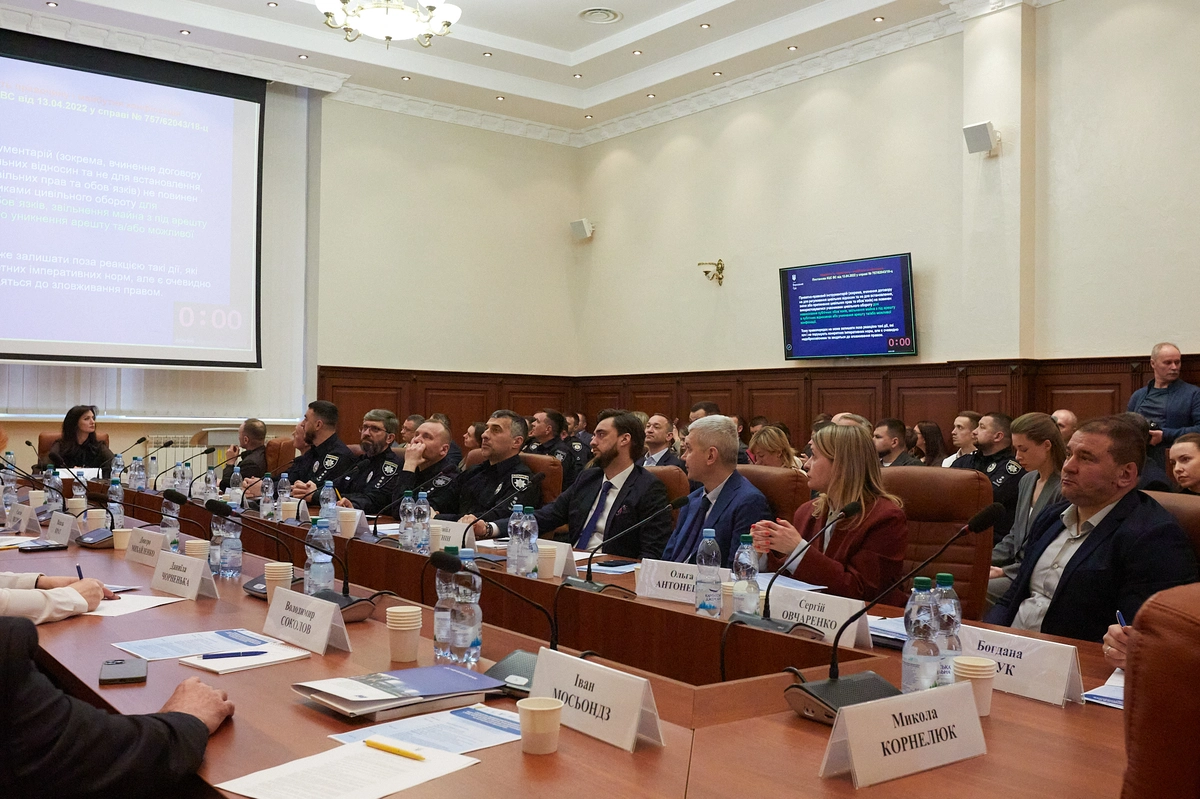
Prosecutors of the Specialized Anti-Corruption Prosecutor’s Office (SAPO), detectives of the National Anti-Corruption Bureau of Ukraine (NABU), and representatives of the National Agency on Corruption Prevention (NACP) and the State Bureau of Investigation (SBI) presented a joint vision of their institutions regarding the calculation of the value of assets acquired with signs of unjustified origin or illicit enrichment, taking into account judicial practice.
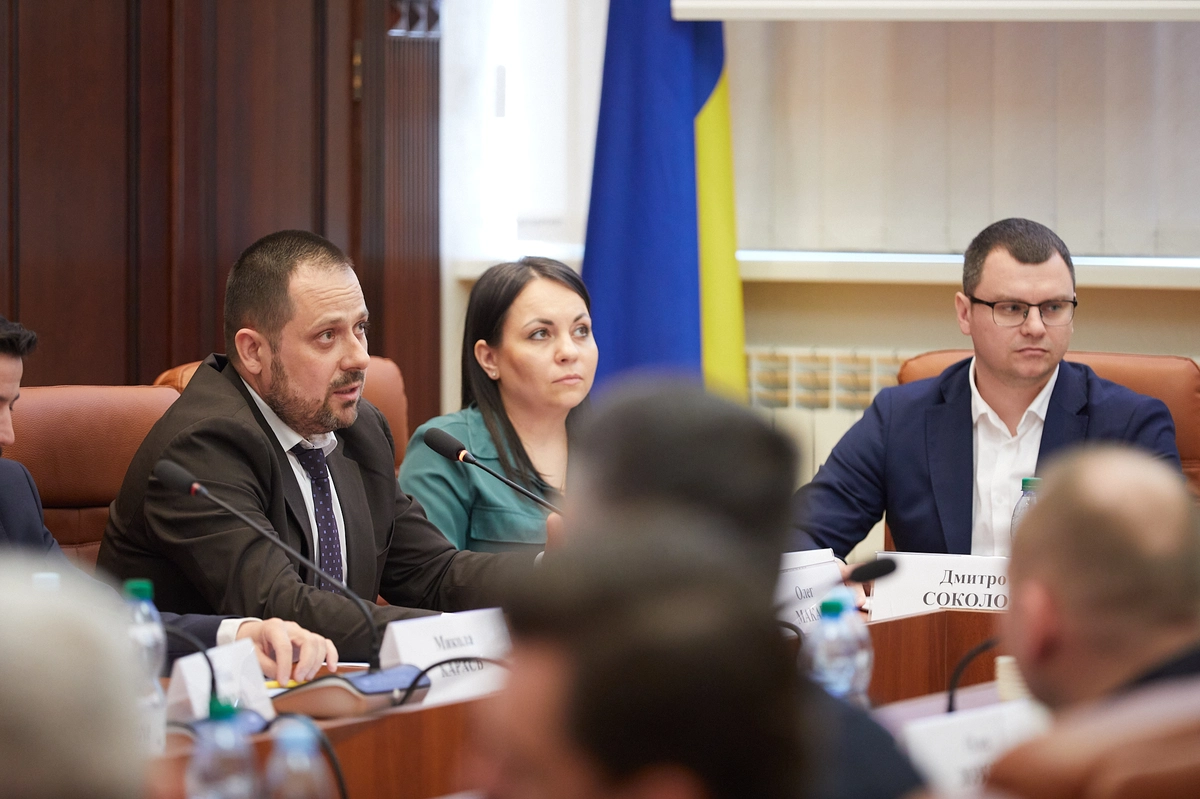
During the second part of the event, participants, working through practical cases and taking into account investigative and judicial practice, agreed on additional principles for qualifying actions under Article 366-2 of the Criminal Code of Ukraine (CCU), including false declaration of information on real estate, income, and financial liabilities.
“Holding such events makes it possible to develop common approaches to qualifying actions related to false declarations, which can not only ensure that materials from declaration verifications have a further judicial perspective, but also build a unified law enforcement practice in the state for holding individuals liable for violations of financial control requirements,” said Yuliia Kulikova, Head of the Department of Full Verification of the NACP.

In addition, Yuliia Kulikova, Head of the Department of the NACP, and Oleh Lozovyi, Head of a Division of the Corruption Prevention Department of the National Police of Ukraine (NPU), used practical cases to demonstrate the specifics of detecting violations related to the declaration of cash and crypto assets.

Participants of the event also outlined directions for further development of interagency cooperation in the field of financial control. In particular, this includes strengthening the focus on detecting significant violations related to the concealment of assets abroad, registered in the names of related persons, including those acquired with signs of unjustified origin or illicit enrichment, as well as increased attention to declarants working in sectors with the highest corruption risks.
Summarising the meeting, NACP Deputy Head Mykola Korneliuk noted the high level of engagement of the participants and the substantive nature of the discussion. According to him, this made it possible to reach practical agreements on the application of aligned approaches, as well as to form a shared vision of further steps and the ultimate goal. He also emphasised that the NACP, in most cases, is not the body that determines the final procedural outcome. Instead, pre-trial investigations and court proceedings are initiated on the basis of the Agency’s materials. Therefore, it is critically important to ensure a unified position of all involved bodies, based on coordinated approaches to the qualification of actions and to certain calculations.
The roundtable was held in a hybrid format and brought together nearly 800 participants, about 700 of whom joined online—representatives of territorial prosecutor’s offices, the National Police of Ukraine (NPU), the National Anti-Corruption Bureau of Ukraine (NABU), and the State Bureau of Investigation (SBI), who had the opportunity to ask questions to the speakers.
Following the event, summarised materials will be sent to all participating bodies. It is expected that they will be widely used in practical activities and will contribute to achieving a common result.
It should be recalled that the previous such meeting took place at the end of 2024, when participants discussed 14 problematic issues related to the qualification of actions in cases of false declarations, in particular, the failure to declare property, including unfinished construction, indicating inaccurate data on the value of assets, income, cryptocurrency, valuable movable property, monetary assets, financial liabilities, expenditures, etc. In previous years, the teams developed common positions regarding the standard of proof for the inaccuracy of data in declarations on cash not supported by lawful sources of origin, as well as cryptocurrency. As a result, there is now a positive judicial practice in cases of this category.